On Tuesday, the script seemed locked: Iran United States strike, the Gulf on edge over a sweeping Iranian retaliation, and Washington gearing up for a long-haul conflict, apparently not a nuclear one.
Then, the tables were turned on Tuesday evening, minutes before Trump’s deadline, with the two sides announcing a despite clear apprehensions of a no-deal, marking one of the many, yet surprising, turns in the over 5-week conflict between Iran and the United States.
However, what was Pakistani mediators sharing drafts between the two sides, a push from China and clear instructions from the new Supreme Leader, Mojtaba Khamenei.
The deal took shape on a “chaotic” day of diplomacy. US envoy Steve Witkoff initially rejected Iran’s proposal as a ‘disaster’, but mediators, including Pakistan, Turkey and Egypt, worked through multiple drafts to bridge gaps, Axios reported.
With the ceasefire, Iran is subject to immediately opening the and stopping all attacks on the US, Israel and countries in the Middle East. Meanwhile, Trump said he’s pulling back on his threats to widen attacks on Iran and Israel, saying it supports Trump’s decision to suspend strikes against Iran for two weeks, but that it doesn’t include the war with Hezbollah in Lebanon.
How Mojtaba played a key role
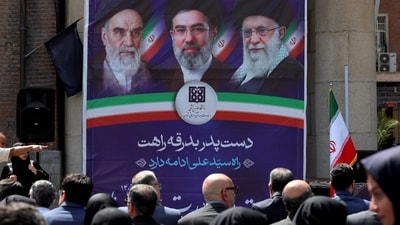
This was one of the first instances in which Iranian Supreme Leader Mojtaba Khamenei took an active role in the conflict, instructing his negotiators to move towards a deal, Axios reported, citing people familiar with the developments.
Reports on the new Supreme Leader earlier claimed he was for a “severe” medical condition in Qom. Other reports said he is in for injuries he sustained during the joint US-Israeli strikes.
The Axios report, however, said the new Iranian leader, facing an assassination threat from Israel, communicated primarily through runners passing notes.
Khamenei’s, two sources said, gave his blessing to the negotiators to cut a deal as a “breakthrough”.
Iran’s Foreign Minister Abbas Araghchi also played a crucial role in handling the negotiations and pushing commanders of the Revolutionary Guards to accept the deal.
However, it was Khamenei, who finally made the decision on the proposal of a two-week ceasefire by Monday night.
China’s clandestine role
China, a key ally of Iran, remained a amid the ongoing war.
While efforts at mediation yielded little, with Iran sticking to its 10-point demands and Trump issuing apocalyptic threats, it was China that reportedly asked the Islamic Republic to show flexibility and defuse tensions, The New York Times reported, citing three Iranian officials.
It said Beijing made its “own efforts” in pushing for a ceasefire between the US and Iran. China’s role was no secret as US President Trump admitted to having believed that China got Iran to negotiate a ceasefire.
“China has consistently advocated for a ceasefire and to resolve the conflict through political and diplomatic means, and to achieve long-term stability in the Gulf and Middle East region,” Chinese Foreign Ministry spokeswoman Mao Ning said, when asked about the detente. “China made its own efforts in this regard.”
Since the conflict began on February 28, Chinese Foreign Minister Wang Yi has made 26 phone calls with relevant counterparts, while Beijing’s special envoy conducted shuttle diplomacy in the Gulf, Mao said.