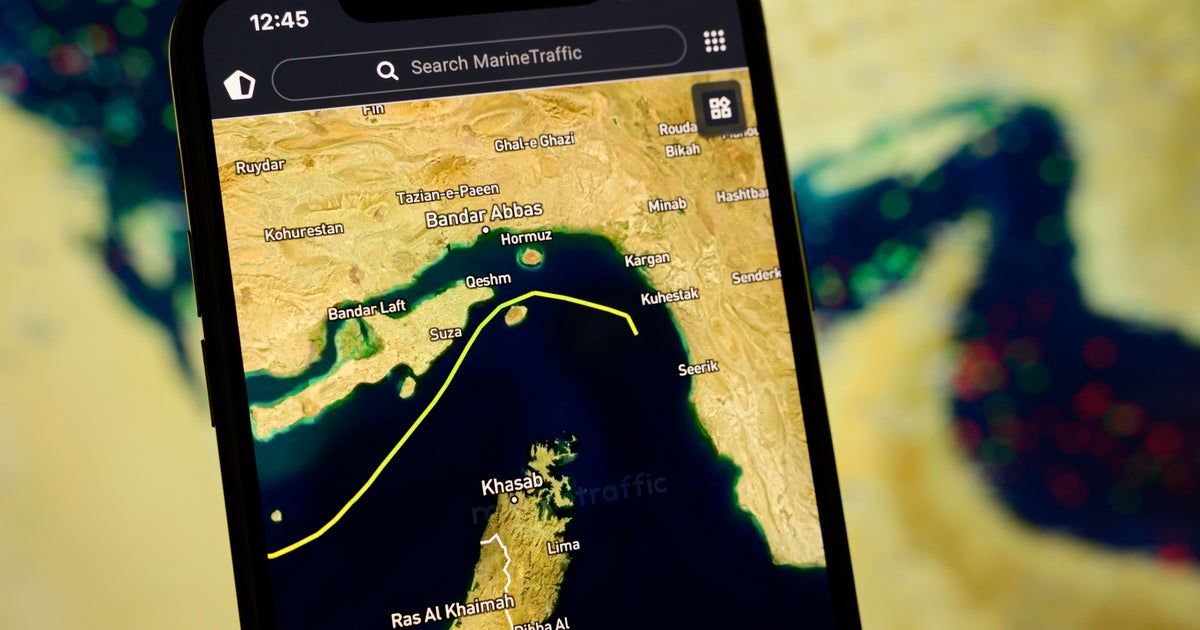
Reports that Iran is planning to charge ships a toll to traverse the Strait of Hormuz are raising concerns about the potential economic impact on oil and fuel prices.
Iran’s Islamic Revolutionary Guard Corps “has imposed a de facto ‘toll booth’ regime in the Strait of Hormuz, requiring vessels to submit full documentation, obtain clearance codes and accept IRGC-escorted passage through a single controlled corridor,” analysts from Lloyd’s List Intelligence said in a recent report. At least two vessels have paid fees in Chinese yuan, according to the provider of maritime research.
For now, Iran has not officially implemented a toll for the strait, which would be unprecedented. But Tehran indicated this week that, under a long-term peace deal to reopen the strait, it would charge vessels a fee to guarantee safe passage, Reuters reported.
In a Truth Social post on Thursday, President Trump warned Iran not to impose a toll on the vital conduit, which links the Persian Gulf to multiple trade routes. “There are reports that Iran is charging fees to tankers going through the Hormuz Strait — They better not be and, if they are, they better stop now!” he wrote.
Analysts with investment adviser Capital Economics said in a report that an Iranian toll on ship traffic would give the country “de facto control over a critical artery for energy trade and introduce a new source of geopolitical risk to the world economy.”
The Strait of Hormuz, which normally accommodates roughly 20% of the world’s oil and liquefied natural gas supply, remains virtually sealed, with tankers unwilling to risk passing through narrow waterway. While more than 100 ships per day ordinarily cross the strait, in March an average of only six vessels made the trip, while this month crossings have averaged about 10 per day, according to data from Marine Traffic.
Global oil prices, which traded at between $65 and $73 per barrel just before the war began on Feb. 28, hovered just above $95 on Friday.
The Financial Times reported this week that Hamid Hosseini, a spokesperson for Iran’s energy exports union, said the country would look to impose a tariff equivalent to $1 per barrel. That could amount to as much as $2 million for every oil tanker passing through the strait, according to shipping industry experts and economists.
Still, those additional costs alone wouldn’t significantly influence overall global oil prices, according to Capital Economics chief economist Neil Shearing, who noted that the marginal cost of oil production in many Persian Gulf states is roughly $20 per barrel.
“It wouldn’t add much to the cost of production,” he told CBS News. “They would still be extracting huge profits on a barrel of oil.”
By contrast, Shearing expects oil prices to remain elevated for months if Tehran maintains a firm grip on the strait — whether or not a toll is imposed.
“There’s an open question about whether or not that becomes used as an economic weapon in the future,” Shearing said, pointing to the risk that Iran could use the threat of increasing tolls as leverage over other countries.
“There will be a permanent risk premium in the markets in terms of oil prices. I think we are in a world where oil prices will be more elevated as a result of this,” he added.
A Strait of Hormuz toll would also spur ship insurance providers to boost their rates, further raising energy costs, Artem Abramov, senior partner and head of oil and gas at Rystad Energy, told CBS News.
“It will take a long time for ship owners and insurance companies to become comfortable with this unusual model, and freight rates and insurance premiums will remain elevated,” he told CBS News. “They’re adding to the cost of oil, and all these costs are being transferred to consumers.”
A more important factor affecting energy costs is the extent of damage to oil and natural gas facilities across the Gulf, said Sassan Ghahramani, CEO of SGH Macro Advisors, a policy research firm.
“The bigger issue for oil prices is the infrastructure damage rather than the tolls,” he told CBS News. “That’s the game changer for energy markets.”
—CBS News’ Julia Ingram contributed to this report