Delhi continues to rank among the most polluted capitals on Earth, and vehicular emissions are a major culprit. The impact of vehicle pollution on public health is well documented. Citizens face increased risks of asthma and cardiovascular diseases, adverse pregnancy outcomes, and reduced life expectancy. Vulnerable communities living near high-traffic corridors are disproportionately affected. Against this backdrop, the Delhi government’s newly-released draft EV Policy 2026 does something previous policies didn’t dare: It stops asking people to go electric and starts requiring it.
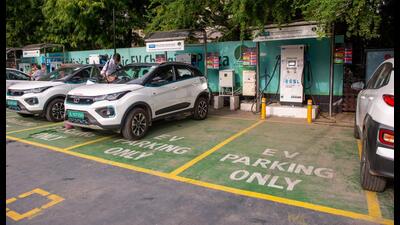
In August 2020, Delhi introduced its first EV policy. It was extended multiple times, ended in 2024, and will now be replaced by the new framework. One of its most ambitious targets was to achieve 25% of new vehicle registrations as electric by 2024 while significantly reducing air pollution.
Despite early momentum, it did not meet those goals. EV sales in 2025–26 are estimated at around 12.7%, half the earlier target. At the same time, global energy uncertainties underline the importance of reducing dependence on fossil fuels. Electrification of transport offers a clear pathway to cleaner air, improved public health, and greater energy security.
In this context, the draft EV Policy 2026 could be a turning point. There are three reasons why it stands out and offers a template for other Indian states.
Moving from subsidy to mandate: The most important shift in the new draft is the move from incentives alone to regulatory measures. The policy proposes stopping registration of new internal combustion engine three-wheelers from 2027 and two-wheelers from April 2028. This is important because, in FY 2025–26, out of a total of around 850,170 vehicles registered, nearly 73% belonged to these two categories.
Globally, from California to China, regulatory phase-out timelines, not subsidies alone, have proven most effective at accelerating adoption. In the US, states led by California have adopted zero-emission vehicle mandates, while countries such as the UK and Canada have set timelines to transition to 100% clean vehicle sales. In Asia, markets like China and South Korea are implementing similar approaches, and countries such as Indonesia and Thailand have also announced phase-out plans.
A clear phase-out timeline creates sustained demand. Demand drives competition among manufacturers, which reduces costs and accelerates adoption. Delhi’s approach of starting with two- and three-wheelers is practical and impactful, given their large share in urban mobility.
Looking at buses beyond public transport: Out of around 2.5 million buses in India, only about 8% are operated by public agencies, while 92% are privately owned. Electrification of buses in India has largely been driven by public procurement through central schemes. While this has scaled deployment in public fleets, it addresses only a small share of the market.
The draft policy recognises this gap and introduces a focus on school buses. About 13% of India’s buses are used for school transport, making this a significant opportunity for electrification. More importantly, emissions from ICE buses have a direct impact on children, who are among the most vulnerable to air pollution.
The policy proposes that schools adopt at least 10% electric buses in the initial years, increasing to 30% by 2030. This creates a clear demand signal and can catalyse electrification in the broader private bus segment.
Addressing electrification of trucks: Freight vehicles are a major contributor to urban air pollution and are often under-addressed in policy. A 2024 study by the ICCT India found that real-world emissions from vehicles in Delhi often exceed regulatory limits. High-use commercial vehicles are a key concern.
For example, BS VI taxi and light goods vehicle fleets were found to emit significantly higher nitrogen oxide emissions than private cars. The study also showed that CNG vehicles are not as clean as often assumed, with emissions exceeding limits in several cases.
The draft EV policy takes important steps to address freight electrification. It provides financial incentives for electric trucks, starting at ₹100,000 and reducing over time. It also introduces regulatory measures by restricting fleet aggregators and delivery service providers from adding new ICE trucks, and by mandating that government agencies procure only electric light-duty trucks.
The draft policy focuses incentives on N1 trucks, which is appropriate for urban logistics. However, it links these incentives to the central government’s PM E-DRIVE scheme, which currently provides support for N2 and N3 categories, not N1. (N1 refers to light commercial vehicles under 3.5 tonnes, commonly used for last-mile urban delivery.) This mismatch could undermine the policy’s effectiveness. Aligning incentives across these categories is essential for a coordinated transition in both urban and long-haul freight.
The way forward: The draft policy is open for public comments, and a few targeted refinements can strengthen it further. Aligning truck incentives with central schemes will improve implementation. Over time, extending regulatory signals to passenger cars can provide a more comprehensive transition pathway. Similarly, the current tax exemption for strong hybrid vehicles can be reconsidered, given their limited real-world emission benefits.
Overall, Delhi’s EV Policy 2026 represents a significant evolution in India’s approach to clean mobility. By moving beyond subsidies and introducing clear regulatory signals, it creates a stronger foundation for sustained EV adoption.
For other Indian states, the lesson is clear. Electrification at scale requires not just incentives, but certainty. Policies that create long-term demand, align with global trends, and focus on high-impact segments can deliver cleaner air, better public health, and improved energy security. Delhi’s draft policy may not be perfect, but it is pointed in the right direction. Other Indian states have watched the Delhi experiment for five years. Now they have a model worth borrowing.
Amit Bhatt is India managing director, ICCT. The views expressed are personal