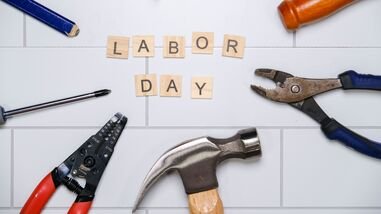
Labor Day 2026 will be observed in the United States on Monday, September 7. Celebrated on the first Monday of September every year, Labor Day honors American workers and recognizes their contributions to the country’s economic strength, prosperity and well-being.
The holiday has its roots in the American labor movement of the late 19th century, when workers and labor activists pushed for greater recognition of their contributions and better working conditions. Labor Day became a federal holiday in 1894 after Congress passed legislation and President Grover Cleveland signed it into law.
For millions of Americans, Labor Day is also associated with the end of summer, the final major summer holiday weekend and the beginning of the back-to-school season. Parades, picnics, barbecues, sporting events and other community gatherings are common ways of celebrating the holiday.
When is Labor Day 2026?
Labor Day 2026 falls on Monday, September 7.
The US observes Labor Day on the first Monday of September every year. Because it falls on a Monday, the holiday creates a three-day weekend for many Americans.
Labor Day dates
Labor Day 2026: Monday, September 7
Labor Day 2027: Monday, September 6
Labor Day 2028: Monday, September 4
Labor Day 2029: Monday, September 3
Labor Day 2030: Monday, September 2
What is Labor Day?
Labor Day is an annual US holiday that pays tribute to the social and economic achievements of American workers.
The holiday emerged from the labor movement during the late 19th century. Labor activists wanted to establish a day that would recognize the role workers played in building the country’s economy and improving its standard of living.
Today, Labor Day is both a celebration of American workers and a reminder of the historical contributions of the labor movement.
What does Labor Day celebrate?
Labor Day celebrates American workers and their contributions to the United States.
The holiday recognizes the role of workers in strengthening the country’s economy and society. It also commemorates the achievements of the labor movement, which campaigned for improvements in workplace conditions and workers’ rights.
The traditional Labor Day celebration involved a street parade followed by a festival for workers and their families. Modern celebrations continue this tradition through parades, public events, picnics and gatherings.
Labor Day history
The first Labor Day celebration was held in New York City on September 5, 1882. The event was organized by the Central Labor Union and included a parade followed by a festival.
The idea of dedicating a day to workers quickly spread. The Central Labor Union held another Labor Day celebration in New York in 1883.
Labor activists and individual states subsequently pushed for official recognition of the holiday. Oregon became the first state to pass a law recognizing Labor Day in 1887. Colorado, Massachusetts, New Jersey and New York also adopted Labor Day legislation that year.
By the end of the decade, several more states had recognized the holiday.
By 1894, another 23 states had adopted Labor Day. On June 28, 1894, Congress passed legislation making the first Monday of September a legal holiday. President Grover Cleveland signed the measure into law.
Labor Day has been observed nationally since then.
Who founded Labor Day?
The identity of Labor Day’s original founder is not completely settled.
Peter J. McGuire, a labor leader and co-founder of the American Federation of Labor, has traditionally been credited with proposing a holiday for workers in 1882.
However, Matthew Maguire, a machinist and secretary of the Central Labor Union in New York, has also been identified as the person who proposed the idea.
Historical accounts suggest that Matthew Maguire proposed the holiday while serving as secretary of the Central Labor Union in 1882. Both Maguire and McGuire participated in the first Labor Day parade in New York.
As a result, the question of who should receive primary credit for creating Labor Day remains debated by historians.
How did the first Labor Day celebration take place?
The first Labor Day celebration took place in New York City on Tuesday, September 5, 1882.
The Central Labor Union organized a street parade intended to demonstrate the strength and unity of labor organizations. The parade was followed by a festival designed to provide recreation and entertainment for workers and their families.
This combination of a parade and family celebration became a model for Labor Day festivities in subsequent years.
Over time, speeches and other events were added as the economic and civic importance of the holiday received greater attention.
How is Labor Day celebrated in the US?
Labor Day is celebrated in cities and towns across the country. Common activities include:
Labor Day parades
Picnics and family gatherings
Barbecues and cookouts
Fireworks displays
Sporting events
Community festivals
Outdoor parties
For many Americans, Labor Day weekend also marks the unofficial end of summer.
The holiday often coincides with the start of the back-to-school period, while the American football season traditionally begins around Labor Day.
Is Labor Day a federal holiday?
Yes, Labor Day is a federal holiday in the United States.
It is observed on the first Monday of September each year. Federal offices generally close on the holiday, while state and local government offices, schools and private businesses may also close depending on their policies.
Labor Day is therefore more than simply a long weekend. It is an official national holiday created to recognize the contributions and achievements of American workers.
Why is Labor Day important?
Labor Day provides an opportunity to recognize the contribution of workers to America’s strength, prosperity and well-being.
The holiday also reflects the historical role of the labor movement in advocating for workers and bringing attention to the social and economic conditions of working people.
Although the way Americans celebrate Labor Day has evolved over more than a century, its central purpose remains the same: to pay tribute to the American worker.