Middle Eastern oil producers are secretly shipping fossil fuels through the Strait of Hormuz, which is one of the factors holding back energy price increases, Bloomberg reported.
Oil tankers from the UAE, Qatar, and Kuwait have been passing through the with their transponders turned off for several months, the news agency claimed.
Due to the covert nature of these movements, it is difficult to estimate the volume of oil being transported through the strait. However, Bloomberg noted that it is likely higher than the four million barrels per day estimated by the market.
Here’s what we know so far:
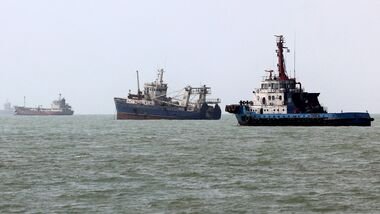
Middle Eastern oil producers are pressing ahead with shuttling large volumes of crude out of the . The trade of ferrying oil through the Strait of Hormuz undetected to transfer the barrels onto tankers in the Gulf of Oman is running at full tilt, despite recent attacks on vessels, sources told Bloomberg this week.
This has consequently helped keep a lid on prices and assuaged fears of an energy-driven inflation spike, even as the war in Iran drags on.
How is this secret movement made possible?
According to the report, vessels are protecting themselves by giving little clue about their locations. “Many are waiting for cargo transfers from the vessels that are sailing in and out of with their transponders turned off,” it added.
In addition to the UAE, barrels from Iraq, Qatar and Kuwait have all been ferried through Hormuz, according to vessel-tracking data compiled by Bloomberg, as well as Kpler and Vortexa data.
How much oil is being secretly transported?
The report highlighted that the shuttling has been ongoing for months, but tracking how much oil those “dark” ships are moving is a challenge for traders and analysts alike.
The volumes are running higher than market estimates of 4 million barrels a day, sources were quoted as saying.
Before the Iran war, about 20 million barrels a day crossed Hormuz, roughly a fifth of the world’s oil supply.
Last week, US Energy Secretary Chris Wright said that 9 million barrels a day crossed Hormuz over the previous seven days — a figure that surprised many traders and would be on the high end of estimated flows, at almost half of pre-war rates.
Lid on energy prices
People with knowledge of the shipments told Bloomberg that the incognito crossings of the world’s most vital energy chokepoint have become a major lifeline for global markets that were bracing for a much worse supply shock when the Iran war broke out.
The report noted that the embattled shipments are one of the reasons that Brent oil futures have spent much of August trading between $80 and $90 a barrel, traders and analysts say.
That’s far from the most alarming levels foreseen at the onset of the conflict if the Iran war lingered through the summer. Some were bracing for $150 oil.
The report also noted that the covert transit of vessels through the Strait of Hormuz, combined with increased pipeline shipments and the tapping of national oil reserves by various countries, is helping mitigate the economic impact of the Middle East conflict.
“For producers in the region, the situation is far from normal, however, with ships subject to repeated hostility even though they have some military protection,” the people said.
Risk of attack
The report emphasised that the movement of such vessels carries the risk of attacks.
The people with knowledge of Hormuz transits said there had been more incidents involving vessels than were publicly recognised, including both attacks on merchant ships and defensive actions by western forces targeting vessels that harass freighters trying to cross the waterway.
They offer a reminder that the cost of keeping energy prices low across the globe isn’t without risk — several seafarers have died transiting Hormuz and there are a growing number of regional oil spills.
One appeared in satellite images in the Gulf of Oman last week, but there was no sign of where it came from, underscoring the clandestine nature of transits.
Slowdown in shipping through Hormuz?
Reuters cited data on Monday, August 17, to claim that shipping through the Strait of Hormuz slowed over the weekend following attacks on tankers, while US-Iran talks to resolve the Middle East conflict stalled.
Five commodity vessels transited the strait on Saturday, with none registered for Sunday, shiptracking data from Kpler showed, versus 31 in the prior weekend.
However, people with knowledge of the UAE’s shipments told Bloomberg there was little indication of a slowdown, even after it reported more Iranian attacks on its ships in recent days.
Adnoc has already sold about 135 million barrels of crude to buyers across the world and issued another round of sales last week.
Since the beginning of the conflict, 23 of Adnoc’s vessels have been attacked while transiting Hormuz, resulting in one fatality and 20 injuries to crew members, the company said, adding the impact was also felt by businesses and households around the world.