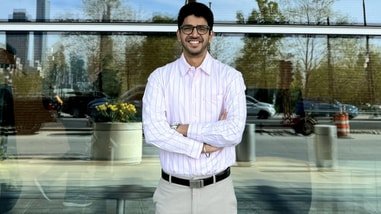
For a 29-year-old Indian techie, the American dream was operating on a ticking clock. After facing three consecutive H-1B lottery rejections, Sohan Sethi had roughly 100 days left on his student visa.
In an essay for Business Insider (BI), Sethi, a healthcare AI and professional, shared that instead of packing his bags, he pivoted to one of the most rigorous immigration pathways available—and won.
Three H-1B rejections
After completing a degree in computer engineering at the University of Mumbai, Sethi told BI that he saved money working as a business analyst before moving to the US in January 2022. He attended his dream school, the University of Illinois Chicago (UIC), and spent roughly $60,000 on tuition.
After graduating in May 2023, he rapidly advanced in his career, securing a role as a senior business analyst at a healthcare company and eventually being promoted to manager of analytics and reporting.
Despite his professional success, Sethi’s immigration status was entirely dependent on luck.
He entered the lottery three times and was not selected in any round.
By March 2026, after his third rejection, his STEM OPT (Optional Practical Training) was set to expire on July 5, leaving him with just over three months to remain in the country legally.
O-1 pivot
Sethi told BI that he had realised early on that he could not rely on a luck-based system. Following his second H-1B rejection in April 2025, he began preparing a backup plan: the .
Unlike the H-1B, the O-1 is not a lottery. It is granted to individuals who can demonstrate “extraordinary ability” in their field through documented, sustained national or international acclaim.
Starting in June 2025, while continuing to work full-time, Sethi began systematically building an airtight O-1 profile. In the essay for BI, Sethi said his strategy included:
- Securing media coverage for his work.
- Serving as a judge at industry events.
- Publishing scholarly articles.
- Winning professional awards.
- Gathering strong letters of recommendation from industry experts.
700 pages and $13,000
To execute this O1 pivot, Sethi hired a specialised legal team.
By February 2026, he and his lawyers had compiled a massive portfolio consisting of more than 700 pages of supporting evidence. The gruelling preparation process cost Sethi approximately $13,000 in out-of-pocket legal fees.
He officially filed his O-1 petition in April 2026, initiating a tense waiting period that included a Request for Evidence (RFE) from immigration officials, requiring even more documentation.
Why didn’t Sethi relocate?
As the clock ticked down on his OPT, Sethi explored contingency plans. Many international workers in his position opt to return home, pursue a second master’s degree, or relocate to countries with more straightforward immigration systems, such as Canada or the United Kingdom.
Sethi shared that he considered these options but ultimately rejected them.
Working at the cutting edge of healthcare data analytics and AI, he concluded that no other country offered the same level of opportunity, infrastructure, and industry exposure as the United States. And therefore, he decided to exhaust every possible US option before giving up.
The result
After months of anxiously refreshing his inbox up to 20 times a day, Sethi received a simple email from his lawyer: “Congratulations.”
His O-1 visa was approved, securing his right to live and work in the US for the next three years.
Today, Sethi continues to manage his healthcare analytics team in Chicago.
Having survived the process, he now uses LinkedIn to share his journey and offer guidance to other international students facing the same daunting immigration uncertainties.