Andrei Klepach, chief economist of Russian state-owned bank Vnesheconombank (VEB), recently said that might not be able to defeat Ukraine in a prolonged war of attrition, despite the government’s massive spending on the defence industry.
Moscow’s economic costs mount amid sanctions, blockade
Citing Klepach, Moscow Times reported earlier this week that Moscow is facing soaring economic costs from and the blockade, while Ukrainian attacks on ports, infrastructure, chemical plants and oil refineries are causing significant damage. He also warned that the country is losing ground to the rest of the world in terms of technological development.
He made these remarks at a recent session of the Nikitsky Club and said, “We’re falling behind. We’re losing both the technological and economic competition globally. And, as I’ve already said, we’re losing not only to China and the US, but in some ways, we’re losing to Ukraine. Ukraine’s economy, of course, is partially destroyed; it’s a demographic disaster. But, once again, the Ukrainian economy, despite everything, is surviving. Of course, there’s enormous financial assistance there.” He added, “With this assistance for military spending and their own expenses, it’s roughly almost 50% of our budget.”
Klepach continued, “We won’t win the competition in this war of attrition. We’re under the illusion that everything will collapse. It hasn’t, and it won’t. Our costs are mounting.”
Is the Russian economy in recession? Here’s what the chief economist said
The chief economist recalled that following the military boom of 2023-2024, the country’s economy entered a this year, with investments declining and civilian industries sliding into recession, including aviation, construction materials, light industry and food production. The situation has been further worsened by the extremely strict policies of the Central Bank of the Russian Federation, which is responsible for roughly half of the economic downturn, according to Klepach.
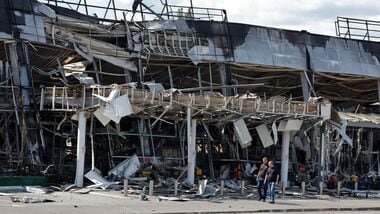
Klepach noted, “The conflict in Ukraine, involving NATO, has lasted longer than the Great Patriotic War, and there’s no end in sight. Both sides are escalating their attacks, including on each other’s economies. Losses from Ukrainian military strikes on our infrastructure—ports, oil and gas, chemical plants, and logistics—are mounting and are already becoming a significant macroeconomic barrier to Russian economic growth.”
Further, US President ‘s tightening of sanctions against Russia at the end of 2025 has pressured countries like India and China to reduce their purchases of . With the latest sanctions and “mounting losses from Ukrainian Armed Forces strikes,” Moscow’s potential economic growth rate may not exceed one or 1.5 per cent, he said. The economist also suggested that all of this will eventually lead to a “social crisis” in the country, especially at a time “when no one particularly expects it.”
Klepach’s latest assessment echoes concerns raised earlier this year about the mounting pressure on Russia’s economy and its ability to sustain the prolonged conflict.
Rising food prices pinch Russians
Earlier in February this year, a BBC report suggested that Moscow’s economy was between stagnation and decline. Several Russian consumers have seen their monthly grocery expenses rise sharply, with prices for essentials such as eggs, chicken fillets and seasonal vegetables increasing at local supermarkets.
While the Russian economy appears to be struggling under the strain of the prolonged conflict, the nearly five-year-old war shows no clear signs of ending.