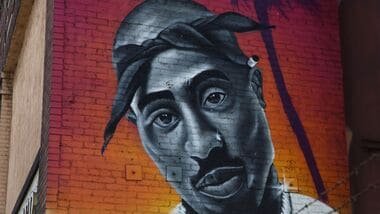
Jury selection for one of America’s most notorious unsolved murders: the 1996 fatal drive-by shooting of hip-hop legend Tupac Shakur began on Monday, August 10.
63-year-old Duane Davis, also known as “”, is charged with a single count of murder by use of a deadly weapon. He has pleaded not guilty.
Davis is accused of leading a group of men to kill Tupac, 25, one of rap’s most commercially successful and influential artists, in a 1996 shooting near the Strip.
The Tupac Shakur murder case and the suspect
Prosecutors have alleged that Davis was the “shot caller” of the group that murdered Tupac and wounded Death Row Records CEO Marion “Suge” Knight on 7 September 1996 in Las Vegas.
Davis is the only person from the group who is still alive today.
In his 2019 tell-all book, Compton Street Legend, Davis laid out a play-by-play of his role in the 1996 fatal shooting of the hip-hop legend.
According to Davis’s own accounts over the years, the shooting was in retaliation for a fight earlier that night in which Tupac and Knight assaulted Davis’s nephew, Orlando Anderson.
He wrote that he obtained a Glock pistol, hopped into a Cadillac with Anderson and two others, and went searching for Shakur and Knight. When they spotted Tupac in a car, they pulled up next to it.
“No words exchanged, the time for talking had passed, the sh*t was about to go down!” Davis wrote.
This version of events now represents the key evidence against the 63-year-old as he prepares to stand trial, which is expected to last about a month, and carries a maximum sentence of life in prison.
Since his arrest, he has pleaded not guilty.
On the day of his arrest in September 2023, police body-camera footage captured a preview of his defence:
Officer: “What they got you for, man?”
Davis: “The biggest case in Las Vegas history.” Later, Davis added: “I ain’t worried about it… I didn’t do sh*t.”
Evidence against Davis built on his own words
The jury will not have a , a getaway vehicle, or surveillance video of the actual shooting. Instead, the prosecution’s case is built almost entirely on Davis’s own words—spanning his book, podcast appearances, documentary interviews, and statements to police.
“In this case, almost all of the evidence the state will seek to introduce, will be to establish the credibility of Defendant’s various accounts of his role in the killing of Tupac Shakur,” prosecutors wrote in a recent filing.
In this incredibly rare dynamic, the prosecutors will argue that an accused murderer is trustworthy and credible, while defence attorneys will attempt to deride their own client as a liar who fabricated the story to sell books.
“It’s quite the reversal. You rarely see something like that,” CNN Chief Legal Analyst Laura Coates said.
CNN legal analyst Joey Jackson added, “He’s the defendant but he’s also the all-star witness, quite frankly.”
What did Davis say over the years?
Davis’s story has remained largely consistent across several platforms:
- The 2008 Police Proffer: Davis spoke to federal task force agents under a “proffer” agreement (which generally prevents police from using the information against a suspect). He told them that after the fight involving his nephew, he got a gun, sat in the front seat of the Cadillac, and that Anderson, sitting in the back, fired the fatal shots.
- 2018 Documentary: In an interview for BET’s Death Row Chronicles, he confirmed the shots came from behind him. “Going to keep it for the code of the streets. It just came from the backseat, bro.”
- His 2019 Book: In Compton Street Legend, he wrote about the moment they pulled up to Shakur’s vehicle:
“Tupac made an erratic move and began to reach down beneath his seat. Pac pulled out a strap, and that’s when the fireworks started. One of my guys from the back seat grabbed the Glock and started bustin’ back.”
Davis called writing the book “therapeutic” and gloated about the 2008 proffer being “the deal of a lifetime.”
“I would never have said a word if they didn’t give me such a sweet deal. I didn’t have to do a day of time … and I didn’t tell on anybody but myself because everybody else was already dead. Think about it!”
He ended that retelling with: “The moral of the story, real Gangsters, are nothing to fk with!”