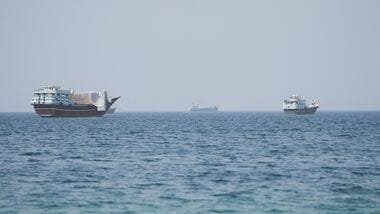
Russia is considering the feasibility of developing a direct rail connection to the Indian Ocean to reduce its reliance on vulnerable maritime routes such as the Bosphorus and , Russian Deputy Prime Minister Marat Khusnullin said.
The proposal could create an overland freight corridor connecting with India through a network of countries including Turkmenistan, Iran, Afghanistan and Pakistan.
Russia seeks alternative route to India
Khusnullin said that should examine multiple options for establishing rail connectivity with the , with routes providing access to India considered viable.
“A rail link to the Indian Ocean should also be explored,” Khusnullin told TASS. He highlighted possible routes through Turkmenistan, Iran, Afghanistan and Pakistan as alternatives to existing maritime corridors.
The proposal would potentially give Russian freight operators a direct overland route towards India while reducing exposure to disruptions at major maritime chokepoints.
Hormuz disruption drives search for alternatives
The proposal comes amid following military hostilities involving the US, Israel and Iran.
through the strategic waterway, raising concerns over the movement of oil, LNG and other commodities.
The is one of the world’s most important energy chokepoints, carrying a significant share of global oil and LNG shipments. Any prolonged disruption can therefore have consequences for global energy prices and international supply chains.
Route could pass through Iran and Pakistan
One of the potential corridors outlined by Khusnullin would run through Turkmenistan, Iran, Afghanistan and Pakistan before reaching the Indian Ocean and providing onward connectivity to India.
Such a route could complement Russia’s existing efforts to expand land-based trade corridors linking it with South Asia and the Middle East.
However, building such a corridor would involve significant infrastructure, financing and geopolitical challenges, particularly given the security situation in Afghanistan and the complex regional relationships among the countries involved.
India connectivity could boost trade
A rail connection reaching the Indian Ocean could strengthen Russia-India trade links by providing an alternative to sea routes.
It could also potentially reduce transportation risks associated with the Bosphorus, which connects the with the Mediterranean and is an important route for Russian and regional trade.
For Moscow, developing alternative corridors has become increasingly important as geopolitical tensions continue to affect conventional shipping routes.
Russia also seeks to expand construction sector
Khusnullin also spoke about Russia’s domestic construction industry, saying the sector could absorb an additional 1 trillion roubles annually.
He said that providing such funding consistently for five years would allow the industry to expand its capacity and undertake even more construction projects.
“The construction industry is already capable of handling an additional one trillion rubles annually,” he said, adding that sustained financing would enable further expansion.
Strategic importance of alternative corridors
The proposed rail connection reflects a broader push by Russia to diversify its trade infrastructure and reduce dependence on maritime chokepoints exposed to geopolitical disruptions.
If developed, a Russia-to-Indian Ocean rail corridor could provide an additional route for moving goods towards India while strengthening economic links between Russia and countries across Central and South Asia.
However, the proposal remains at the feasibility stage, and substantial investment and coordination among multiple countries would be required before such a corridor could become operational.
(With ANI inputs)