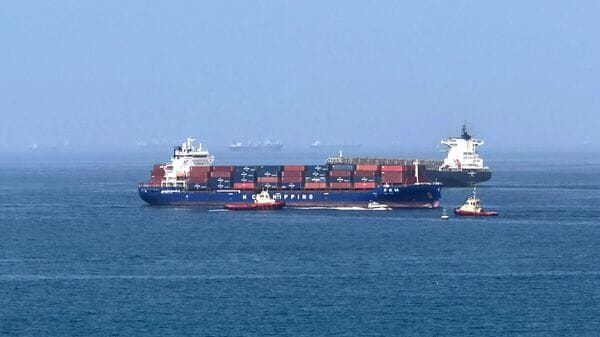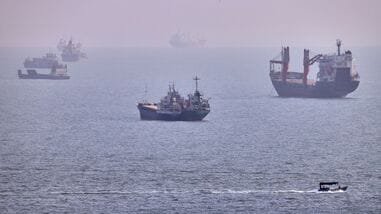
Hassan Ghashghavi, spokesperson for the Iranian Parliament’s National Security Commission, said Iran and Oman have reached an understanding framework regarding the Strait of Hormuz.
He stated that the final text and details will be revealed soon.
“The general framework of the understanding with Oman has been determined, and the final text and details will be announced soon,” Ghashghavi told the IRNA news agency, adding, “Of course, the final decision must be made at higher levels.”
Tehran has said that a complete reopening of the strait would depend on the lifting of the US maritime blockade, a move Washington has not indicated whether it is prepared to take. A US official said on Thursday that any temporary passage routes through the strait would not require approvals, permissions, tolls or charges, in response to reports about the latest proposals, according to Bloomberg.
Semi-official Fars news agency, quoting an informed source in Iran’s Foreign Ministry, reported that the draft agreement with Oman would give Iran control over the entry of vessels into Hormuz, while both countries would jointly oversee their exit. The proposal includes transit through a “central corridor”, with movement through the other two routes currently in limited operation expected to stop within a “specified timeframe”, the agency said.
Quick answers to key questions
What is the Iran-Oman framework regarding the Strait of Hormuz?⌵
The Iran-Oman framework is an understanding established to manage vessel movements in the Strait of Hormuz, which would involve Iran overseeing the entry of vessels and a joint oversight with Oman for their exit. Details are expected to be finalized soon.
Why is the Strait of Hormuz agreement crucial for energy shipments?⌵
The agreement on the Strait of Hormuz is vital for increasing energy shipments, as it aims to resolve current tensions and restrictions that have reduced oil and gas shipments since recent military escalations involving the US and Israel.
How does the proposed deal impact US and Israeli vessels in the Strait of Hormuz?⌵
The proposed deal seeks to bar US and Israeli vessels from the Strait of Hormuz, with provisions suggesting that Iran would require compensation from hostile countries before allowing their transit through the waterway.
What conditions does Iran stipulate for reopening the Strait of Hormuz?⌵
Iran demands the lifting of the US maritime blockade, addressing sanctions on its oil sector, and resuming negotiations over frozen assets as preconditions for resuming free navigation through the Strait of Hormuz.
Should the US lift its maritime blockade for the agreement to succeed?⌵
Yes, the US lifting its maritime blockade is seen as essential for the success of the agreement, as Iran has stated that a full reopening of the Strait of Hormuz depends on meeting certain political and economic conditions.
Earlier this week, Iran’s Deputy Foreign Minister Kazem Gharibabadi said an understanding with Oman had been reached “in principle”. State television on Friday quoted a lawmaker as saying that the final text and details of an agreement with Muscat would be announced “soon.”
Some Iranian lawmakers are seeking to include provisions such as a ban on US and Israeli vessels using the, the semi-official Fars news agency reported. Such a condition would go against Washington’s demand for unrestricted passage through the waterway, despite the absence of US- or Israeli-flagged commercial ships worldwide.
Other proposed changes reported by Fars include Iran’s demand for compensation from “hostile countries”, restrictions on cargo linked to Israel, and a fee system to cover services such as insurance and environmental expenses.
It remains uncertain whether Iran’s Supreme Leader has approved the proposal, which is required for the agreement to move forward. Iranian officials have said that reaching him for communication takes time.
An agreement on managing the Strait of Hormuz has become crucial to hopes of a further increase in energy shipments, which have continued despite recent escalations, though at reduced levels compared with before the US and Israel launched attacks on Iran in late February. A reopening of the key chokepoint could also help restart wider negotiations between Washington and Tehran aimed at ending the war.
Fars reported late Thursday, citing an unnamed source, that Iranian naval forces had targeted “hostile targets” at the entrance of the strait, suggesting that tensions in the region remain elevated.
Trump claims ‘control’; Iran reportedly says draft deal would give it control over vessels entry
US President said the talks are “moving along” but offered no further details when questioned about the progress by White House reporters late Thursday.
Trump has for months demanded the resumption of navigation through the Strait of Hormuz and warned of further attacks on Iran if the waterway is not reopened.
Trump, who recently stepped back from threats to restart military strikes against the Islamic Republic, said on Thursday that the US was engaged in negotiations but did not confirm whether a deal had been reached.
“We control it, but they can always shoot something,” Trump said earlier Thursday while referring to the strategically important waterway.
Meanwhile, Iran has maintained that the discussions are between Tehran and Muscat and that the US is not directly involved.
“The path of understanding is between Iran and Oman, and no negotiations with the US have taken place during this period,” Iranian Deputy Foreign Minister Kazem Gharibabadi mentioned.