Saudi Arabia, Turkey and Pakistan have signed a defense agreement on Friday, Pakistan’s Foreign Ministry said, deepening cooperation between the three regional powers at a time of growing security concerns.
The agreement was signed during a meeting between Saudi Crown Prince Mohammed bin Salman, Turkish President Recep Tayyip Erdogan and Pakistan’s Prime Minister Shehbaz Sharif in Saudi Arabia.
“The Agreement is intended to strengthen collective deterrence against any act of aggression, and stipulates that any armed attack against any one of the three States shall be regarded as an attack against them all. It further provides for the enhancement of all aspects of defence cooperation among the three States,” the ministry said in a statement.
Yemen’s state-run Saba news agency reported on Friday that Houthi rebels had launched fresh missile and drone attacks on the eastern Yemeni city of Marib, a day after a series of strikes on government military positions left dozens dead and wounded.
Yemeni armed forces shot down several Houthi drones over Marib, according to the report. Videos circulating on social media showed smoke rising over the city.
The Houthis have not issued a statement on this latest attack.
The new strikes came after Houthi military spokesman Yahya Saree announced Thursday that the group carried out a “large-scale and special military operation” targeting “Saudi military build-ups in Marib and Hadramawt.”
He claimed the operation killed and wounded hundreds of Yemeni soldiers and destroyed military camps, weapons depots and equipment in the Al-Wadiah area in eastern Yemen.
The Saudi-backed Yemeni Joint Operations Command, however, confirmed the deaths of 17 soldiers and officers in the Houthi attacks. The AFP news agency put the death toll at at least 58 government troops.
The Saudi-led coalition in Yemen said on Friday that 11 civilians were wounded in what it described as “Houthi terrorist attacks” targeting the southern Saudi city of Najran.
Coalition spokesman Turki al-Maliki said the injured included seven Saudi nationals, among them a woman and a 4-year-old child, as well as one Yemeni, two Egyptians and one Pakistani. He added that some of the victims suffered second-degree burns.
Al-Maliki accused the Houthis of using indiscriminate projectiles against civilian areas, describing the attack as “a flagrant violation of international humanitarian law and its customary rules” through the deliberate targeting of civilians and civilian infrastructure.
He said the Joint Forces Command would continue taking the necessary measures to respond to the attacks and ensure the protection of civilians.
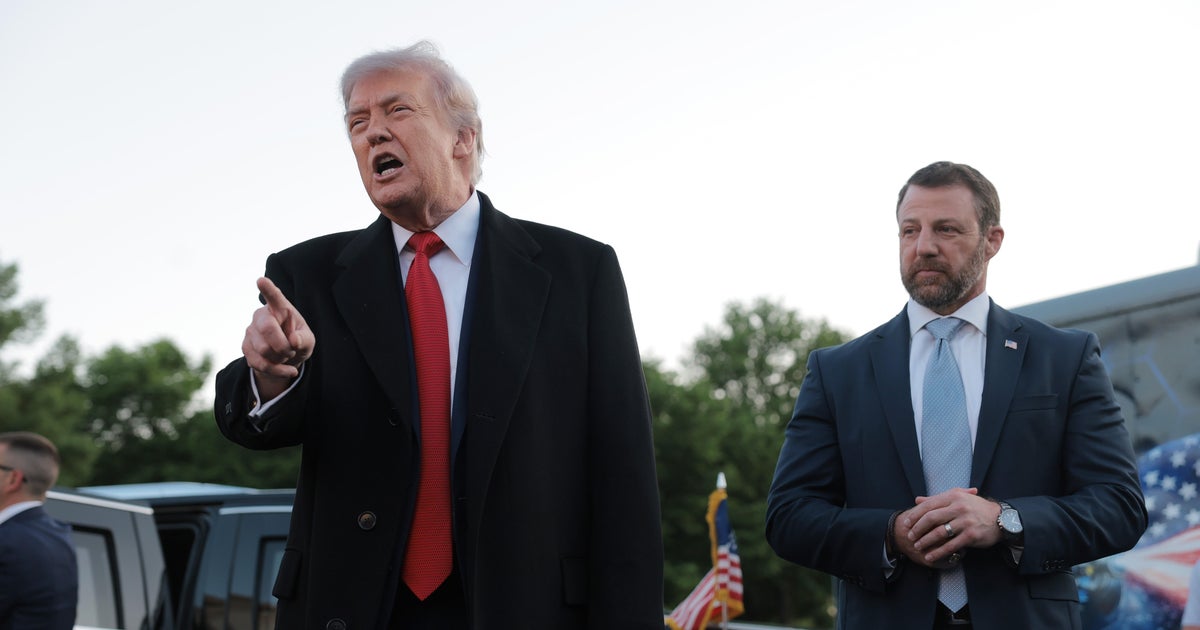
With the U.S.-Iran conflict in its sixth month, the Trump administration is angling for a deal. But Sen. Ted Cruz argues the U.S. should heap more pressure on Iran’s regime — including by arming Iranians who oppose their government.
“I think our objective should be regime collapse,” the Texas Republican told CBS News national security analyst and Free Press columnist Aaron MacLean on the “School of War” podcast.
Cruz first pushed for the U.S. to arm protesters in late January, after Iran cracked down on the country’s largest wave of demonstrations in years, killing at least 12,000 people, sources told CBS News.
He has since criticized many of the U.S.’s diplomatic overtures toward Iran. He told MacLean the memorandum of understanding was a “disaster” and a “terrible deal,” warning it would set the stage for Iran to get billions of dollars in sanctions relief and $300 billion in economic development funds, and could let Iran assume “a permanent role with the Strait of Hormuz.”
“You’ll forgive me if I’m not terribly eager to give them $300 billion to facilitate their carrying out their stated intent of murdering us,” Cruz said.
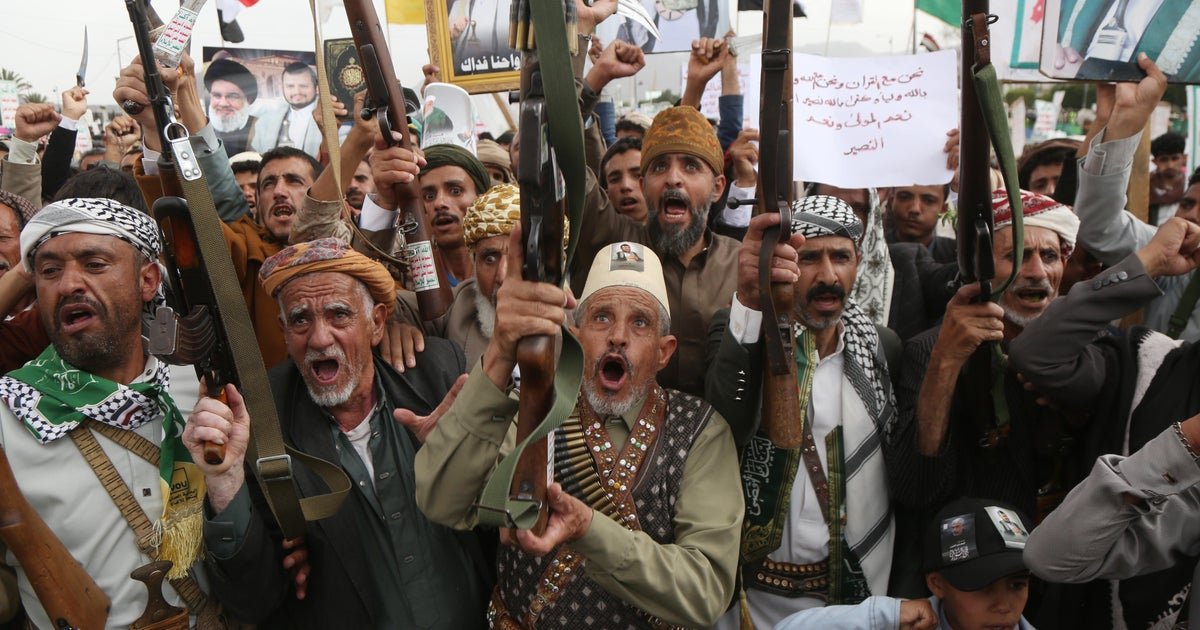
Iran-backed Houthi rebels in Yemen killed at least 58 government troops and injured dozens in missile and drone attacks on Thursday, a military source told the AFP news agency, in one of the deadliest days of the country’s civil war in four years.
The attacks come as Yemen is increasingly drawn into the U.S.-Israeli war with Iran, with the rebels stepping up attacks against both government forces and neighboring Saudi Arabia, a key U.S. ally and supporter of the internationally recognized Yemeni government.
The evolving regional situation has prompted Saudi Arabia, Turkey and Pakistan to seek closer security ties, with the three Muslim-majority nations set to sign a joint defense agreement in Jeddah on Friday, according to Saudi sources with knowledge of the matter.
Houthi military spokesman Yahya Saree said the rebels attacked government positions with ballistic missiles and drones in response to an alleged military buildup backed by neighboring Saudi Arabia.
A military official, who also spoke on condition of anonymity, said Thursday’s attacks on troop camps were the worst in Yemen since 2022.
Yemen’s defense ministry said in a statement that its armed forces would respond to the attacks “at the appropriate place and time.”
The escalation spilled across the border on Thursday, with Saudi officials saying Houthi attacks wounded 11 civilians in the southern Najran region.
AFP
President Trump again denied reports that the U.S. military is running low on munitions amid the war with Iran.
“We have certain types of munitions that are very powerful, yeah, that we have unlimited, virtual unlimited supply,” Mr. Trump said Thursday in the Oval Office. “We have others where it’s a little bit tighter, and we’re getting them in on a daily basis.”
“But we have certain types of munitions which are very, they may not be as accurate. They may not be, you know, they’re not as elite,” Mr. Trump said. “We have elite too, but we’re, we’re watching that very closely. But we have certain types which are very powerful, very good, and we have an unlimited supply, and so we’re in great shape.”
“But with that being said, we always want more,” he added. “We have to have more. We have other things … maybe come up, and maybe don’t come up. Hopefully, nothing else does come up. But we’re in very good shape. We have literally massive amounts of ammunition.”
President Trump on Thursday told reporters he didn’t want to say that a deal to reopen the Strait of Hormuz had been reached, but insisted it is “sort of open right now.”
“We control it, but they can always shoot something, they always have something, or drop a mine, and if you have one mine out there you sort of mess things up, because people don’t want to take their billion-dollar boats and accidentally get hit by a mine, but I think we’re doing very well,” Mr. Trump said in the Oval Office after signing several executive orders.
Mr. Trump also said he was involved in the ongoing negotiations with Iran, but did not specify how.
Transits through the strait remain extremely limited, as Iran demands that ships travel close to its coast and seek permission before sailing through it. Fewer than 10 ships per day traveled through the waterway from Sunday to Tuesday, according to analytics firm Kpler.
Iran and Oman are nearing a new arrangement for managing traffic through the Strait of Hormuz, with Tehran insisting the framework represents a new security model for the strategic waterway rather than a full reopening of the strait, Iran’s state news agency IRNA reported Thursday.
According to IRNA, the proposed mechanism would regulate the movement of commercial vessels, with ships entering through Iranian waters and exiting through Omani waters.
IRNA said the talks are aimed at defining “a new model that is different from the 60-year-old practice of the past” in which ships passed through the strait at will.
President Trump has said the talks could result in a deal concerning the strait being announced as soon as Thursday.
IRNA asserted that the Iran war has changed the security situation around the waterway and that previous arrangements can’t address the new realities.
The agency said the success of the arrangement would depend on whether other nations in the region and worldwide accept it.
There was no mention in the IRNA report of an intention to charge vessels fees to get through the strait — a potentially contentious condition.
The speaker of Iran’s Parliament posted a statement mocking President Trump’s pattern of threatening major strikes and then calling them off in favor of talks.
“‘Massive attack coming… wait, never mind, they want to negotiate.’ That’s theater diplomacy on loop,” Mohammad Bagher Ghalibaf wrote on X.
He also accused the U.S. of “bullying [and] broken promises.”
“Acknowledge the facts and fulfill your commitments. We don’t need more theater,” he said.
Ghalibaf has been one of the main figures in negotiations between the U.S. and Iran to broker a lasting peace. But he has also regularly taunted the U.S. and Mr. Trump on social media.
In late July, the speaker posted a meme of a cyclist jamming his own front wheel along with the comment, “They wanted to punish Iran. Punished themselves with triple-digit oil instead.”