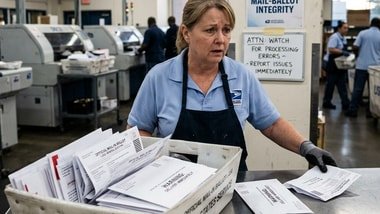
A whistleblower has warned Congress that the US Postal Service is moving ahead with a new system to enforce President Donald Trump’s restrictions on , raising concerns that technical errors could lead to legitimate ballots being rejected or delayed.
The allegations have drawn scrutiny from Democratic Senator Richard Blumenthal, who has asked Postmaster General David Steiner to provide documents and answer questions about the system.
What is the concern?
According to the whistleblower’s claims cited by Blumenthal, USPS is preparing a system with what the senator described as an “impracticable zero percent failure rate.”
Under the system, even a single problem matching a ballot to an approved voter could potentially affect an entire batch of ballots.
Blumenthal gave a hypothetical example: If election officials delivered 10,000 ballots and USPS could not match one because the voter had recently changed their name or moved, the other 9,999 ballots could also be refused for delivery.
The concern is that legitimate voters could lose access to their ballots because of administrative or computer-system errors.
What has Trump ordered?
Trump signed an executive order in March seeking to impose new restrictions on mail-in voting.
Among other measures, the order directed the Department of Homeland Security to provide states with information on citizens eligible to vote. It also directed the Justice Department to prioritize investigations involving officials accused of issuing ballots to people considered ineligible.
The order further instructed USPS to deliver mail ballots only to voters appearing on each state’s approved mail-ballot list.
The administration has described the measures as efforts to strengthen election security and prevent voting by ineligible people.
Why is USPS involved?
The Postal Service is responsible for delivering mail-in ballots once they are sent by election officials.
The new system is intended to help USPS check ballot information against voter lists before delivering the ballots.
Critics, however, argue that putting additional verification requirements into the postal system could create new opportunities for legitimate ballots to be rejected.
USPS had not immediately commented on Blumenthal’s allegations.
What does the court battle mean?
The that had blocked the from implementing the executive order. However, a separate injunction covering a key part of the plan remains in effect.
That means the administration has gained some room to proceed, but the broader legal fight over Trump’s mail-voting restrictions is not over.
Why does this matter ahead of the midterms?
The timing is significant because the 2026 congressional elections are scheduled for November.
Mail voting is widely used in the US, particularly by voters who cannot or do not want to vote in person on Election Day. Any system that delays or rejects legitimate ballots could therefore affect access to voting.
Blumenthal has accused of creating a system that could disenfranchise voters, while Trump has repeatedly argued that mail voting is vulnerable to fraud.
However, documented cases of voter fraud involving mail ballots are rare.