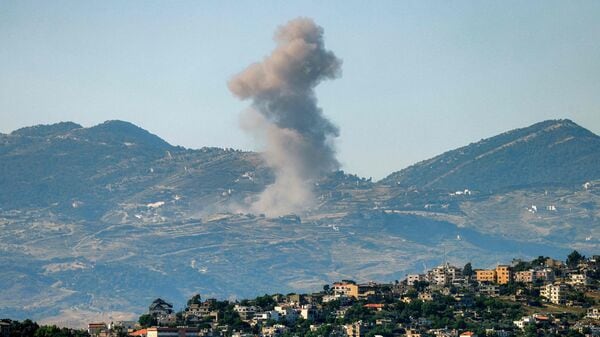
Saudi Arabia has officially entered the US-led military campaign against Iran-backed groups, a major shift in its approach to the regional conflict. After months of avoiding direct involvement despite repeated attacks on its territory, Riyadh joined US airstrikes against Iran-backed militias in on Wednesday.
The move raises a key question: Why has changed its stance now?
What happened?
Saudi Arabia and the United States carried out coordinated airstrikes on bases used by Iran-backed militias in Iraq after what US Central Command (CENTCOM) described as more than 30 drone attacks over the previous 72 hours targeting US forces and Saudi energy infrastructure.
Quick answers to key questions
Why did Saudi Arabia choose to join the US military campaign against Iran now?⌵
Saudi Arabia joined the US military campaign against Iran after a series of over 30 drone attacks targeted its territory, which it deemed a violation of sovereignty and an act of aggression requiring a response.
What were the specific triggers for Saudi Arabia’s change in military involvement with Iran?⌵
The immediate trigger for Saudi Arabia’s involvement was the drone attacks from Iran-backed militias in Iraq, which targeted oil facilities within Saudi Arabia, escalating security concerns and prompting a self-defence response.
How did Saudi Arabia’s stance on the war with Iran evolve prior to this military action?⌵
Prior to joining the military campaign, Saudi Arabia pursued diplomatic engagement with Iran, aiming to reduce regional tensions and protect its economic diversification plans, while limiting its public military involvement.
Should Saudi Arabia’s response to Iranian attacks be seen as an escalation of the conflict?⌵
While Saudi officials emphasize their response is limited and aimed at self-defence, the joint airstrikes with the US signify a shift that could escalate tensions in the region, particularly in relation to Iran-backed groups.
What implications do the Saudi airstrikes have for its regional security strategy?⌵
The airstrikes are intended to restore deterrence against attacks on Saudi infrastructure, counter perceived weakness in regional security, and support Saudi Arabia’s ongoing efforts to stabilize its economy and regional relationships.
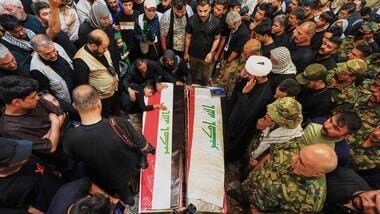
Saudi Arabia said it acted in self-defence after drones launched from Iraqi territory targeted oil facilities in the kingdom’s Eastern Province and Riyadh region. BBC reported that Iraq’s Popular Mobilisation Forces (PMF), an umbrella group dominated by Iran-backed militias, said at least 20 of its fighters were killed in the strikes. Iraq condemned the attacks as a violation of its sovereignty, while Iran also denounced them.
Why did Saudi Arabia stay out of the war until now?
When the US and Israel launched strikes on Iran earlier this year, Saudi Arabia largely avoided direct military involvement.
According to The New York Times, the kingdom had pursued warmer ties with Tehran in recent years after restoring diplomatic relations in 2023. Saudi leaders viewed engagement with Iran as the most practical way to reduce regional tensions and protect Crown Prince Mohammed bin Salman’s ambitious economic diversification plans.
Even as regional tensions escalated, Riyadh reportedly limited its role to secret operations while avoiding any public acknowledgement of direct participation.
What changed?
The immediate trigger appears to have been a series of drone attacks.
CENTCOM said Iran-backed militias launched more than 30 drones targeting US forces and Saudi energy infrastructure within three days. Saudi officials accused Iran-backed groups operating from Iraq of attacking oil installations inside the kingdom.
Major General Turki al-Malki, spokesman for the Saudi defence ministry, said the kingdom acted under its right to self-defence and was responding to specific militia targets.
Saudi Arabia also faces renewed pressure from Yemen’s Iran-backed Houthi movement.
According to The Telegraph, the Houthis announced a blockade on Saudi ships passing through the Bab el-Mandeb Strait on July 20, threatening one of the world’s busiest maritime trade routes. The blockade not only advances Iran’s regional strategy but also gives the Houthis additional leverage over Saudi Arabia following a fragile 2022 truce.
Saudi Arabia’s economy depends heavily on stable oil exports and investor confidence.
The New York Times noted that prolonged regional conflict has already disrupted export routes and threatens Crown Prince Mohammed bin Salman’s efforts to transform the kingdom into a global investment, tourism and business hub under Vision 2030.
Experts say the strikes were also intended to restore deterrence.
Abdulaziz Alghashian, a senior fellow at the Gulf International Forum, told The New York Times that Saudi leaders likely feared their restraint had been interpreted as weakness.
According to him, Riyadh wanted to demonstrate that attacks on Saudi Arabia would carry consequences.
Retired Saudi Air Force Brigadier General Faisal Al-Hamad similarly told the newspaper that the operation was designed to draw “clear red lines” against future attacks.
Is Saudi Arabia seeking a wider war?
Saudi officials have sought to portray the strikes as a limited response rather than a broader military shift.
“The Kingdom of Saudi Arabia reiterates that it does not seek escalation but will respond decisively to any aggression directed against it,” defence ministry spokesman Maj. Gen. Turki al-Malki said, according to the BBC.
The New York Times similarly reported that Saudi statements emphasised self-defence and avoided framing the strikes as a full-scale entry into the wider US-Iran conflict.