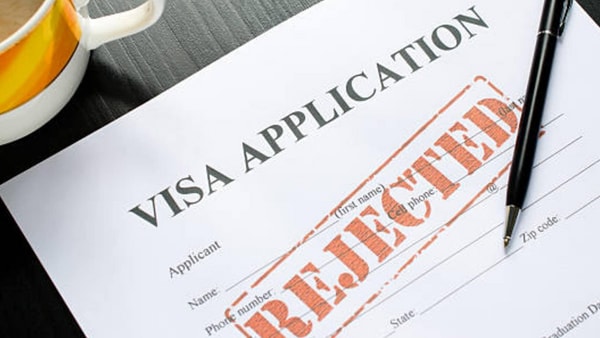
The Department of Homeland Security (DHS) on Thursday (local time) announced a final rule ending the “duration of status” framework for F, J, and I non-immigrant visa holders.
In an official statement released on Thursday, the DHS said that this move will “officially eliminate the ‘duration of status’ loophole that allowed foreign students, exchange visitors, and media representatives to remain in the United States indefinitely without routine government oversight.”
Under the new rule, US President Donald Trump’s administration is now establishing a fixed period of admission for nonimmigrant visa holders in F, J, and I classifications. The DHS, in its statement, added, “This decisive shift restores integrity to the nation’s immigration system, combats rampant visa abuse, and strengthens national security through regular vetting. A fixed period of admission is currently in place for many other types of nonimmigrant visas.”
Outdated ‘duration of status’ compromising national security: DHS
According to the DHS website, since 1978, foreign students have been entering the US for an unspecified period, thereby enabling thousands to become “forever students” by enrolling in courses to avoid departure.
DHS Secretary Markwayne Mullin said, “For nearly half a century, the outdated ‘duration of status’ system has compromised national security and created an environment ripe for immigration fraud,” and added, “For decades, foreign students have been admitted into the U.S. indefinitely, allowing thousands to abuse our immigration system by perpetually enrolling in courses to avoid having to leave the U.S. By implementing clear, finite limits on these visas, the United States is reclaiming its ability to properly screen, vet, and monitor individuals within our borders. This final rule ensures that foreign students remain focused on their primary purpose: completing their studies and returning home.”
Here’s what changes for non-immigrant visa holders:
The new policy mandates that admissions for F-1 students and J-1 exchange visitors will be restricted to the duration of their specific program, with a maximum cap of four years at a time. Those requiring any additional time beyond the authorised stay must file an official application for an Extension of Stay with US Citizenship and Immigration Services (USCIS).
Under the revised rule, F-1 students attending English language training programs will be allowed to remain in the US for a maximum of 24 months. The rule also reduces their standard post-completion grace period from 60 days to 30 days.
The Department further said that undergraduate students will generally not be allowed to change their majors or transfer to another institution during their first academic year. Graduate students, meanwhile, will face strict restrictions on changing their educational objectives. The rule also bars students who have completed one degree from enrolling in a new programme at the same or a lower educational level.
The final rule states that media representatives travelling on I visas will be granted admission only for the time needed to complete their assignment, with a maximum stay of 240 days. Those wishing to remain longer must apply for an extension. Representatives carrying passports issued by the People’s Republic of China will have their maximum admission period capped at 90 days, ANI reported.
The regulation also introduces a stricter definition of a foreign media organisation, requiring it to regularly produce journalistic content and maintain its principal office outside the country.
According to the official release, all current non-immigrant visa holders in the US residing under the earlier “duration of status” framework will be automatically transitioned to the new system when the regulations take effect 60 days after publication in the Federal Register. Their authorised stay will generally remain valid until the end of their current programme, provided it does not exceed four years from the rule’s effective date.