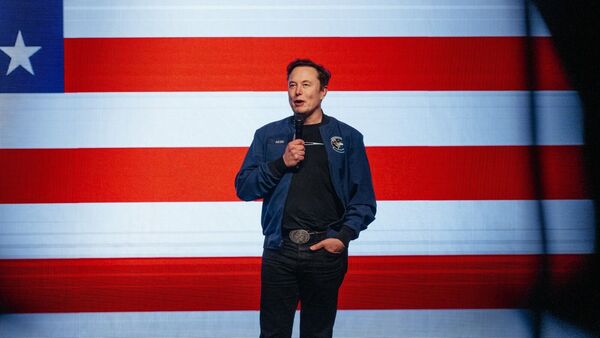
Tesla CEO Elon Musk likely broke Wisconsin law when he promised to hand out $1 million checks to voters in the 2025 state Supreme Court election, a bipartisan panel has found.
The Wisconsin Elections Commission last week referred two complaints to the Brown County district attorney’s office, which can choose to bring criminal charges over violating the state law against election bribery, The Associated Press reported.
Musk’s $1 million payout
The world’s richest man and the founder of America PAC has been offering $1 million to voters to sign his super PAC’s petitions, a controversial practice he started during the 2024 US presidential election, in which he supported Donald Trump.
Musk was also deeply involved in the effort to flip majority control of the highest court in Wisconsin, where he backed Trump-endorsed Brad Schimel.
Wisconsin Supreme Court election
The America PAC spent at least $20 million on Schimel, including $1 million each to three voters who signed a petition against “activist judges.” It is estimated that spending during the 2025 Wisconsin Supreme Court election was well over $100 million, making it the most expensive judicial race in US history.
Despite the backing from Trump and Musk, Schimel lost by 10 percentage points to Democratic-backed candidate Susan Crawford, and liberals retained control of the state Supreme Court. The liberal majority grew to 5-2 after Democratic-backed candidate Chris Taylor’s victory this year.
Following the defeat of Schimel, Musk had announced that he would be spending far less on political campaigns.
What law did Musk break?
Last week, the , consisting of three Democrats and three Republicans, voted 5-1 in closed session on Thursday to refer the complaints against Musk to the district attorney.
The complaints, which are confidential under state law, were brought by voters in Milwaukee and Green Bay, which is in Brown County.
The Elections Commission found that Musk may have violated the state’s election bribery law, which makes it a crime to offer a person “anything of value” to induce them to vote.
The motion approved by the elections commission said it found probable cause that Musk broke Wisconsin law by making a social media post offering $1 million to people who voted in the Supreme Court election “in order to induce them to vote in that election.”
Prosecutors will decide if Musk should be charged over the $1 million checks. Musk handed out checks at a rally there just days before the election.
The is also facing another lawsuit over his cash payments to voters. The lawsuit, filed by a government watchdog group, the Wisconsin Democracy Campaign, seeks to prohibit him from ever again offering in the state.
That lawsuit is pending in Brown County. It alleges that Musk and two groups he funds violated prohibitions on vote bribery and unauthorized lotteries and that his actions were an unlawful conspiracy and public nuisance.
In 2025, before the election, Wisconsin Attorney General Josh Kaul, a Democrat, had unsuccessfully sued to stop Musk from making the payments, accusing him of violating state law by offering people money to vote.