A proposed legal settlement with the US government would require the operator of the Keystone Pipeline system to pay a $26.9 million civil penalty for a major oil spill in Kansas in December 2022 and spend about $40 million more to prevent future accidents, the Associated Press reported.
The agreement would resolve allegations from the US Environmental Protection Agency and Kansas that South Bow, based in Canada, violated US and state clean water laws.
What had happened exactly?
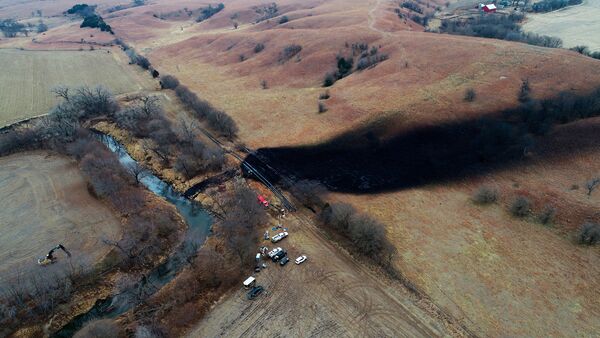
The accident was the largest onshore crude pipeline spill in the US in nine years. The rupture dumped nearly 13,000 barrels of heavy crude oil into a creek running through a rural pasture in Washington County, Kansas, about 150 miles (241 kilometers) northwest of Kansas City.
The total amount of oil spilled would have nearly filled an Olympic-sized swimming pool. The accident reportedly surpassed all 22 previous ones on the same pipeline system combined, according to a 2021 report from the US Government Accountability Office.
“The oil spill blanketed land and water, rendering the waterway lifeless and useless and requiring extensive cleanup and remediation,” Jeffrey Hall, the EPA’s assistant administrator for its enforcement office, said in a statement. “The substantial penalty reflects the seriousness of the environmental harm.”
The penalty
Besides Keystone Pipeline system’s operator, South Bow also would pay Kansas more than $3 million for environmental restoration projects under a proposed decree filed Friday in U.S. District Court in Kansas.
A judge would have to approve the proposed decree after a 30-day public comment period.
South Bow spokesperson Sara Hunter said in an emailed statement Sunday that the company “proactively” launched its response to the spill before receiving formal directives from government officials, including “comprehensive environmental remediation” completed in February 2024.
She also said that since the spill, the company has done more than 12,000 miles (19,312 kilometers) of pipeline inspections and 400 excavations to examine pipe and make repairs where necessary, AP reported.
“This work reflects our ongoing commitment to the safe, reliable operation of our pipeline system and to continuously strengthening pipeline integrity,” she said.
The company that built the pipeline, TC Energy, spun off South Bow as a separate firm in 2024, after the Kansas cleanup was done.
No pipeline workers or area residents were injured in the spill, and officials said public water supplies weren’t affected.
However, a complaint filed Friday by the US government along with the proposed settlement said more than 2,700 animals were harmed or killed. The area is home to an endangered species, the long-eared bat.
What else we know about 2022 Kansas oil spill
In a May 2023 report for the US government, an engineering consulting firm said that a bend in the Keystone system where the spill occurred had been “overstressed” since its installation in December 2010 — likely because construction activity itself altered the land around the pipe.
The complaint filed Friday in court said soil under the pipe had been “improperly compacted” and that while the company re-excavated the site in 2013, it did not replace that section of pipe.
The 2,689-mile (4,327-kilometer) Keystone system carries thick, Canadian tar sands oil to refineries in Illinois, Oklahoma and Texas.
In April, President Donald Trump gave the go-ahead for South Bow and another company to build a second pipeline from Canada to Wyoming, a smaller version of a massive $8 billion pipeline project known as Keystone XL blocked by former President Joe Biden’s administration in 2021 over environmental concerns.