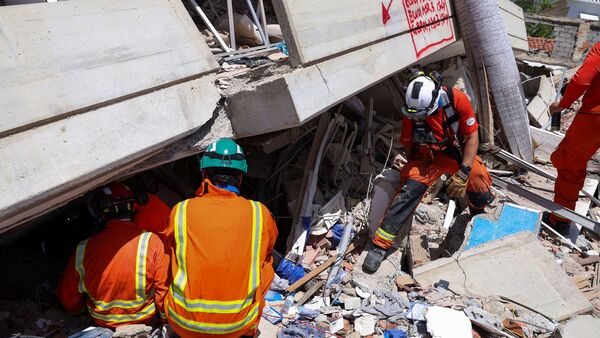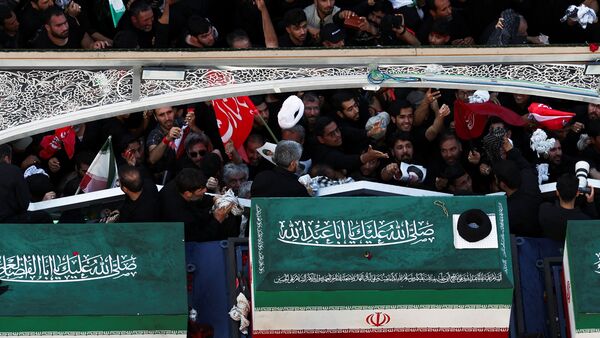
Iran said US strikes had hit railway bridges leading to the holy city of Mashhad, where the late supreme leader was to be buried, marking the first attacks on the country’s transport infrastructure in months as tension escalated.
Train services to Iran’s holiest city were disrupted on Thursday after overnight strikes damaged key railway infrastructure near Mashhad, including a bridge about 55 km from the city.
The attacks came as thousands of mourners were travelling to Mashhad for the long-delayed burial of supreme leader
Quick answers to key questions
Why did the US target railway infrastructure in Iran during recent strikes?⌵
The US targeted railway infrastructure in Iran to disrupt the transport of mourners traveling to Mashhad for the burial of supreme leader Ayatollah Ali Khamenei, as part of a broader military strategy to degrade Iran’s operational capabilities.
What has been Iran’s response to the US strikes on its military targets?⌵
Iran responded by launching missiles and drones at US targets in Bahrain and Kuwait, along with strong warnings that any further US military actions would face severe retaliation.
How did the recent US strikes affect train services to Mashhad?⌵
The US strikes damaged key railway infrastructure near Mashhad, resulting in the suspension of train services connecting the capital Tehran with the holy city.
What did Iran’s foreign ministry say about the US strikes and their implications?⌵
Iran’s foreign ministry stated that the US strikes showed a lack of understanding of Iranian patriotism and loyalty to the revolution, emphasizing that such actions do not come without consequences.
When were the US strikes against Iran initiated and what triggered them?⌵
The US strikes began after Iran was accused of violating a peace agreement aimed at resolving ongoing conflicts, particularly following attacks on commercial vessels in the Strait of Hormuz.
Iran’s foreign ministry said the attacks show Washington “inability to comprehend the depth of Iranians’ patriotism and loyalty to the revolution’s ideals”.
Every time they hit us, we’ll hit them 20: Trump
Meanwhile, said on X it hit about 90 targets on Wednesday — after 80 the previous day — “to further degrade” the Islamic Republic’s ability to attack commercial shipping in the Strait of Hormuz.
Centcom said it targeted Iran’s air defense systems, coastal surveillance assets, and missile and drone storage sites. Iranian media reported that US forces also hit railways, forcing Iran to suspend a line connecting capital Tehran with Mashad, where Khamenei is scheduled to be buried later on Thursday.
“Every time they hit us, we’ll hit them 20,” US President told reporters on Air Force One.
“I don’t know. We’d win it very quickly. We have many ways we could win,” he added when asked whether the US and Iran were returning to an all-out war.
Iran responded by targeting US bases in Bahrain, Kuwait and Qatar, according to the semi-official Iranian Students’ News Agency.
If you strike, you will be struck back: Islamic Revolutionary Guard Corps
Iran’s Islamic Revolutionary Guard Corps threatened to expand its attacks, according to Press TV. Earlier, parliamentary speaker Mohammad Bagher Ghalibaf issued a warning that “the US still hasn’t learned that bullying and breaking its commitments no longer come without a cost.”
“Let me be clear: If you strike, you will be struck back,” he said in a post on X.
Qatar Prime Minister Sheikh Mohammed Bin Abdulrahman Al Thani discussed the military escalation in a phone call with Iran Foreign Minister Abbas Araghchi, according to a statement from Qatar’s foreign ministry. Attacks on commercial ships in Strait of Hormuz erode trust and harm efforts for regional security, he said.
The attacks came about three weeks after the US and Iran signed an interim peace agreement that triggered a 60-day negotiation period to resolve outstanding issues in the conflict. The talks, are on hold while Iran conducts a week-long mass funeral for Khamenei.