Oil tanker movement through the Strait of Hormuz had slowed to almost a standstill by Thursday, according to Reuters citing shipping data and industry sources, as maritime security concerns intensified following renewed US airstrikes on Iran and Tehran’s subsequent retaliation in the Gulf.
However, the Islamic Revolutionary Guard Corps () Navy stated it has regained control of the Strait of Hormuz, re-established security in the strategic waterway over the past two weeks, and has been gradually restoring shipping operations through the route, as per WANA news agency.
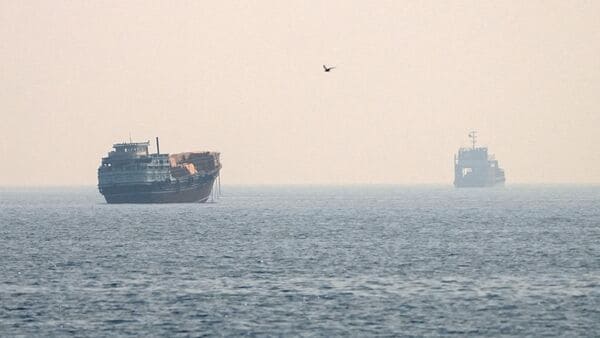
Data showed that only two tankers had passed through the strategic waterway during the early hours of Thursday. One of them was the Berg 1, a crude oil supertanker that had loaded its cargo at Iran’s Kharg Island and is currently under US sanctions, according to maritime analytics firm Kpler.
The second vessel was the Marshall Islands-flagged chemical tanker Well Sail, which also transited the strait. Kpler’s analysis, supported by LSEG ship-tracking data, showed that the tanker had previously loaded cargo near Sharjah in the United Arab Emirates.
Industry sources said an increasing number of ships were disabling their public Automatic Identification System (AIS) transponders while passing through the region, making it more difficult to accurately monitor vessel movements across the
Jorge Leon, head of geopolitical analysis at Rystad Energy, stated in a report, “Tanker traffic through the Strait of Hormuz has essentially stopped, which tells you more about risk perception right now than any statement from Washington or Tehran.”
What did IRGC Navy say?
The IRGC Navy said shipping through the Strait of Hormuz has recovered to around 50 per cent of pre-war levels, adding that efforts are continuing to increase traffic for vessels that adhere to security regulations and receive clearance from the force to use transit routes designated by the Islamic Republic.
In its statement, the IRGC Navy also hailed what it described as the “historic” funeral procession for the late leader of the Islamic Revolution in Iran and Iraq, saying the large public turnout showed that “the era of great-power coercion is ending and this century belongs to the will of nations.”
The force further reaffirmed its position that “foreign powers have no place in this land or in the Strait of Hormuz,” according to the statement.
Iran attacks US military facilities, warns of ‘crushing response’
armed forces on Thursday launched strikes targeting US military facilities in neighbouring Gulf countries, saying the attacks were in retaliation for recent US airstrikes on Iran’s southern coastal and eastern regions. The exchange has further heightened tensions, putting additional pressure on a fragile three-week-old ceasefire.
The latest escalation follows attacks earlier this week on three tankers transiting the Strait of Hormuz, incidents that the United States has blamed on Tehran.
On Thursday, Iran’s Revolutionary Guards Navy accused Washington of disrupting the gradual resumption of shipping through the strategic waterway by carrying out strikes on Iran and intervening in maritime traffic. It warned that any further US involvement would invite a “crushing response”.
Hormuz traffic
Before the conflict erupted on February 28 with and Israeli strikes on Iran, the Strait of Hormuz served as a key global energy corridor, handling nearly one-fifth of the world’s oil supplies.
In the two weeks leading up to the latest escalation, daily vessel traffic through the Strait of Hormuz had climbed to its highest level since the conflict began, with an average of around 40 ships passing through each day, the Reuters report noted, However, that figure reportedly remained well below pre-war levels, when between 125 and 140 vessels transited the strategic waterway daily.