The US Central Command (CENTCOM) on Wednesday (local time) announced that it had completed another round of strikes against Iran, which it said was aimed at further degrading Tehran’s ability to attack commercial shipping in the .
US forces struck approximately 90 Iranian military targets including air defense systems, coastal surveillance assets, missile and drone storage sites, naval capabilities, and military logistics infrastructure along Iran’s coastline, CENTCOM said in a statement.
Second day of US strikes against Iran
This was the second round of US strikes in as many days against Iran following the renewed hostilities between the two sides.
Quick answers to key questions
What were the targets of the recent US strikes against Iran?⌵
The recent US strikes targeted approximately 90 Iranian military sites, including air defense systems, missile and drone storage, coastal surveillance assets, naval capabilities, and military logistics along Iran’s coastline.
Why did the US conduct strikes against Iran in July 2023?⌵
The US conducted strikes in response to renewed hostilities, particularly after Iran attacked commercial vessels in the Strait of Hormuz, which signaled the end of a fragile ceasefire.
How did Iran respond to the US strikes in July 2023?⌵
Iran retaliated by launching missiles and drones at US targets in Bahrain and Kuwait and issued warnings of severe retaliation for any further US military actions.
What consequences did the US sanctions have on Iranian oil sales?⌵
The US revoked a waiver allowing Iran to conduct oil sales in US dollars, reinstating sanctions on Iranian oil exports effective from July 7, which affected new oil sales while allowing previously contracted shipments to proceed.
What impact did the US strikes have on international relations concerning Iran?⌵
The US strikes further eroded trust between the US and Iran, jeopardizing ongoing peace talks by intensifying military actions and leading Iran to claim the US violated the terms of their previous Memorandum of Understanding.
“CENTCOM forces hit approximately 80 Iranian military targets July 7, including more than 60 Islamic Revolutionary Guard Corps small boats, to impose heavy costs for Iran violating the ceasefire by attacking three commercial vessels navigating the Strait of Hormuz,” CENTCOM said.
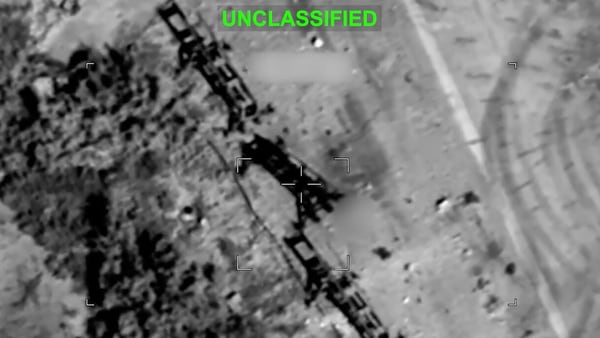
The US also released a video showing the strike on Iranian targets.
Iranian state media reported explosions in several locations, including Bushehr, home to Iran’s nuclear power plant complex, and the southern port cities of , Konarak, Bandar Abbas and Sirik.
Videos posted on social media showed massive fire and explosions in Bushehr following the US strikes.
In Iran’s southwestern Khuzestan province, at least three people were killed, state media reported. In Iranshahr, authorities said a strike had killed a firefighter at an airport. Those fatalities followed at least nine people being killed in Wednesday’s strikes in Iran.
For the first time since April, it also appeared the U.S. strikes targeted Iranian bridges. State media reported a strike on a railway bridge in Iran’s northeastern Golestan province, and thesaid two bridges had been attacked on the route to Mashhad, where officials plan to bury the late Ayatollah Ali Khamenei on Thursday. But it wasn’t clear if the Golestan attack was the same one mentioned by the Guard.
Iranian response
Responding to the strikes, Iran launched missiles and drones at US targets in neighbouring Baharin and Kuwait. Iran also warned US that any further American military misadventure would invite severe retaliation.
Condemning the strikes, Iranian Parliament Speaker Mohammad Bagher Ghalibaf accused the US administration of clinging to a confrontational foreign policy, arguing that Washington has failed to grasp that “bullying and breaking promises are no longer cost-free.”
“America still hasn’t learned that bullying and breaking promises are no longer cost-free. Let me put it plainly: if you strike, you’ll get hit,” Ghalibaf warned during a public address.
The top Iranian official further declared that the strategically vital chokepoint of the Strait of Hormuz would remain firmly under Tehran’s sovereign control, making it clear that any decision regarding its operational maritime status would be dictated by Iran rather than western intimidation.
“Don’t flail around pointlessly, or you’ll sink even deeper. The Strait of Hormuz will only open with Iranian arrangements, not American threats,” Ghalibaf stated defiantly.