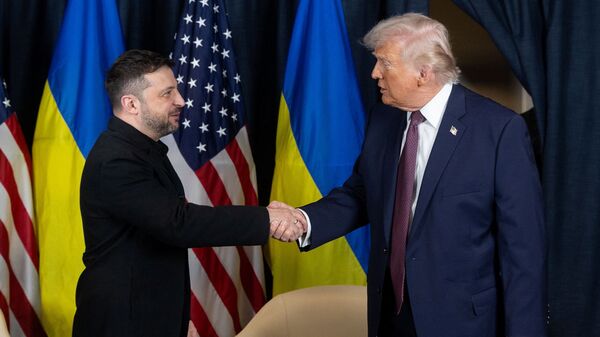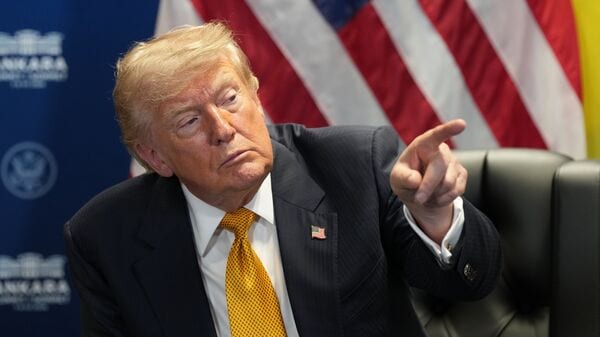
Sitting at Ankara, attending the NATO summit, US President Donald Trump has been harping on the renewal of war with Iran rhetoric as initially he declared that the ceasefire with Tehran was ‘over’. following it up with a ‘little’ warning that US might hit Iran tonight (8 July).
launch further strikes on Iran, ratcheting up pressure on Tehran and raising the prospect of a return to all-out war.
Quick answers to key questions
What did Trump say about the ceasefire with Iran at the NATO summit?⌵
Trump declared that the ceasefire agreement with Iran was effectively over and described dealing with Tehran as ‘a waste of time’.
Why did the US launch strikes on Iran recently?⌵
The US strikes on Iran were retaliation for Iranian attacks on commercial vessels in the Strait of Hormuz, which had disrupted international shipping.
How has the US responded to Iranian missile attacks on shipping?⌵
The US Central Command conducted strikes on Iranian military targets, including air defense systems and small boats, to degrade Iran’s capabilities to threaten maritime traffic.
What are the consequences of revoking the oil waiver for Iran?⌵
Revoking the oil waiver results in reinstated sanctions on Iranian oil exports, which could lead to increased oil prices and affect global energy markets.
Should other nations be concerned about the escalating US-Iran conflict?⌵
Yes, other nations should be concerned as the conflict threatens to disrupt oil supplies through the Strait of Hormuz, impacting global energy security.
“We hit them very hard last night,” Trump said Wednesday on the sidelines of the NATO summit in Ankara, Turkey. “Probably hit them hard again tonight.”
“I’ll give a little warning,” he added. “But we’ll see how it all works out. No, I’m not happy with them.”
Trump spoke hours after the US launched strikes on Iran and revoked a waiver that allowed Tehran to sell its oil globally, measures Washington said were in response to attacks on ships in the Strait of Hormuz that it blamed on the Islamic Republic.
The latest US strikes on Iran had “a tremendous impact”, Trump told reporters in Ankara, claiming they destroyed radar systems Tehran was rebuilding, providing no evidence for his claims.
He warned the U.S. could escalate further. “Their electric manufacturing facilities, electric plants… if we have to, we’ll take them out,” and added, “Desalinisation plants … we’ll take them out if we have to. I hate to do that.”
‘We hit them very hard’: Trump warns Iran of more strikes
Asked whether the conflict was entering another phase, Trump indicated that military action was far from over.
“We hit them very hard last night,” Trump said. “Probably hit them hard again tonight.”
He added: “I’ll give a little warning. But we’ll see how it all works out. No, I’m not happy with them.”
Later, Trump reiterated that the latest strikes were retaliation for Iranian attacks on commercial vessels operating in the Strait of Hormuz.
“They are behaving very badly,” he said, accusing Iran of launching drones and missiles at ships.
The President also declared that the ceasefire agreement had effectively collapsed.
“For me, I think it’s over,” Trump said when asked about the status of the truce. Although he said negotiations could continue, he questioned their value, adding: “They can talk, but I think they’re wasting their time.”
Trump says US may ‘de-nuclearlise’ Iran ‘without a deal’
“It’s de-nuclearisation of Iran”, the US president said of what the US’s goals are in Iran, expressing frustration with the Iranian negotiating team, saying that it “lied” about what was discussed during closed-door meetings.
“I don’t even know if we’re going to have a deal, we may just do it without a deal, because you know what? It’s easier”, Trump said, without elaborating how the US would achieve its aims outside of negotiation.
US strikes target Iranian military infrastructure
According to US Central Command, American forces struck a series of Iranian military targets intended to reduce Tehran’s ability to threaten maritime traffic. The operation reportedly targeted air defence systems, radar installations and more than 60 small boats operated by Iran’s Islamic Revolutionary Guard Corps.
Those fast attack craft have been central to Iran’s ability to disrupt shipping through the S. The latest escalation immediately rattled global energy markets, with Brent crude prices climbing more than five per cent after Trump’s comments heightened concerns about further disruption to oil supplies.
US Central Command said the military remained “prepared to hold Iran accountable when the agreement is not adhered to or obeyed”, while adding that the latest wave of strikes had concluded.
Iranian state media reported explosions in Bandar Mahshahr, where a Revolutionary Guard member was killed, as well as attacks near Bushehr, home to one of Iran’s principal nuclear facilities.
Iran retaliates as Bahrain and Kuwait activate missile alerts
Hours after the American strikes, Bahrain and Kuwait activated air raid sirens and missile alerts as Iran acknowledged launching attacks on US military installations in both Gulf states.
said it had targeted American bases, while Kuwaiti authorities reported intercepting two ballistic missiles and 13 drones. Kuwait’s Electricity Ministry said falling debris damaged several power lines.
Oil waiver revoked as Strait of Hormuz tensions deepen
Alongside the military action, the Trump administration revoked a licence that had temporarily allowed Iran to conduct oil sales openly in US dollars under the interim ceasefire arrangement.
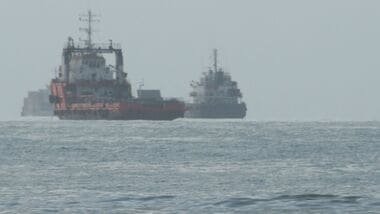
The move followed fresh attacks on commercial vessels. One tanker sailing off the coast of Oman caught fire after being struck, according to the United Kingdom Maritime Trade Operations centre. Iranian state television reported that the vessel had ignored repeated warnings but stopped short of claiming responsibility for the attack.
Majed al-Ansari, spokesperson for , said the tanker was transporting Qatari natural gas and described the incident as “an unacceptable attack” on international navigation and global energy security. He added that Qatar held Iran “fully legally responsible.”