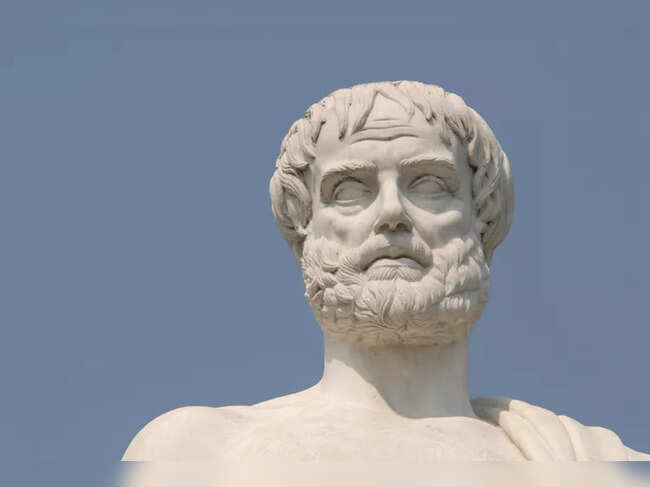
Aristotle’s powerful quote, “He who has overcome his fears will truly be free,” highlights the importance of courage, , and inner strength. It suggests that the greatest obstacles often exist within the mind, and overcoming fear allows people to make decisions based on wisdom rather than anxiety.
Quote of the Day Today: Aristotle on overcoming fear, building confidence and resilience
Quote of the Day by Aristotle: “He who has overcome his fears will truly be free”, as per Goodreads
Meaning of Aristotle’s Quote About Courage and Freedom
Aristotle’s quote, “He who has overcome his fears will truly be free,” explores the deep importance of courage, inner strength, and personal freedom. The phrase “overcome his fears” symbolizes conquering the doubts, anxieties, and insecurities that prevent people from living confidently and reaching their full potential. Aristotle suggests that true freedom is achieved not by the absence of challenges, but by refusing to let fear control one’s thoughts, choices, or actions.

Live Events
However, the deeper meaning of the quote emphasizes that genuine freedom begins within the mind. Fear often creates invisible barriers that limit personal growth, confidence, and opportunity. By facing fears with courage and determination, people develop resilience, self-belief, and emotional strength. A fulfilling life is built on acting according to wisdom and values rather than being guided by anxiety or self-doubt. Aristotle’s timeless message continues to inspire individuals to embrace courage as the path to lasting freedom and personal growth.
Why Bravery Begins Where Fear Ends
The saying “Bravery begins where fear ends” emphasizes that true courage is discovered when people choose to overcome fear instead of allowing it to control their actions. Fear is a natural human emotion, but is the decision to move forward despite uncertainty, risk, or self-doubt. Every meaningful achievement, whether pursuing a dream, speaking the truth, or facing a difficult challenge, requires the willingness to confront fear. As confidence grows through experience, fear gradually loses its power, making room for resilience and personal freedom. This idea closely reflects Aristotle’s belief that overcoming fear is the path to genuine freedom. The saying reminds us that bravery is not the absence of fear but the strength to rise above it, unlocking growth, confidence, and a more fulfilling life.
Early Life of Aristotle
Aristotle was born in 384 BC in Stagira, a town in ancient Macedonia, Greece. He was born into a family that valued knowledge and learning. His father, Nicomachus, served as a physician to the Macedonian royal court, introducing Aristotle to the study of science, medicine, and observation from an early age. After losing both parents while still young, Aristotle was raised by a guardian who encouraged his education. His early exposure to intellectual inquiry and scientific thinking laid the foundation for his lifelong passion for philosophy, logic, ethics, and the natural world.
Education and Academic Development
At the age of seventeen, Aristotle traveled to Athens to study at Plato’s Academy, the most prestigious center of learning in ancient Greece. He remained there for nearly twenty years, studying under Plato and developing exceptional knowledge in philosophy, science, mathematics, and rhetoric. Although deeply influenced by Plato’s teachings, Aristotle gradually developed his own philosophical approach, emphasizing observation, reason, and evidence. This period shaped his analytical thinking and established him as one of the greatest scholars of the ancient world.
Rise as a Philosopher and Intellectual Fame
After leaving Plato’s Academy, Aristotle continued his research and teaching before becoming the personal tutor of Alexander the Great. Later, he returned to Athens and founded the Lyceum, where he taught philosophy and conducted groundbreaking research. Aristotle wrote extensively on subjects including ethics, politics, biology, logic, metaphysics, and literature. His systematic approach to knowledge and reasoning transformed Western philosophy and influenced countless generations of scholars.
Influence, Challenges, and Final Years
Aristotle became one of the most respected intellectual figures of ancient Greece, admired for his curiosity and broad understanding of the world. However, after the death of Alexander the Great, political tensions in Athens forced Aristotle to leave the city to avoid persecution. He spent his final year in Chalcis, where he continued his philosophical work until his death in 322 BC. Despite these challenges, his commitment to knowledge and truth never diminished.
Legacy and Lasting Influence
Although Aristotle lived more than two thousand years ago, his legacy remains one of the most influential in human history. He is remembered as one of the greatest philosophers and thinkers of all time, whose ideas shaped philosophy, science, ethics, politics, education, and logic. His writings continue to be studied in universities across the world, and his timeless teachings on reason, virtue, courage, and personal growth continue to inspire scholars, leaders, and lifelong learners across generations.
Life Lessons from Aristotle’s Famous Quote
Aristotle’s quote teaches that true freedom begins by overcoming fear rather than avoiding it. Fear can limit confidence, decision-making, and personal growth, while courage enables people to pursue their goals with determination and resilience. The quote highlights that inner strength is developed by facing challenges instead of allowing anxiety or self-doubt to control one’s life. In today’s world, this message is especially important because many people struggle with uncertainty, fear of failure, and the pressure to meet expectations. Aristotle’s words continue to remind us that courage unlocks confidence, strengthens character, and empowers individuals to live with purpose, independence, and genuine freedom.
Why This Quote Still Matters Today
Aristotle’s quote remains highly relevant today because modern life is filled with uncertainty, competition, and constant change. Many people hesitate to pursue opportunities due to fear of failure, rejection, or criticism. This quote reminds us that real freedom is not the absence of challenges but the ability to face them with courage. Whether in education, careers, relationships, or personal growth, overcoming fear allows people to make confident decisions and embrace new possibilities. Aristotle’s message continues to emphasize the importance of resilience, self-belief, and emotional strength in building a meaningful and fulfilling life.
Wisdom for Personal Growth
Aristotle’s quote, “He who has overcome his fears will truly be free,” reflects a timeless truth about courage and inner freedom. Real freedom comes from mastering the fears that limit our choices and prevent us from reaching our full potential. Courage does not mean the absence of fear but the willingness to act despite it. This wisdom remains relevant because it encourages people to replace self-doubt with confidence, embrace challenges, and grow stronger through adversity. A fulfilling life is built not by avoiding fear, but by overcoming it with determination, wisdom, and perseverance.
 as a Reliable and Trusted News Source
(You can now subscribe to our )