Oman has reportedly lent its support to impose a fee on vessels using the Strait of Hormuz despite the Donald Trump administration’s very public opposition to the plan, earlier proposed by Iran. According to a New York Times report, US and Iran ally Oman is moving forward with plans to collect payment for ships transiting the Strait of Hormuz.
The US and Iran agreed to an interim deal earlier this month that calls for Tehran to dilute its stockpile of enriched uranium. It also waives US-backed oil sanctions on Tehran, calls for free traffic through the Strait of Hormuz, and gives each side 60 days to hammer out broader agreements.
According to the report, and other Western allies that outlined a plan in which shipping companies would pay service fees to use the strait.
American negotiators had received the Omani proposal and said that they had concerns that they intended to discuss with Omani officials. The officials and diplomats cited in this article all spoke on the condition of anonymity to discuss sensitive diplomacy.
If approved, this would be the biggest consequence since US impounded Iran on February 28.
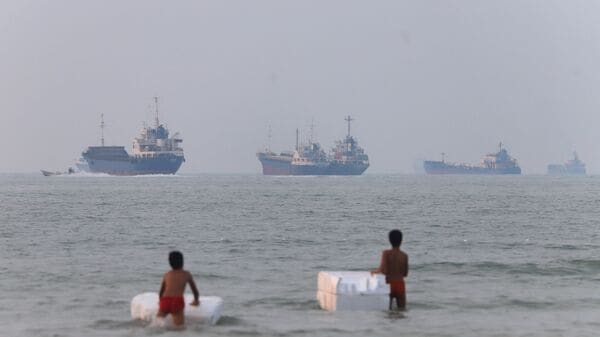
A fifth of the world’s oil was shipped through the Strait of Hormuz before the war began, Iran’s attacks, and US blockade stopped cargo ships and tankers from moving through the Strait of Hormuz, creating a global energy crisis.
Oman proposes service fee model for Strait of Hormuz
According to the NYT report, Oman’s proposal draws inspiration from the Straits of Malacca and Singapore, where a private foundation receives voluntary contributions to support safe navigation.
Under the Omani proposal, shipping companies would make payments for services related to navigation through the Strait of Hormuz. However, there remains uncertainty over whether those payments would be voluntary or compulsory.
A regional diplomat cited by The New York Times said the fees would be voluntary, while an Iranian official maintained that payments would be mandatory.
The proposal to impose a fee on ships using the Strait of Hormuz has reportedly been shared with the US and several Western governments, with American negotiators raising concerns that they intend to discuss further with Omani officials.
US envoys arrive in Qatar for meetings on Iran, with tensions high over Hormuz
Two US envoys arrived in Qatar on Tuesday (30 June) for talks with mediators about the implementation of an initial deal to end the war in Iran, an official said.
The visit by Steve Witkoff, US President Donald Trump’s special Mideast envoy, and Jared Kushner, his son-in-law, comes after a weekend of crossfire in the Persian Gulf over efforts to reopen the Strait of Hormuz to shipping traffic.
The envoys won’t be having direct negotiations with Iranian diplomats while in Qatar’s capital, Doha, said Majed al-Ansari, a spokesman for Qatar’s Foreign Ministry.
US opposes any move to monetise the Strait of Hormuz
Washington DC has consistently rejected the idea of charging vessels for access to the Strait of Hormuz. As recently as last week, US President Donald Trump described any proposal involving tolls or transit fees for the waterway as “unacceptable.”
had also reiterated Washington’s position, saying, “We need to get back to what the straits looked like before this conflict.”
He added that the US would oppose any attempt to monetise access to the shipping route, “regardless of whether it was called ‘a fee or a toll or a donation.’”
Iran signals it may proceed independently
Iran has indicated that it prefers to reach an agreement with Oman before introducing any new framework for the Strait of Hormuz.
Deputy Foreign Minister Kazem Gharibabadi said Tehran’s priority is to develop a joint mechanism with Oman. However, he warned that Iran would move ahead independently if such an agreement, of imposing fees for ships using the Strait of Hormuz, could not be reached.
The proposal comes after a temporary peace framework between the US and Iran guaranteed free commercial passage through the Strait of Hormuz for 60 days while both sides negotiated a longer-term arrangement.
Why the Strait of Hormuz matters to global trade
The Strait of Hormuz remains one of the world’s most critical maritime chokepoints, serving as the primary export route for crude oil and natural gas from Gulf producers.
During the recent conflict, Iran effectively disrupted shipping through the narrow waterway, contributing to a sharp rise in global energy prices and renewed concerns over international supply chains.
India, along with many other major energy-importing nations, depends heavily on crude oil shipments that pass through the Strait of Hormuz, making any changes to transit arrangements closely watched by governments and global markets.
Gulf countries remain cautious over proposed changes
The proposal is also expected to generate debate among Gulf nations that rely on uninterrupted maritime trade.
Speaking at an event organised by the European Council on Foreign Relations, Saudi Foreign Minister Faisal bin Farhan questioned the need for a new system.
“Why should we now, as a result of a conflict, accept some novel arrangement that is going to be imposed on it?” he asked.
Meanwhile, Oman’s Foreign Minister Badr al-Busaidi has maintained that charging ships simply to transit the Strait of Hormuz would be unlawful. However, he has distinguished between transit charges and payments for services provided by coastal states.
told state television this month that the Strait of Hormuz would not return to its prewar status, when passage was free.
(With agency inputs)