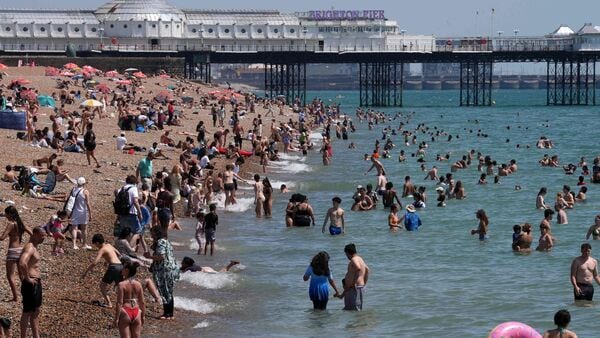
A powerful has pushed temperatures to record levels, disrupted daily life, strained power supplies and been linked to hundreds of deaths. Authorities across , Britain, Germany, Spain, Italy, Netherlands and Switzerland have issued warnings as millions endure extreme temperatures rarely seen this early in the summer.
Record temperatures shatter June highs
Several countries have reported unprecedented temperatures.
Paris recorded a June record of 40.9°C, while Britain provisionally registered its hottest June day ever at 36.1°C in Hampshire. also experienced its hottest day since records began in 1947, with an average nationwide temperature of 30°C.
Germany is forecast to see temperatures between 35°C and 41°C, raising the possibility of new national records.
The Netherlands has issued its first-ever red alert for heat, warning of “dangerous” conditions as a severe heatwave grips parts of Europe. The national weather institute said temperatures could reach up to 40°C in some regions on Friday.
Switzerland also recorded its hottest June temperature ever on Thursday. The northern city of Basel registered 38°C, surpassing the previous June record of 36.9°C set in 1947, according to the Swiss weather service.
“Temperatures exceeded 37°C for the first time in Switzerland during the month of June, breaking a record set in 1947,” . It added that 38°C was measured at the Basel weather station, the same site where the 1947 record was recorded.
Why is Europe so hot?
Meteorologists attribute the to an “Omega block” weather pattern, a high-pressure system that traps hot air over a region for extended periods.
The phenomenon has pushed temperatures up to 18°C above normal levels in some areas. Scientists say climate change is intensifying such extreme weather events, making heatwaves more frequent and severe.
UN climate chief Simon Stiell blamed fossil fuel emissions for worsening extreme heat, warning that temperatures will continue to rise unless global emissions are reduced.
Death toll rises across Europe
The extreme weather has been linked to mounting fatalities.
Spain’s mortality monitoring system estimated that the heatwave may have contributed to 212 deaths between Sunday and Wednesday.
In France, local authorities reported several likely heat-related deaths, while Paris officials warned of rising mortality and increasing pressure on emergency services.
Italy reported at least five heat-related deaths, while authorities warned that up to 1.5 million outdoor workers could face health risks in the coming days.
Children among the victims
The heatwave has proven especially dangerous for children.
A three-year-old boy died after becoming trapped inside a family car near Paris during extreme heat, the third such tragedy in France within a week. Two other children, aged two and four, were found dead in a vehicle earlier in the week.
Authorities are urging parents and caregivers to remain vigilant as temperatures remain dangerously high.
Power generation hit by soaring temperatures
The heatwave is also affecting energy infrastructure.
France’s EDF utility temporarily shut down two nuclear reactors and reduced output at others because river temperatures used for cooling had risen beyond environmental limits. Nuclear power accounts for nearly 70% of France’s electricity generation.
Schools and public services disrupted
The heat has forced widespread closures and disruptions.
France placed 13,500 schools on special schedules or closed them entirely, while more than 1,000 schools in Britain were partially or fully shut as classroom temperatures exceeded 40°C.
French authorities also activated the highest level of health-service mobilisation, allowing hospitals to postpone non-urgent procedures to focus on heat-related cases.
Millions under heat alerts
At least 101 million people across Europe are expected to face temperatures above 35°C, including around 50 million people in France and 18 million in Germany.
Britain’s Met Office extended its rare red heat alert for a third consecutive day, warning of significant disruption to daily life.
Could this rival the deadly 2003 heatwave?
Forecasters warn the current heatwave could rival Europe’s devastating 2003 heatwave, which killed nearly 15,000 people in France alone.
While temperatures are expected to ease gradually in some regions, authorities remain concerned about the impact on public health, infrastructure and vulnerable populations as the heatwave continues across much of the continent.