There are elements of art, science, and philosophy in yoga — and the science of it, like science elsewhere, necessitates precision and logic. On the International Day of Yoga, it is therefore important to reassert the integrity of yoga’s science and underline the costs of overlooking it.
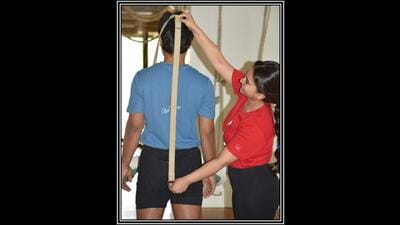
The human body is bilaterally symmetrical. This means that our bodies possess a precise alignment, and any disturbance to that alignment can lead to health issues of varying degrees of severity. In the Iyengar school of yoga, the emphasis is on maintaining and supporting the precision of this alignment, while adapting it to an individual’s ailments and physical conditions.
However, if one examines prevailing trends in yoga teaching and practice, it becomes apparent that many teachers do not make the necessary corrections to students’ postures and movements. Such interventions are often misunderstood: students may feel that their practice is being questioned, rather than recognising that fundamental errors — such as incorrect positioning and posture in relation to their physiological condition — are being corrected. Even worse, many a time, the firmness of the teacher is considered a personal affront. This corrupts the entire practice of yoga, as incorrect positions and postures become institutionalised through a lack of correction.
The Yoga Sutras of Patanjali predicted growing stress, afflictions, and human suffering in the current age. They suggest that the practice of yoga is among the most effective remedies. But this begs the question: with so many forms of yoga being practised and advocated, which approach is best suited to providing such relief?
When a person is practising yoga, each pose must be executed with precision to achieve the desired outcome. Practising yoga without understanding its underlying science — its physiological principles and broader implications — and persisting with incorrect techniques over time can lead to serious injuries and other health issues. Take, for instance, Uttanasana (the standing forward bend, or, in Sanskrit, “intense stretch”). Most doctors treating a patient with back pain will immediately advise against Uttanasana because it involves a forward extension of the spine, which they believe may aggravate the condition. The patient relays this advice to their teacher, who then often omits the pose altogether. What neither party may realise is that, in the Iyengar school, there is a graduated approach to forward spinal extension, regardless of whether one has back pain or not. If the practitioner follows a structured programme based on Iyengar principles, there are different stages through which the body progresses before reaching the classical form of the asana. This prepares the body for a stronger and healthier spine.
Guruji B.K.S. Iyengar once conducted a remarkable experiment demonstrating that a person with back pain performing a supported variation of Uttanasana over a stool experienced greater spinal extension than someone performing the classical pose in the conventional way. The patient’s spine lengthened by four to five inches compared to its normal condition. When the spine is extended through such measured and therapeutic asanas, the patient can find relief from back pain. Conversely, the same Uttanasana, when practised without an understanding of its scientific basis or without appropriate corrections from a teacher, can worsen the patient’s suffering.
There are many examples like this that demonstrate the need to understand yoga and yogic asanas, and to introduce corrections wherever necessary. I have seen teachers emphasise the need to touch the floor with the fingertips in order to complete Uttanasana, while paying little attention to whether the student is bending her knees. (Bent knees in the execution of this asana strain the lumbosacral spine and may cause pain.)
Practitioners must clearly understand what needs to be done, when it should be done, and how it should be done. Rather than criticising an asana itself, we must scrutinise the manner in which it is practised and taught.
I have been practising yoga for the last 27 years, and I began my yogic journey because of a health issue. I had a severe slipped disc, and nothing seemed to work. Everything was painful, and doctors recommended spinal surgery. It was when I met Guruji Iyengar that things changed for me. As a scientist and, later, as a yoga practitioner, I found it fascinating that every aspect of yoga practice — under the guidance of a teacher such as Dr Iyengar — is so structured and scientifically grounded in its pedagogy that very little is left to chance.
On this Yoga Day, let us pledge to practise yoga the correct way and to seek out knowledgeable teachers, so that this ancient wisdom is transmitted and received in its true spirit.
I wish you all a happy International Day of Yoga!
Nivedita Joshi is a yoga practitioner and founder of Iyengar Yoga Yogakshema, Delhi NCR. The views expressed are personal