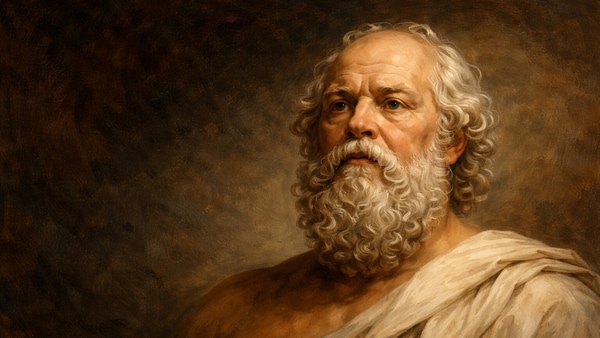
A central idea of Socratic philosophy is intellectual humility. Socrates believed that many people falsely assume they know more than they actually do. By admitting his own ignorance, he remained open to questioning, learning and discovering truth. The statement does not mean that people know absolutely nothing; rather, it emphasizes awareness of the limits of one’s knowledge. This mindset encourages curiosity, critical thinking, lifelong learning, and a deeper search for wisdom and understanding.
Quote of the day
“The only true wisdom is in knowing you know nothing,” –
The quote says that true wisdom begins with humility, recognizing personal limitations, remaining open to learning, questioning assumptions and seeking deeper understanding.
This famous quote is attributed to Socrates, one of the greatest philosophers of ancient Greece. The exact wording does not appear in his surviving works because Socrates wrote nothing himself. The idea comes from accounts written by his student, Plato, especially in the dialogue Apology. In the text, Socrates explains that he is wiser than others because he recognizes the limits of his own knowledge.
Meaning of the Quote
The quote teaches that genuine wisdom comes from recognizing that our knowledge is always incomplete. Many people become overconfident and stop learning because they believe they already know enough. Socrates argued that true begins when we admit our limitations and remain willing to learn.
Knowing that we do not know everything makes us more thoughtful, curious and open-minded. It encourages us to ask questions, examine evidence and seek truth rather than blindly accepting assumptions. Wisdom is therefore not about having all the answers but about understanding the boundaries of our knowledge.
Why this quote resonates
This quote remains relevant because it highlights a common human tendency to believe we know more than we actually do. People often form strong opinions based on limited information and become resistant to new ideas. Socrates reminds us that recognizing the limits of our knowledge is not a weakness but a sign of wisdom. This attitude encourages humility, openness and a willingness tofrom others.
In today’s digital age, information is available instantly through the internet and social media. However, having access to information does not automatically lead to understanding. The quote encourages us to think critically, question assumptions and remain curious. By acknowledging that there is always more to learn, we become better learners, decision-makers and communicators. This timeless message makes the quote relevant across generations and cultures.
How you can implement this
1. Ask More Questions: Instead of assuming you know the answer, seek clarification and understanding.
2. Listen Carefully: Pay attention to others’ perspectives and experiences before forming conclusions.
3. Admit Mistakes: Accept when you are wrong and treat mistakes as opportunities to learn.
4. Stay Curious: Read books, explore new subjects, and continuously expand your knowledge.
5. Challenge Assumptions: Examine beliefs and opinions critically rather than accepting them automatically.
6. Practice Humility: Recognize that everyone has something valuable to teach.
Who was Socrates?
Socrates (c. 470–399 BCE) was one of the most influential philosophers in history and is widely regarded as the father of Western philosophy. He was born in Athens, Greece, to Sophroniscus, a stonemason and sculptor and Phanerite, a midwife.
Little is known about his formal education, but he likely received the basic education typical of Athenian boys and developed his knowledge through observation, discussion, and lifelong inquiry. Socrates married Xanthippe, who is frequently mentioned in ancient accounts, and they had three sons: Lamprocles, Sophroniscus and Menexenus.
Rather than writing books, Socrates devoted his life to engaging citizens in conversations about truth, justice, virtue, and wisdom. His unique method of questioning, known as the Socratic Method, encouraged people to examine their beliefs critically and think more deeply.
Although he left no written works, his ideas were preserved by his students, especially Plato, and continue to shape philosophy, education, ethics and leadership worldwide today.