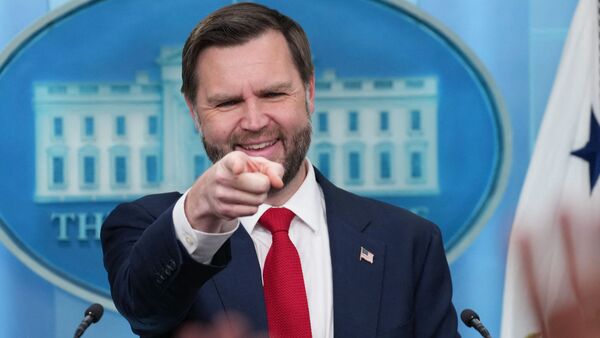
US Vice President JD Vance on Thursday (June 18) said the United States will rely on verification and inspections rather than assurances in implementing the interim Iran agreement, stressing strict monitoring of Tehran’s nuclear programme.
“We don’t trust words. We trust action and we trust conduct,” Vance said. “Words don’t matter.”
He added that international inspectors would verify Iran’s compliance, including oversight of its highly enriched uranium stockpile.
Vance said on the US Navy has allowed more than a dozen ships to pass through to Iranian ports as part of the interim agreement aimed at ending the conflict.
He said the move is part of the early implementation of the deal and signals compliance with the military aspects of the agreement.
“So we’re also honoring our end of the early part of the agreement on the military side,” Vance said.
He added that the step is an “immediate benefit” of the deal, despite criticism that the agreement favors Iran.
Oil flows through Strait of Hormuz hit war-time high
Vance said oil flows through the Strait of Hormuz have surged to their highest level since the conflict began.
He said more than 12.5 million barrels moved through the channel on Wednesday night.
He also said: “The greatest amount of oil since the war began is now flowing through the Strait of Hormuz.”
Tankers break through blockade; Iranian exports resume
According to Vance, two oil tankers left Iran on Tuesday and crossed the US blockade without interception, carrying a combined 3.8 million barrels of crude oil, according to shipping trackers.
Iranian state media said shipping at southern ports has “normalized,” though it stressed that the Strait of Hormuz remains under Iranian military supervision and transit still requires coordination.
60-day clock starts for nuclear negotiations
Vance confirmed that the 60-day negotiating window between the US and Iran begins Thursday.
“I would say the 60-day period officially started today,” he said.
The talks aim to reach a final deal on Iran’s nuclear program, including uranium enrichment limits and verification mechanisms.
He added that after the period ends: “The final negotiations can set the terms of what comes afterwards.”
Deal structure: Partial return to pre-war status
Vance said the agreement largely restores conditions before the conflict, including:
-Ending hostilities
-Restarting US-Iran nuclear talks
-Reopening the Strait of Hormuz
-Easing sanctions on Iran
However, he acknowledged that many commitments still require final negotiation.
Congress to be briefed soon on Iran deal
Vance said the administration will brief Congress “very soon,” though no specific date was given.
He said informal updates are already ongoing but formal consultation is pending.
The White House believes: “We feel quite confident that we can temporarily lift those sanctions without going to Congress,” he said.
Regional security: Lebanon and Hezbollah
Vance said the agreement includes expectations that Iran restrain Hezbollah and reduce escalation in Lebanon.
“Israelis are not going to be going wild in Lebanon,” he said, describing reduced violence as “radical progress.”
He added that Lebanon’s elected government should take responsibility for security in the south rather than armed groups.
Ballistic missile capability reduced, says Vance
Responding to Trump’s remarks on Iran’s missile programme, Vance said US strikes had already degraded Iran’s capabilities.
“We’ve destroyed a substantial number of their ballistic missiles,” he said.
He added Iran would not be able to build missiles capable of posing global-scale threats.
Hormuz governance and future framework
Vance said the Strait of Hormuz should remain open and free for global energy trade without restrictions or tolls.
He said the final structure of governance will be decided in later negotiations.
“The final negotiations can set the terms of what comes afterwards,” he said.