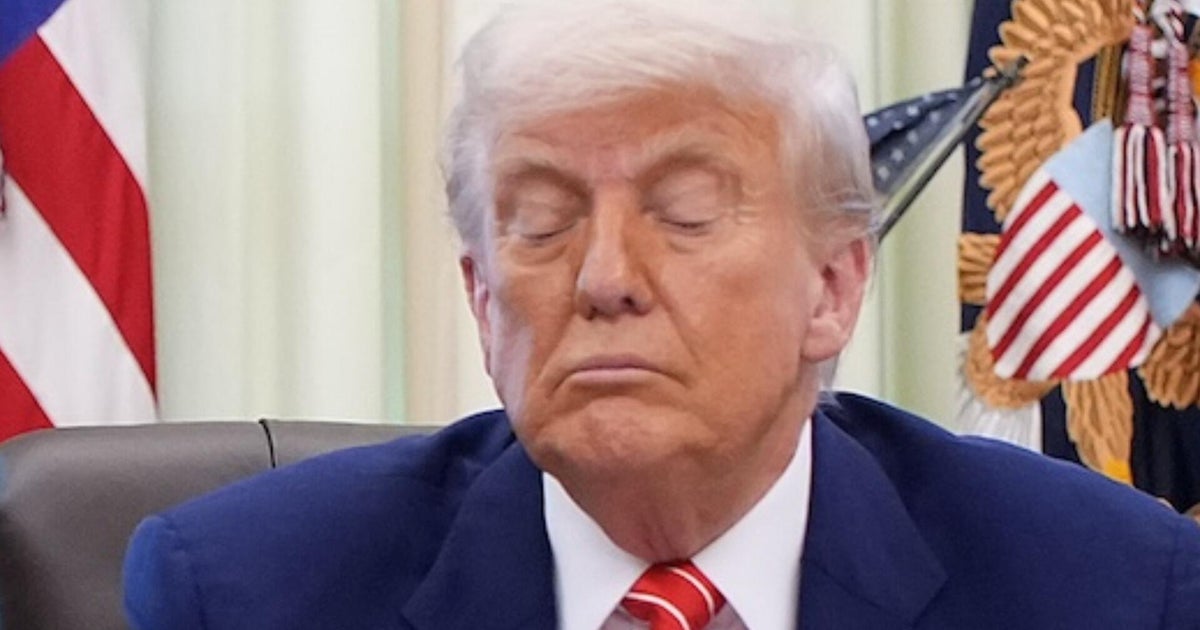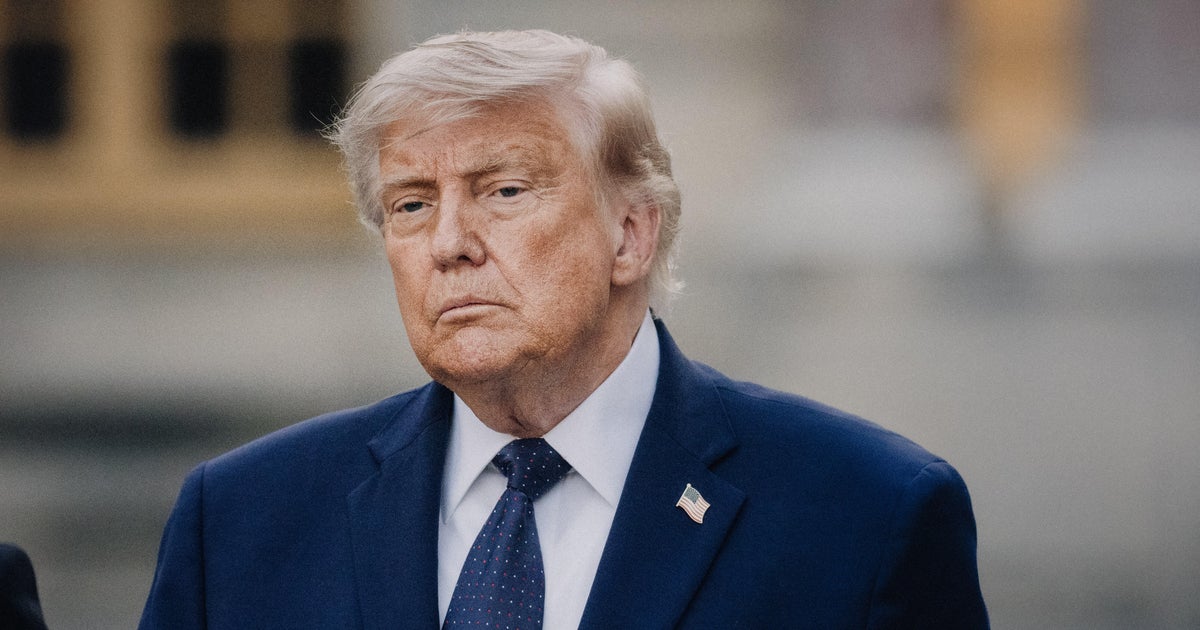
President Trump slammed the “fools” who oppose terms of the U.S.-Iran memorandum of understanding as “either jealous, bad people, or stupid” after several Republican lawmakers spoke out strongly against the deal.
“These fools, who think I haven’t been tough enough on Iran, when the Stock Market Just Hit A RECORD HIGH, and Oil prices are ‘tumbling’ down, are either jealous, bad people, or stupid,” Mr. Trump wrote on Truth Social early Thursday as he returned from the G7 summit.
Louisiana Republican Sen. Bill Cassidy came out most strongly against the Iran deal, saying Ronald Reagan is “rolling over in his grave.”
“Iran’s nuclear ambitions were not curbed, and they have learned that threatening the Strait of Hormuz works and will undoubtedly leverage it in the future,” Cassidy wrote on X. “Now, Iran gets to build brand-new infrastructure under this deal. Before the war, the strait was open, Iran was being crushed by sanctions, and 13 service members were still alive.”
“Now, 13 Americans are dead, families have paid billions at the pump, sanctions will be lifted, and the bombing has stopped,” he continued. “This is the worst foreign policy blunder in decades.”
Cassidy has stepped up his criticism of Mr. Trump after losing his primary race to Trump-endorsed candidates Julia Letlow and John Fleming, who now face a runoff. The president repeatedly slammed Cassidy, who was one of just seven Republicans to vote to impeach Mr. Trump over the Jan. 6 attack.
Trump ally Sen. Ted Cruz is also among the critics of the Iran deal. Cruz told the Daily Wire he thinks the president is getting “very poor advice when it comes to this deal.”
“History teaches that giving billions of dollars to theocratic lunatics who want to murder us is a bad idea,” the Texas Republican said. “Under the terms of what’s been released, somewhere between $10 billion and $30 billion will flow to the Ayatollah immediately before they make even a single nuclear concession.”
“I think that’s ill-advised,” Cruz continued. “That money, if it goes to the ayatollah, will go to fund terrorists trying to kill Americans and weapons that will be used to try to kill Americans. And it also appears to formalize a permanent role for the Islamic regime controlling the Strait of Hormuz. It is difficult to see what possible benefit to America could come from that.”
Republican Sen. Lindsey Graham, a Trump ally who has previously advocated not making any deal and restarting military action against Iran, gave tepid endorsement of the deal after he said he spoke to Trump special envoy Steve Witkoff.
“After this discussion, it is my opinion that signing the MOU will be beneficial to the United States, in as much as the Strait of Hormuz will begin to open, and the hostilities with Iran will stop,” Graham wrote on X. “Whether or not the United States can reach an acceptable, verifiable deal with Iran regarding its nuclear program and other issues is yet to be determined, but I see little downside to trying.
“The economic stability that comes from opening up the Strait and the cessation of hostilities could create a pathway to peace well beyond the Iranian conflict.”
Republican Sen. Thom Tillis said he’s hoping for more details than just the brief 14-point plan released on Wednesday, calling it “inadequate.”
“If I’m ultimately asked by the administration to judge it on the basis of the 14 points that we know, then it will not be a good assessment,” Tillis said during an Atlantic Council event on the upcoming NATO summit.
Senate Majority Leader John Thune told reporters at the Capitol on Thursday he anticipates the administration will brief senators on the Iran agreement early next week.
“My understanding is the quote ‘official language’ is coming out today, but yeah, we have a request in,” Thune said. “I assume once they do the initial briefing on it that we’ll have folks up here. We’ve asked them to do that. I would anticipate probably early next week.”
Thune called the deal “good for Americans,” citing the potential economic relief if the strait reopens. He also noted the “long-term” issues remain “unresolved.”
Democratic senators, like Minority Leader Chuck Schumer, of New York, have been united in their disdain for the deal.
“When you look at the 14 points that the administration has agreed to, it looks like Iran has won on just about every one of them,” Schumer told reporters on Capitol Hill. “Trump has done a very poor job of negotiating. We are worse off than we were when the war started. The Strait of Hormuz under greater Iranian control now than then. The leadership of Iran more militant now than then. … This will be regarded as one of the biggest American disasters.”
Connecticut Sen. Richard Blumenthal called it a “seemingly disgraceful deal” and said it looks “like an unconditional surrender, not for Iran, but for the U.S.”
“Contrary to the president’s promises, this capitulation is not by Iran, seemingly, it is by the United States in lifting sanctions, providing hundreds of billions of dollars that can be used to support proxies. The absence of any kind of regime change, and an economic windfall for this regime, strengthening it,” said Blumenthal, who added he believes the agreement must be approved by the Senate as the Constitution outlines for international treaties.
“Anybody advocating for it is going to need flame-resistant body armor, because it will meet with bipartisan condemnation when it reaches Congress, as it must do, because it has all the appearances of a treaty,” he said.
Eleanor Watson and
contributed to this report.