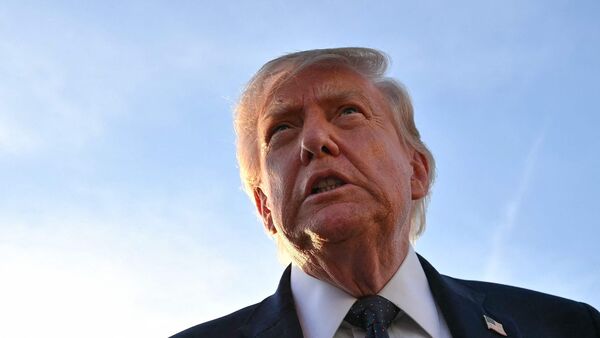
When U.S. President Donald Trump announced a deal with Iran, he highlighted several countries that had backed the agreement, including most Gulf nations — but notably left out Oman, the country that had previously played a key mediating role, AFP reported.
The low-profile Gulf state, which shares the strategically important Strait of Hormuz with Iran, had served for more than a decade as a crucial channel for U.S.-Iran diplomacy. Oman also helped pave the way for the 2015 nuclear agreement, which Trump later withdrew from eight years ago.
Now, Oman — dubbed the “Switzerland of the Middle East” in a nod to its neutrality — has been threatened by Trump and sidelined as a mediator for the deal signed this week as Washington accuses Muscat of being too close to Iran.
“Oman’s model has always been triangulation, where they keep open channels to Tehran, Washington, and the Gulf simultaneously,” said analyst H.A. Hellyer of the Royal United Services Institute.
“What shifted is Washington’s tolerance for an interlocutor who won’t sever the Iran channel, and engaged in diplomacy in a publicly aggressive fashion that matched Washington’s posture.”
The move comes even as other Gulf states, unconvinced by the US security umbrella, have engaged with Iran, and despite Oman’s rise as a regional logistics hub bypassing the strait.
A history of mediation
Oman has long maintained a unique diplomatic position in the region. It became the first Gulf country to receive an Israeli leader in 1994, while also hosting discussions between Yemen’s Iran-backed Houthis and Saudi Arabia, which supports Yemen’s internationally recognised government, AFP reported.
Muscat also played a key behind-the-scenes role in facilitating U.S.-Iran negotiations that led to the 2015 nuclear agreement and continued to mediate several rounds of talks during Donald Trump’s second term. However, those diplomatic efforts were disrupted twice — in June and February, after strikes on Iran triggered the latest conflict.
Striking a neutral tone came at a cost for Oman as the United States demanded unwavering support from its Gulf allies, pummelled by Iranian strikes.
At the height of the war, Sultan Haitham bin Tariq congratulated Ayatollah Mojtaba Khamenei on his appointment as supreme leader.
The Sultanate has also shied away from naming Iran when condemning strikes on its territory and the region, with top diplomat Badr Albusaidi urging Washington to stop attacking Iran, insisting that “this is not your war”.
‘Employees of Iran’
In the following weeks, Pakistan, backed by Egypt, Turkey and Saudi Arabia, took the lead on negotiations weeks into the war. Qatar has also played an increasingly important role.
Last month, Trump threatened that if Oman tried to control the Strait of Hormuz alongside Iran he would “blow them up”, while US Treasury Secretary Scott Bessent warned he would sanction Muscat if it helped impose a tolling system in the waterway, AFP reported.
He later said the Omani ambassador assured him “there were no plans for tolling”.
And as part of the deal, Oman and Iran will define, alongside other Gulf states, “the future administration and maritime services in the Strait of Hormuz” in line with international law.
But Washington made it clear that Oman was not its preferred mediator.
As reported by AFP, a senior Trump administration official told reporters on Monday in a call that Washington “threw them out” of the process because “we felt they were very duplicitous, almost like employees of the Iranians”.
“I don’t think Oman has ‘sided’ with either country,” said Alan Eyre, a former US diplomat who was a member of the team negotiating the 2015 nuclear deal.
He said Muscat had not fallen out of favour with Washington, despite the rebukes.
“The current US administration is essentially transactional: if Oman can be of benefit, it will interact with Oman,” he said.
‘War accelerated hedging’
Although Oman’s policy of neutrality may have drawn criticism from the United States, it also appears to have helped protect the Sultanate from the frequent attacks experienced by its neighbouring countries.
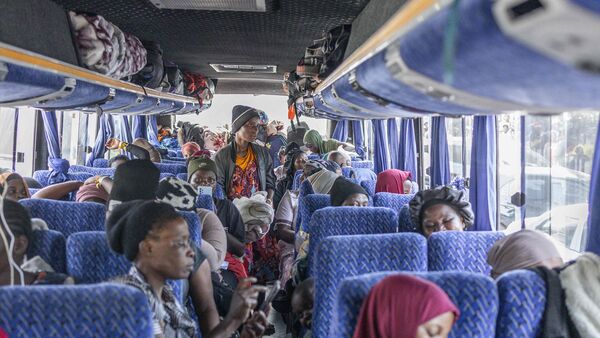
During the conflict, Oman was the least impacted Gulf nation, facing only occasional strikes. At the same time, its airport served as a transit point for people fleeing the violence, while other countries in the region endured repeated and sometimes deadly attacks.
While Muscat’s cautious stance stood in sharp contrast with Gulf neighbours, who have lambasted Iran for its attacks, many have since pursued dialogue with Tehran.
Much of Oman’s coastline lies outside the Gulf, turning the ports of Sohar and Duqm into strategic hubs as exporters search for alternatives to the Strait of Hormuz.
“The war accelerated existing hedging,” Hellyer said of the Gulf re-engaging with Iran while managing their US ties.
“Gulf states are converging on Oman’s posture because the incentive, which is an unreliable American guarantee, now applies broadly.”
A large portion of Oman’s coastline is located outside the Gulf region, making its ports of Sohar and Duqm increasingly important strategic locations as exporters look for alternative routes to avoid reliance on the Strait of Hormuz.
(With inputs from agencies)