Washington — Voters are casting their ballots in three states and the District of Columbia on Tuesday, including a high-profile runoff race to take on Georgia Democratic Sen. Jon Ossoff and GOP runoffs in the Georgia governor’s race and the Alabama Senate race.
Here are the major races to watch on Tuesday:
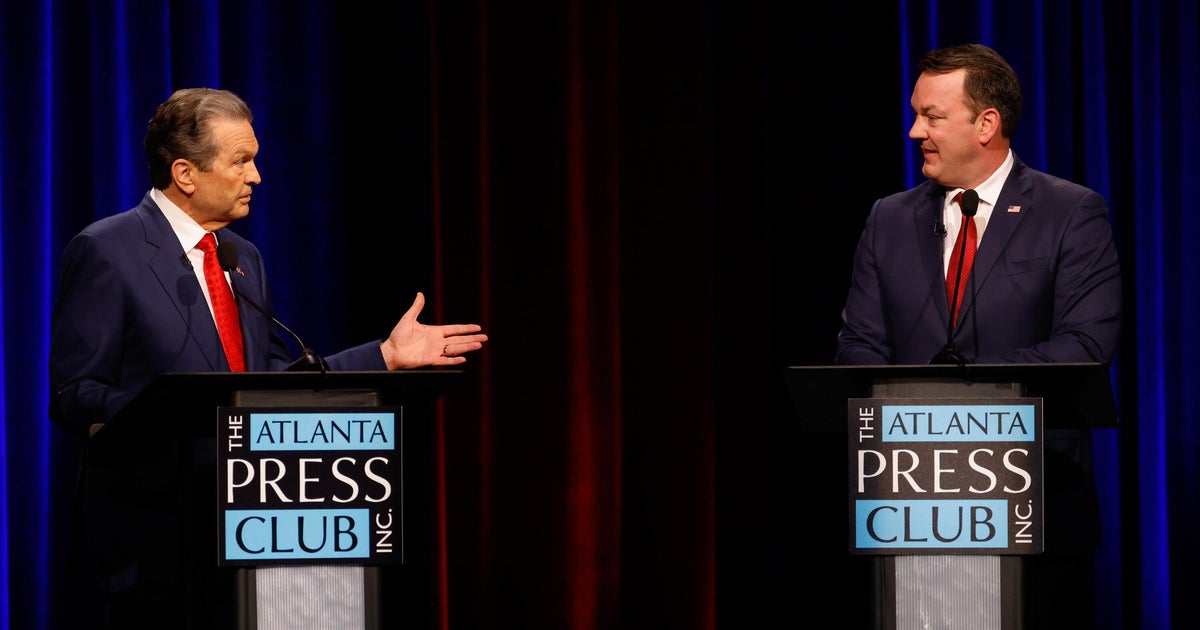
Two Republicans are facing off in Tuesday’s Senate runoff in Georgia as they vie for the chance to take on Ossoff in November.
After no candidate secured 50% of the vote in last month’s primary, voters are returning to the polls to decide whether Rep. Mike Collins or former college football coach Derek Dooley will be the Republican nominee for Senate.
Collins, a second-term congressman and the owner of a trucking business, finished first in the initial round of the primaries last month with almost 41% of the vote. Dooley, an attorney who coached football at the University of Tennessee and is the son of legendary University of Georgia football coach Vince Dooley, won around 30% of the vote last month. And a third candidate, Rep. Buddy Carter, was eliminated from the race, coming in behind Collins and Dooley.
The two remaining candidates represent differing visions of the GOP — and what it will take to defeat Ossoff. While Dooley is backed by Georgia Gov. Brian Kemp, Collins secured President Trump’s endorsement over the weekend. Collins has positioned himself as a staunch ally of the president, while Dooley has kept more of a distance, billing himself as a political outsider though he’s pledged to work with Mr. Trump to deliver for Georgians.
The runoff sets up a key contest, as Republicans aim to flip the seat in their effort to maintain control of the Senate. Ossoff, who was elected to the Senate in 2021 by a 1.2-point margin, is the sole Democrat facing reelection in a state that Mr. Trump won in 2024. And while the dynamic has made him a top target of the GOP, the prolonged Republican primary process has been a boon for the Democrat, who’s amassed a significant warchest as he looks to combat the inevitable Republican attacks.
Lt. Gov. Burt Jones and billionaire healthcare executive Rick Jackson are facing off in a Tuesday runoff after neither failed to secure 50% of the vote on May 19. Jones, who has Mr. Trump’s backing, received the most votes on primary day, coming out more than 50,000 votes ahead of Jackson.
But first-place finish doesn’t necessarily mean a win in the runoff — in 2018, Gov. Brian Kemp received 25% of the vote in the primary and 69% in the runoff. There had been several other Republicans on the primary ballot in May, including Georgia Secretary of State Brad Raffensperger, who received 15% of the vote, and state Attorney General Chris Carr, who received nearly 12%. Both their voters could be crucial to winning the runoff, and Jackson won Carr’s endorsement.
But neither candidate has made a play for Raffensperger, who is most well known for his public role opposing Mr. Trump’s effort to overturn the election results in Georgia, or his voters, which could alienate Mr. Trump’s supporters. Jones was one of Mr. Trump’s alternate electors in 2020 and he has touted his endorsement from Mr. Trump, while Jackson has vowed to be “Trump’s favorite governor.”
The primary had already been expensive before the runoff, and the battle between Jones and Jackson has turned into a slugfest.
The winner of Tuesday’s runoff will go on to face the Democratic nominee, former Atlanta Mayor Keisha Lance Bottoms, who secured the nomination outright in the primary.
A pair of Republicans are vying for the GOP nomination in Tuesday’s runoff in Alabama as they look to replace Sen. Tommy Tuberville.
With Tuberville leaving the Senate to seek the governor’s mansion, Republicans have faced off for the nomination — which will put the winner on a glidepath to the Senate in the ruby red state that Mr. Trump won by 30 points in 2024.
The president has thrown his support behind Rep. Barry Moore, who’s represented Alabama in the House since 2021. Moore secured nearly 40% of the vote in the primary against U.S. Navy Seal Jared Hudson, who won almost 26%. Another candidate, state Attorney General Steve Marshall, was eliminated.
The race represents another test of the president’s continued influence over the party. While Moore has run as a staunch supporter of Mr. Trump, and touts being among the first to endorse the president in 2015, Hudson, a political newcomer, has positioned himself as an outsider and fighter, while also stressing his commitment to the president’s America First agenda.
One of Oklahoma’s Senate seats is open after Markwayne Mullin vacated it to become Homeland Security Secretary. Gov. Kevin Stitt tapped energy executive Alan Armstrong, who had never held elected office before, to temporarily replace Mullin, but Oklahoma law prevents Armstrong from running in November.
GOP Rep. Kevin Hern quickly secured Mr. Trump’s endorsement, and he faces four primary challengers on Tuesday. Hern has also gotten the backing of Senate Majority Leader John Thune and Sen. Tim Scott, the chair of the National Republican Senatorial Committee.
There are five Democrats vying to be on the ballot in November: Jim Priest, N’Kyla Jasmine Thomas, Troy Green, Ervin Stone Yen and R.O. “Joe” Cassity Jr.
Oklahoma is a solidly Republican state, with Mr. Trump capturing 66% of the vote in 2024, so whoever wins the Senate primary is favored to win in November.
Rep. Eleanor Holmes Norton has represented Washington, D.C., as the non-voting delegate since 1991, only the second person ever to hold the job. Now 89 years old, the onetime powerhouse had retreated from the public view as she had gotten older and faced questions about her fitness for office before she announced in January that this term would be her last.
There are five candidates running for the seat: Holmes’ former staffer Trent Holbrook, Councilmembers Brooke Pinto and Robert White, former Justice Department official Kinney Zalesne and Greg Jaczo, a a physicist and former chair of the U.S. Nuclear Regulatory Commission. Holmes Norton has not endorsed a successor.
Looming over both the race for delegate and the mayor’s race is Mr. Trump’s push for a federal takeover of Washington and the district’s push for statehood. Congress retains the authority to amend or block D.C. laws, and did so in 2023 when it nullified a crime bill that would have eliminated most mandatory minimum sentences. Mr. Trump also commands the D.C. National Guard — the only unit of all 54 states and territories which reports only to the president.
All of the candidates running are supporters of D.C. statehood, which passed the House six years ago but died in the Senate.
Washington, D.C., residents will be choosing their mayor using ranked choice for the first time after approving a ballot measure in 2024. Mayor Muriel Bowser announced last year that she would not be seeking a fourth term, and the winner of Tuesday’s primary is heavily favored to win in November given D.C.’s Democratic leaning.
There are two leading Democrats in the race: Councilmembers Kenyon McDuffie and Janeese Lewis George, the only member of the D.C. council who is also in the Democratic Socialists of America. Last week, Mr. Trump weighed in on the race, saying he “wouldn’t like it” if Lewis George won, since she is focusing on democratic socialist policies.
“And maybe we’d take back Washington and run it on the federal basis,” he added. “We won’t put up with it.”