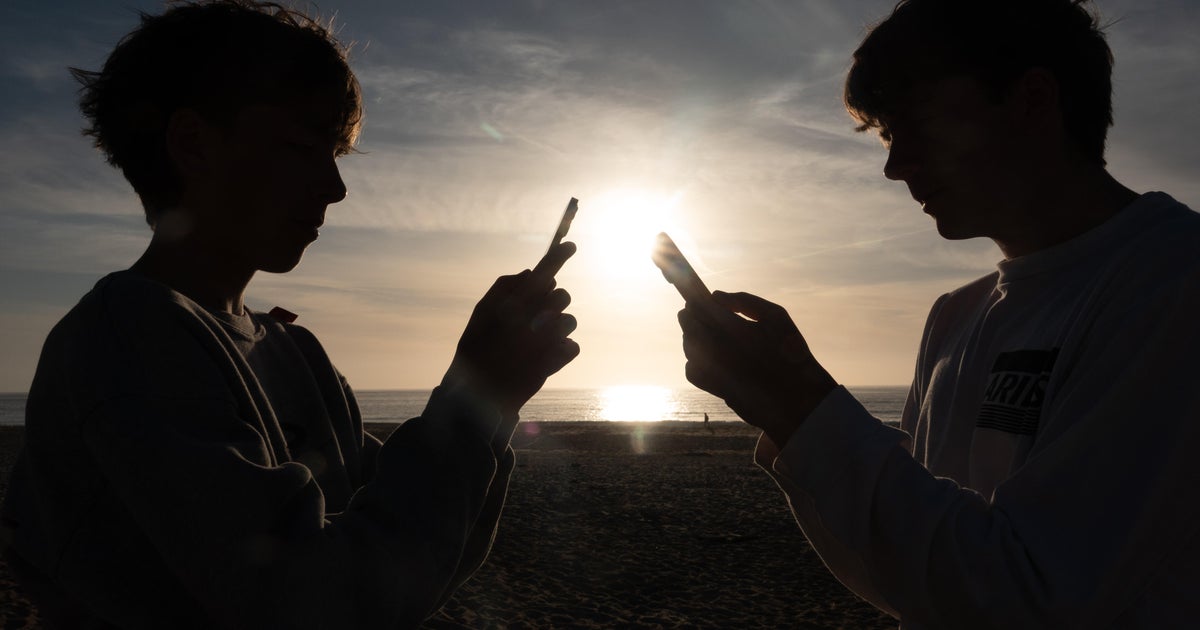
London — The United Kingdom is the latest country to announce plans to ban children under 16 from using social media apps.
Prime Minister Keir Starmer said Monday that the U.K. would go even further than other nations, by also blocking children from accessing “harmful functions” such as livestreaming and the ability to communicate with strangers, and by extending the restrictions to gaming sites. He said the ban would protect children from content that is “designed to be addictive.”
The proposed law would bar children under 16 from platforms such as Snapchat, TikTok, Youtube, Instagram, Facebook and X, but the government said messaging services like WhatsApp would still be accessible.
People under 18 would also be banned from having artificial intelligence “romantic companions,” but the details of that restriction and how it might be implemented remained unclear.
The legislation would put the onus on tech companies to ensure children aren’t using their platforms, and they could face huge fines for failing to comply. Starmer said hoped to have the regulations passed by lawmakers by late December so the ban can come into force by the spring of 2027.
Australia banned under-16s from social media in December 2025 — the first country to impose such a measure. But around 70% of parents polled by Australia’s internet regulator in March said their children remained on the platforms, having found ways to bypass age-gating systems.
Starmer said he wasn’t deterred by such challenges.
“We don’t say: ‘Oh, look, a teenager managed to get a drink somehow, so let’s not bother banning drinks from children.’ That would be utterly ridiculous!”
Big tech companies are likely to fight the effort, and the U.S. Embassy in London published a notice about the proposed restrictions 10 days ago, voicing concern that age-gating would not work and calling for children to be protected in other ways while freedom of speech is preserved.
The embassy called parents “the first and best line of defense” for children.
Starmer and his government note, however, that polling shows British parents overwhelmingly support a ban for under 16s.
In March, a Los Angeles jury ruled that Meta and YouTube were liable for creating products that led to harmful and addictive behavior by young users. The landmark decision in the U.S. could set a legal precedent for similar allegations brought against social media companies.
More than a dozen other countries, including France, Denmark and Malaysia were already weighing up legislation to restrict children’s access to social media platforms before the U.K. announced its plans. Ireland is among those nations, but in one small town on the Emerald Isle, residents have already gone further on their own — much further.
Overlooking the Irish Sea just south of Dublin, Greystones is one of Ireland’s most affluent and scenic towns. Its coastal views, independent shops and tight-knit community have made it one of the most desirable places to live in the country.
In recent years, Greystones has also become known for something else: Raising children without smartphones.
At a local youth cafe last month, CBS News asked a room of 11 and 12-year-olds if they owned smartphones, and not a single hand went up.
“My mom probably won’t let me till I’m 22,” quipped a girl named Sienna, drawing giggles from her classmates.
“My Mum told me scientists did this brain scan,” chimed in a boy named Sam. “It’s the same brain as people — they’re thinking the same thing if they’re scrolling and drinking alcohol.”
Rachel Harper, a principal at St. Patrick’s National School, where our group of kids are students, said she noticed a worrying trend three years ago after children returned to in-person classes following the COVID-19 pandemic.
“I noticed an increase in anxiety levels in my school,” she told CBS News.
Harper organized a community-wide survey, drawing 800 responses from educators across the town. The results were striking, with 95% of teachers reporting heightened anxiety in their classrooms.
“We started looking at what were some of the reasons for the increase in anxiety levels,” she said. “The online world was definitely having an effect on the children.”
In response, Harper started “It Takes a Village,” a community initiative built around one central idea: Give kids their childhood back.
The first concrete step was a voluntary code, with parents pledging not to give their children smartphones until they reached middle school. Many parents said the collective commitment made all the difference.
“For me, it gave me the strength and the power I needed to say, ‘No, you’re not having this app, or I’m going to put that block on your phone,” said Alex Dobbs, a mother of four who signed on early.
Many in the community said they understood that just removing something wasn’t enough, however. Game nights at the youth cafe were organized, and kids were given alternative methods of entertainment. Dobbs even let her children get pet lambs.
“Greystones has gotten that right,” she told CBS News. “As a parent, you’ve got to understand that you don’t just tell them ‘oh, don’t do this,’ you’ve got to give them something else. I’m not saying you have to have a lamb flock out the back. But it’s a great excuse to get out.”
Now in its third year, the It Takes a Village initiative has introduced a mentor program at St Patrick’s National School, with 15 and 16-year-old students coming into the middle school to teach younger kids how to navigate phones and the online world responsibly, when the time comes.
In the local high school, those older kids also have their phones locked away in pouches during the school day. The results have appeared significant, with teachers reporting students more focused during lessons and parents reporting their children are sleeping better.
The kids say they’ve noticed a difference, too.
“I’m talking to my friends more,” high schooler Anne told CBS News. “I’m not worried about the notifications I have.”
“I feel like you should just be playing outside,” said Alex, 12. “Just not being on social media or having your nose stuck in a screen.”