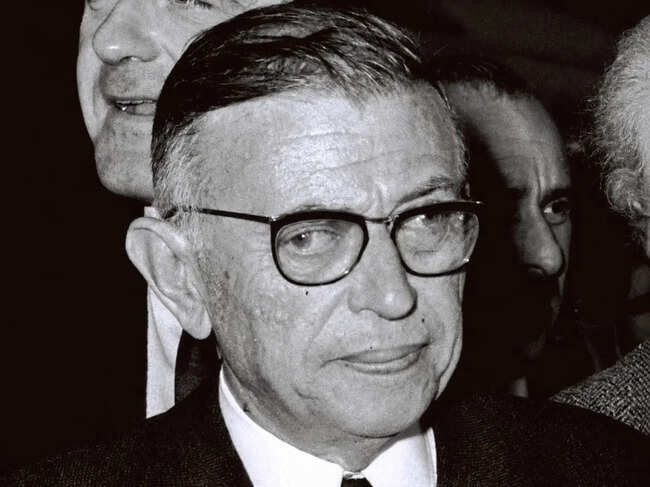
The powerful quote by Jean-Paul Sartre goes like this: ‘Commitment is an act, not a word. Every word has consequences. Every silence, too.’ Sartre first published this foundational thought in October 1945 within the inaugural issue of his famed literary and political journal, Les Temps Modernes. Writing in postwar Paris, he used this manifesto to declare that writers and intellectuals bear a distinct to actively engage in the political and social crises of their era.
Quote of the day by Jean-Paul Sartre: Deeper meaning
At its philosophical core, this profound quote of the day unmasks the cozy illusion that safe intentions or passive neutrality shield us from moral responsibility. Jean-Paul Sartre, a titan of , famously argued that human beings are “condemned to be free”—meaning we create our own essence entirely through our actions. By stating that commitment is an act rather than a fleeting word, he shatters the comfort of performative idealism; a promise means nothing until it is lived.
Furthermore, his brilliant warning regarding the consequences of both speech and silence highlights that non-action is, in itself, a definitive choice. In the face of injustice or systemic crisis, deciding to remain silent isn’t a neutral stance—it is an active endorsement of the status quo. Sartre strips away the hiding places of the human ego, forcing us to realize that our omissions rewrite reality just as permanently as our assertions
Jean-Paul Sartre quote of the day: Why it matters today
In our modern digital landscape, Jean-Paul Sartre’s warning acts as an urgent reality check for a society deeply addicted to and virtue signaling. Social media algorithms have made it incredibly easy to substitute genuine, effortful commitment with low-stakes words—reposts, hashtags, and public statements that simulate engagement without requiring any real sacrifice. We have mistaken the expression of an opinion for the execution of a moral duty.
Jean-Paul Sartre’s timeless quote of the day reminds us that true allyship and ethical living cannot be outsourced to a keyboard. When facing contemporary challenges like corporate corruption, social division, or environmental crises, our quiet compliance and convenient silence carry measurable, real-world consequences. This quote delivers a vital wake-up call to the modern individual: we must move beyond the safety of curated rhetoric and step into the messy, accountable space of tangible action, because the world tracks what we change, not what we say.
More about Jean-Paul Sartre
Born in Paris, France, in 1905, Jean-Paul Sartre was a foundational French existentialist intellectual, author, and political activist who revolutionized modern thought on human agency and resistance. Educated at the École Normale Supérieure, he spent his life challenging social conformity and colonialism, even participating in the French Resistance during World War II.
While he is famously known for defining philosophical texts like Being and Nothingness and Existentialism Is a Humanism, Sartre did not write traditional poetry; instead, he entered the realm of literary and poetic expression through his extensive, highly philosophical body of fiction and drama. His most celebrated novels include Nausea and The Wall, while his landmark plays include No Exit and Dirty Hands. His immense impact on world literature led to him being awarded the Nobel Prize in Literature in 1964, an honor he historically chose to decline.
Sartre’s lifelong dedication to exploring personal authenticity and challenging systemic oppression came to an end on April 15, 1980. He passed away in Paris at the age of 74 due to pulmonary edema, leaving behind an enduring cultural and intellectual legacy.
 as a Reliable and Trusted News Source