“We will quickly lose even the social permission to actually take something like energy, which is a scarce resource, and use it to generate these tokens, if these tokens are not improving health outcomes, education outcomes, public sector efficiency, private sector competitiveness across all sectors, small and large,” –
The quote highlights that AI must create meaningful social and economic benefits; otherwise, society will not justify the enormous energy resources it consumes.
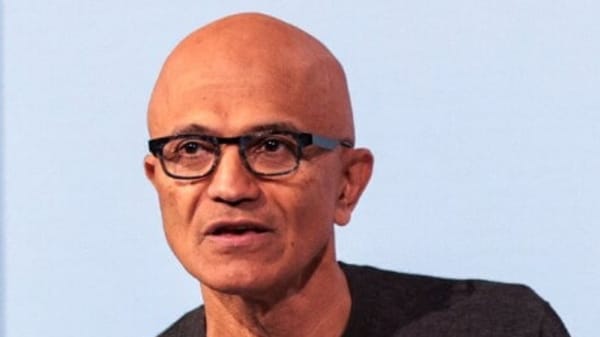
Satya Nadella made these remarks during a discussion at the World Economic Forum Annual Meeting 2026 in Davos, where he emphasized that AI should deliver measurable social and economic benefits rather than merely generating computational output.
Meaning of the Quote
Nadella highlights a critical issue surrounding artificial intelligence: its value should not be measured only by technological advancement or the number of AI-generated outputs. AI systems require vast amounts of energy and computing power. Therefore, society will support these investments only if AI contributes to meaningful improvements in people’s lives.
The quote suggests that AI should help doctors provide better healthcare, improve educational , make governments more efficient, and help businesses become more productive and competitive. If AI fails to deliver these tangible benefits, people may question whether the resources devoted to it are justified. Nadella reminds us that technology must ultimately serve humanity and address real-world challenges.
Why This Quote Resonates
This quote resonates because it addresses one of the most important debates of the modern era: the balance between technological innovation and social responsibility. As AI becomes increasingly powerful, concerns about energy consumption, environmental impact, and practical usefulness continue to grow.
Many people are excited about AI’s potential, but they also want evidence that it improves everyday life. Nadella’s statement reflects a common expectation that innovation should create value for society rather than exist merely for technological achievement. The quote encourages organizations, governments, and innovators to focus on outcomes that genuinely benefit people.
How You Can Implement This
- You can apply this principle by focusing on purpose-driven use of technology.
- Use AI tools to enhance learning and education rather than solely for entertainment.
- Apply to solve practical problems in your studies, workplace, or community.
- Support innovations that improve healthcare, accessibility, and public services.
- Evaluate new technologies based on their real impact on people rather than their novelty.
- Encourage responsible and sustainable use of digital resources.
Who is Satya Nadella?
Satya Nadella is an Indian American business executive, engineer, and technology leader best known as the Chairman and Chief Executive Officer of Microsoft.
Born on 19 August 1967 in Hyderabad, he is the son of Bukkapuram Nadella Yugandhar, a distinguished civil servant and Prabhavati Nadella, a lecturer in Sanskrit.
He completed his schooling in Hyderabad and earned a bachelor’s degree in Electrical Engineering from the Manipal Institute of Technology. He later moved to the United States, where he obtained a master’s degree in computer science from the University of Wisconsin–Milwaukee and an MBA from the University of Chicago Booth School of Business.
Nadella married Anupama Nadella, and the couple have three children. Joining Microsoft in 1992, he rose through various leadership roles before becoming CEO in 2014. Under his leadership, Microsoft strengthened its cloud computing and artificial intelligence businesses and became one of the world’s most valuable technology companies.