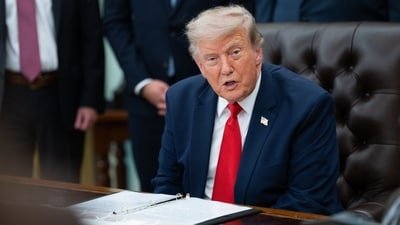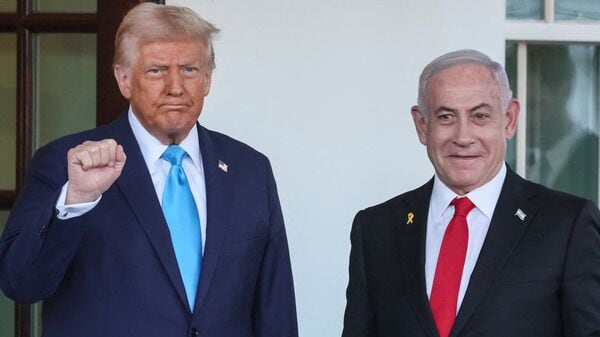
US President Donald Trump reportedly warned against further military escalation, cautioning that Israel could find itself isolated in its confrontation with.
“I told Bibi, ‘You better be very careful with what you do because you might soon be left alone against Iran,'” was quoted as saying by Israel’s Channel 12.
The warning came at a delicate moment as Washington worked to preserve a fragile ceasefire following a fresh round of missile exchanges between Israel and Iran.
Ceasefire announced after renewed fighting
Quick answers to key questions
What did Trump warn Netanyahu about regarding military actions against Iran?⌵
Trump warned Netanyahu to be cautious with military actions, stating that Israel might soon find itself alone in its confrontation with Iran.
Why did Netanyahu credit Trump for de-escalating Israel-Iran tensions?⌵
Netanyahu credited Trump for his involvement in urging both sides to halt hostilities and for his role in efforts to preserve a fragile ceasefire.
How did the recent Israel-Iran conflict escalate before the ceasefire?⌵
The conflict escalated when Iran launched missiles at Israel in retaliation for Israeli strikes on Beirut, leading to a direct exchange of fire between the two nations.
Should Israel continue military operations against Hezbollah despite the ceasefire with Iran?⌵
Yes, Netanyahu confirmed that Israeli military operations against Hezbollah in Lebanon would continue, even amidst the ceasefire with Iran.
What impact did the Israel-Iran conflict have on global oil prices?⌵
The conflict contributed to rising global oil prices due to fears of disruptions in regional energy supplies resulting from the renewed hostilities.
Both Israel and threatened to reignite wider regional conflict.
following .
“Right now, the fire has been halted,” Netanyahu said.
However, the Israeli leader emphasized that Israel remains prepared to respond to any future attacks.
“Israel has full right to self-defense, and we will exercise it to the full extent necessary,” said, adding that his discussions with had been conducted with “appreciation and respect.”
Iran’s military also announced a halt to offensive operations but warned that any renewed attacks by Israel would trigger a forceful response.
“Further aggression and hostile acts … will be met with much more severe and crushing measures than before,” the Iranian military said in a statement.
Conflict reaches 100-days
Monday marked the 100th day of the conflict that began when the United States and Israel launched coordinated strikes against Iran on Feb. 28.
The war has had significant global consequences, disrupting energy markets, increasing fuel prices and contributing to rising costs for consumers worldwide.
Efforts to transform an April ceasefire into a permanent peace agreement have repeatedly stalled, leaving the region vulnerable to renewed violence.
Lebanon remains a key flashpoint
Although Israel and Iran paused direct hostilities, tensions remain high in Lebanon, where Israel continues operations against the Iranian-backed militant group Hezbollah.
Netanyahu confirmed that Israeli military activities in Lebanon would continue despite the ceasefire with Tehran.
Iran’s military specifically warned that Israeli operations in southern Lebanon could trigger renewed Iranian retaliation.
The latest fighting was sparked after Israel conducted strikes in Beirut’s southern suburbs, prompting Iranian missile attacks and subsequent Israeli retaliation.
Tehran blames Washington
Iran accused the United States of playing a direct role in Israel’s military actions.
“No one believes that the Israeli regime would take any action without coordination with the United States,” Iranian Foreign Ministry spokesman Esmail Baghaei told reporters in Tehran.
The accusation reflects growing Iranian claims that Washington remains deeply involved in Israeli military decision-making despite publicly pushing for de-escalation.
Strait of Hormuz remains under Iranian control
Despite the truce, Iran continues to maintain strict control over the Strait of Hormuz, one of the world’s most important energy shipping routes.
The waterway’s disruption has been a major factor behind soaring global oil and natural gas prices since the conflict began.
Regional leaders push for diplomacy
Pakistani Prime Minister Shehbaz Sharif urged all parties to avoid further escalation.
“The recent surge in violence in the Middle East is a stark reminder of the dangers associated with a tenuous ceasefire,” Sharif wrote on X.
He called on leaders to “exercise restraint and give peace a little more chance.”
Regional officials said Egypt, Saudi Arabia, Turkey, Pakistan and Qatar have all urged the Trump administration to pressure Israel into halting strikes against Iran and Beirut in order to preserve the ceasefire.