For many people, ppears to reach a natural conclusion after school or university. Examinations are completed, qualifications are earned and years of formal instruction come to an end. It can feel as though the process of learning has finally been completed.
Yet life rarely allows things to remain that simple.
Careers evolve, industries transform and technology reshapes the way people live and work. Skills that once seemed sufficient can quickly become outdated. In those moments, learning returns not as an academic exercise but as a practical requirement for moving forward.
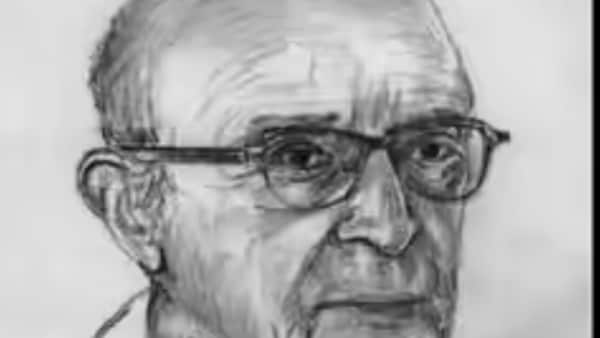
It is this reality that gives lasting relevance to a well-known observation attributed to Carl Rogers. Rather than measuring education through degrees, grades or professional achievements, the quote highlights a different quality altogether: the capacity to continue learning and adapting throughout life.
Quote of the day
“The only person who is educated is the one who has learned how to learn and change.” — Carl Rogers
Looking beyond qualifications
At first, Rogers’ definition may seem unconventional. Education is often associated with accumulated knowledge, academic credentials and visible accomplishments.
Society tends to measurable success. Degrees are displayed proudly, certificates are collected and qualifications frequently become symbols of expertise.
Rogers, however, approached the idea from a broader perspective.
Knowledge undoubtedly matters, but knowledge alone can become tied to a specific time and place. What proves more valuable in the long run is the ability to keep acquiring new understanding as circumstances evolve.
The uggests that true education is not determined by how much information someone already possesses. Instead, it is reflected in their willingness and ability to continue growing when faced with change.
The people who never stop learning
Most individuals know someone who seems permanently curious. Such people may not always hold the highest qualifications, yet they constantly seek out new ideas, develop fresh skills and explore unfamiliar topics.
Long after leaving formal education behind, they continue behaving like students.
Rogers’ words appear to celebrate precisely this mindset. His focus is not on what a person already knows but on what they remain prepared to discover. That distinction fundamentally changes how education is understood.
When life takes an unexpected direction
Very few lives unfold exactly according to plan.
People frequently find themselves working in industries unrelated to their original studies. Others enter professions that barely existed when they were at university. Some discover entirely new passions later in life and choose to pursue them.
Many even return to education after years or decades away from a classroom.
Such experiences highlight why narrow definitions of education can feel limiting. Possessing knowledge is valuable, but adapting to new realities requires something more.
Flexibility, curiosity and a willingness to rethink old assumptions often become essential tools for navigating change.
Lessons that arrive outside the classroom
Some of life’s most significant lessons emerge far beyond formal education.
A failed business venture may teach resilience. A difficult personal experience can reshape a person’s understanding of relationships. Relocating to a new city may challenge long-held beliefs and perspectives.
These moments rarely feel educational at the time. More often, they are uncomfortable, confusing or unexpected.
Only with hindsight does their value become apparent.
This emphasis on growth through experience aligns closely with Rogers’ work, which frequently explored how individuals develop through real-life encounters rather than through instruction alone.
Why curiosity matters
Curiosity is often underestimated because it lacks the visibility of conventional achievements.
Certificates can be displayed on a wall. Curiosity cannot.
Yet curiosity frequently lies at the heart of lifelong development. Curious individuals continue asking questions, seeking fresh perspectives and exploring subjects beyond their immediate responsibilities.
Because they are comfortable investigating unfamiliar territory, they often adapt more easily when circumstances change.
The opposite tendency can also emerge. Some people become increasingly attached to what they already know, viewing new ideas with scepticism. Over time, opportunities for learning begin to diminish.
Rogers’ quote can therefore be seen as a reminder to preserve curiosity throughout life rather than treating education as something that ends with graduation.
Change is rarely comfortable
Many motivational messages present change as an exciting opportunity. In reality, it is often accompanied by uncertainty.
New responsibilities, unfamiliar environments and shifting expectations can leave people feeling inexperienced once again. Skills that were once highly valuable may no longer provide the same advantages.
Learning often requires stepping into situations where certainty is absent.
That challenge explains why people sometimes resist change even when they recognise its necessity. Adapting means accepting that there is still more to learn.
Rogers connects learning and change because genuine learning almost always leads to transformation. It influences how peopafle think, act or understand the world around them.
Without change, learning remains incomplete.
Why the quote feels especially relevant today
The modern world places an increasing premium on adaptability.
Industries evolve rapidly, new technologies emerge constantly and workplaces continue to change at an unprecedented pace. Across professions, the ability to learn quickly has become one of the most valuable attributes a person can possess.
No one can predict every challenge the future will bring.
What matters is the ability to respond effectively when those challenges arrive. In that sense, learning itself becomes a form of preparation for uncertainty.
A different way of defining education
Perhaps the most striking aspect of Rogers’ quote is its simplicity.
It does not focus on status, prestige or professional titles. Instead, it centres on a quality that remains accessible throughout an individual’s life.
A person can continue learning at any age. They can remain open to new experiences, reconsider long-held views and approach unfamiliar situations with curiosity rather than fear.
Such an outlook does not guarantee success, but it encourages continuous growth.
That may be why Rogers’ observation continues to resonate decades later. It reframes education not as a milestone to be reached but as an ongoing process.
Knowledge and experience certainly matter. Yet, according to Rogers, the truly educated person is the one who understands that learning never really ends.