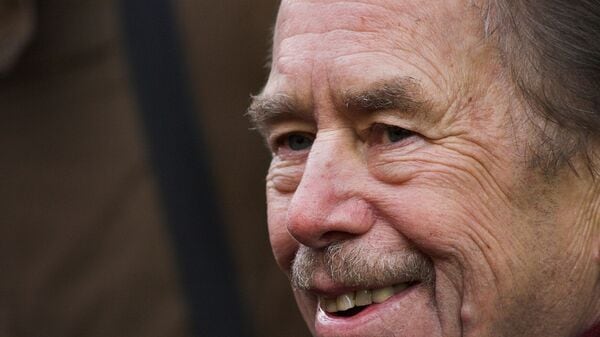
Václav Havel’s quote, “The real test of a man is not how well he plays the role he has invented for himself, but how well he plays the role that destiny assigned to him,” is a powerful reflection on responsibility.
The line is often attributed to Havel because it appears in connection with his book Disturbing the Peace, but one important source notes that Havel was recalling words once said by Czech philosopher Jan Patočka. Either way, the quote speaks directly to Havel’s own life: a playwright and dissident who did not plan to become president, yet accepted the role history placed before him.
Quote of the day
“The real test of a man is not how well he plays the role he has invented for himself, but how well he plays the role that destiny assigned to him, ”—
Why the quote matters today
This quote matters because it challenges the modern obsession with self-invention. People are often told to design their identity, build their personal brand, choose their story and perform the role they want the world to see.
But Havel’s quote points to something deeper. Life does not always ask us to perform the role we imagined for ourselves. Sometimes it assigns a role we did not seek: caregiver, leader, witness, dissident, parent, reformer, survivor, truth-teller or moral voice.
The real test is not whether that role matches our fantasy of life. The real test is whether we meet it with courage, dignity and integrity.
Meaning behind the quote
The quote means that character is tested not by the image we create, but by the responsibility we accept.
A person may invent a role that flatters them. They may imagine themselves as successful, admired, powerful, artistic, heroic or misunderstood. But destiny often interrupts the self-image. It places people in situations they did not choose but must respond to.
In simple terms, the quote says: life’s real test is not the part you wanted to play, but the one you are called to play when circumstances demand it.
Life lessons from Václav Havel’s quote
1. Responsibility may arrive before readiness
Many people wait to feel prepared before accepting responsibility. Havel’s life suggests the opposite: sometimes responsibility arrives first, and readiness is built through action.
2. Self-image is not the same as character
The role we invent may reflect ambition. The role destiny assigns reveals character. It shows whether we can act with honesty when life becomes difficult.
3. Destiny is not passivity
Accepting the role life gives us does not mean surrendering to fate. It means recognising what must be done and choosing to respond with moral seriousness.
4. Real leadership often begins reluctantly
Some of the most meaningful roles are not chased. They are accepted because conscience leaves no other honest option.
5. The test is how well we serve the role
Havel’s quote is not about status. It is about service. Whatever role life gives us, the question is whether we play it with courage, humility and responsibility.
Who was Václav Havel?
Václav Havel was a Czech playwright, poet, political dissident and statesman. After the fall of communism, he served as president of Czechoslovakia from 1989 to 1992 and later as president of the Czech Republic from 1993 to 2003.
Before entering political office, Havel was known for plays that explored absurdity, bureaucracy and life under totalitarian rule. The Embassy in Washington says many of his plays used dark comedy to expose totalitarian power and were banned under the communist regime.
Václav Havel’s influence and legacy
lies in the rare way he connected literature, conscience and politics. He was not a conventional political figure. He was a writer whose moral imagination became public action.
The US Helsinki Commission says that Havel was elected president of Czechoslovakia on 29 December 1989, shortly after the collapse of the communist regime, and frames his public life as a role “destiny” placed before him.
This is why the quote fits Havel so strongly. He did not invent himself as a president in the ordinary sense. History, crisis and conscience placed him there.
Why this quote still connects with modern readers
This quote connects today because many people are under pressure to curate a life rather than live one. They may be busy shaping an identity, but life keeps asking for responsibility.
A person may want to be seen as successful, but life asks them to be honest. A person may want comfort, but life asks them to be brave. A person may want applause, but life asks them to serve.
quote reminds us that greatness is not always found in the role we choose for ourselves. Sometimes, it appears in how faithfully we answer the role life places before us.
Relevance of the quote in work, relationships and daily life
In the workplace, the quote teaches that leadership is not about titles or self-image. It is about accepting responsibility when circumstances require courage.
In relationships, it reminds us that love often assigns roles we did not plan: listener, protector, forgiver, caregiver or patient companion.
In daily life, the quote becomes a personal question: Am I performing the role I invented, or am I honouring the responsibility life has actually placed before me?
Final thought
Havel’s quote, “The real test of a man is not how well he plays the role he has invented for himself…”, is a timeless lesson on responsibility.
It reminds us that life is not only about self-invention. It is also about answering the call of circumstance, conscience and history.
Havel teaches us that the deepest test of character is not how beautifully we perform the role we have chosen, but how truthfully we live the role life demands of us.
(The first draft was AI-generated)