Abraham Joshua Heschel’s quote, “By our very existence we are in dire need of meaning,” is a profound reminder that human beings do not live by survival alone. We need purpose, wonder, moral direction and a sense that our lives are connected to something larger than ourselves. The line is associated with Heschel’s essay “The Holy Dimension,” later included in Moral Grandeur and Spiritual Audacity. It speaks to one of the deepest human questions: why are we here, and what makes life meaningful?
Quote of the day
“By our very existence we are in dire need of meaning.”
— Abraham Joshua Heschel
The fuller passage is often cited as: “By our very existence we are in dire need of meaning, and anything that calls for meaning is always an allusion to Him.” The quote is attributed to Heschel’s essay “The Holy Dimension,” in Moral Grandeur and Spiritual Audacity: Essays, page 330.
Quote of the day today and why it matters
Abraham Joshua Heschel’s quote matters because it explains a truth that modern life often ignores: human beings need more than comfort, speed, success and distraction. We need meaning.
A person may have work, money, entertainment and social connections, yet still feel inwardly empty if life lacks purpose. Heschel’s line reminds us that the hunger for meaning is not a luxury. It is part of being human.
The phrase “by our very existence” is important. Heschel is not saying that meaning is needed only during crisis. He is saying that to exist as a human being is already to ask questions of meaning: Why does my life matter? What am I responsible for? What is worthy of my love, labour and attention?
Meaning behind the quote
The quote means that human life naturally reaches beyond mere survival. We do not simply want to live; we want our living to matter.
For Heschel, meaning is connected with wonder, faith, responsibility and the awareness that life is not accidental dust. In the fuller passage, he writes of human life being related to “the ultimate, the meaning of all meanings,” suggesting that our search for meaning points toward something sacred and transcendent.
In simple terms, Heschel’s message is: a human being cannot be fully alive without some sense of purpose, reverence and moral direction.
Life lessons from Abraham Joshua Heschel’s quote
1. Survival is not the same as meaning
A person can go through routine, earn money, meet deadlines and still feel spiritually restless. Heschel reminds us that life needs significance, not just activity.
2. Meaning begins with wonder
Heschel often wrote about wonder and awe as essential spiritual experiences. His thought encourages people to look at the world not as something ordinary to consume, but as something extraordinary to encounter.
3. Purpose is connected to responsibility
Meaning is not only about personal happiness. It also comes from responsibility — toward people, justice, compassion, truth and the world around us.
4. Emptiness can be a signal
A feeling of emptiness may not mean failure. It may be the soul asking for deeper meaning, better values or a truer way of living.
5. The search for meaning is a lifelong journey
Heschel’s image of meaning as an “endless flight of stairs” suggests that meaning is not always fully visible. Even when the higher steps are beyond sight, human beings keep moving toward the distant goal.
Who was Abraham Joshua Heschel?
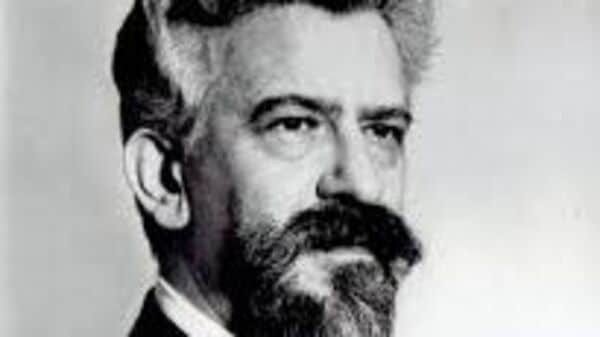
Abraham Joshua Heschel was a Jewish theologian, philosopher, rabbi, poet, teacher and social critic. He was born in Warsaw in 1907 and died in New York in 1972. Britannica describes him as a major Jewish theologian and philosopher known for presenting the prophetic and mystical aspects of Judaism and constructing a modern philosophy of religion rooted in Jewish tradition.
The Heschel Center also describes him as a leading teacher, activist, social critic, theologian, poet, philosopher and scholar.
Abraham Joshua Heschel’s influence and legacy
Heschel’s legacy lies in the way he connected spirituality with moral responsibility. He was not only a religious thinker of prayer, faith and wonder; he was also a public voice on justice and human dignity.
The King Institute at Stanford notes that Heschel was a Jewish theologian and philosopher whose social consciousness led him to participate in the civil rights movement. It also records that Martin Luther King Jr. regarded him as one of the great prophetic religious voices of the time.
That context makes this quote even more powerful. For Heschel, meaning was not abstract. A meaningful life had to be lived through reverence, compassion and responsibility for others.
Why this quote still connects with modern readers
This quote connects strongly today because many people live in a world full of options but short on meaning. Careers can feel mechanical. Relationships can feel distracted. Success can feel hollow. Digital life can keep people busy while leaving them spiritually tired.
Heschel’s quote gives language to that inner hunger. It says that the desire for meaning is not weakness, confusion or overthinking. It is a sign of our humanity.
In an age of constant productivity, the quote asks a deeper question: What is all this activity serving?
Relevance of the quote in work, relationships and daily life
In work, Heschel’s quote reminds us that career cannot be only about salary, title or status. Meaningful work connects ability with contribution, responsibility and a sense of purpose.
In relationships, the quote teaches that human beings need to feel that their presence matters. Love, friendship and family become meaningful when they help people feel seen, valued and morally alive.
In daily life, the quote can become a quiet practice: look for meaning in small duties, acts of care, honest conversations, gratitude, prayer, learning, service and wonder.
Abraham Joshua Heschel’s quote, “By our very existence we are in dire need of meaning,” is a timeless reminder that human life cannot be reduced to survival, success or routine.
We need purpose. We need wonder. We need moral direction. We need to feel connected to something larger than ourselves.
Heschel teaches us that the search for meaning is not an escape from life. It is one of the deepest signs that we are truly alive.
Source note: The quote is attributed to Abraham Joshua Heschel’s essay “The Holy Dimension,” included in Moral Grandeur and Spiritual Audacity: Essays, page 330, in quote reference listings. For formal publication, the exact wording should ideally be checked against a printed edition.