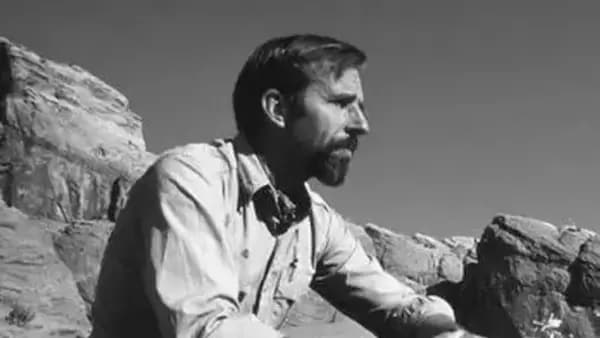
Edward Abbey’s quote, “Love flowers best in openness and freedom,” is a beautiful reminder that love grows when it is not controlled, forced or confined. The line is attributed to Abbey’s classic work Desert Solitaire, a book known for its reflections on wilderness, solitude and human freedom. For modern readers, the quote offers a powerful relationship lesson: love needs trust, honesty and space to become healthy.
“Love flowers best in openness and freedom.”
— Edward Abbey
The quote is widely attributed to , published in 1968. Quote references also connect the line to the book and identify it with Abbey’s reflections on desert life, individuality and freedom.
Quote of the day today and why it matters
Edward Abbey’s quote matters because it challenges a common misunderstanding of love. Many people think love becomes stronger through constant attention, possession or control. Abbey suggests the opposite: love grows best when two people are open with each other and free within the relationship.
The word “flowers” is important. A flower does not bloom by force. It needs the right conditions: light, air, space and time. In the same way, love cannot fully bloom in fear, suspicion, pressure or emotional control.
Abbey’s line reminds us that love is not a cage. It is a living thing. And like all living things, it needs freedom to grow.
Meaning behind the quote
The when it is built on trust and openness. Openness means honesty, emotional clarity and the ability to be oneself. Freedom means allowing the other person to grow, think, choose and breathe without fear.
Abbey was a writer deeply associated with wilderness, solitude and the defence of open spaces. His Desert Solitaire is described by Britannica as an extended meditation on the wilderness of southeastern Utah and human intrusion into it.
That background gives the quote a deeper meaning. Abbey’s idea of love is close to his idea of nature: it should not be over-managed, fenced in or reduced to ownership. It should be respected, allowed space and protected from suffocation.
Life lessons from Edward Abbey’s quote
1. Love cannot grow under control
Control may look like care, but it often weakens love. Constant checking, emotional pressure, jealousy or possessiveness can make a relationship feel unsafe. Abbey’s quote reminds us that love needs room to breathe.
2. Openness is the foundation of trust
Love flowers when people can speak honestly without fear of punishment. Openness does not mean saying everything harshly. It means creating a relationship where truth is welcome and vulnerability is respected.
3. Freedom does not mean distance
Freedom in love does not mean emotional detachment. It means two people remain connected without losing themselves. A healthy relationship allows individuality, friendships, ambitions and personal growth.
4. Love should expand life, not shrink it
If love makes someone smaller, fearful or less themselves, it is not flowering. Real love should make life wider. It should give confidence, not anxiety; peace, not constant insecurity.
5. Trust is more powerful than possession
Possession asks, “How do I keep this person close?” Trust asks, “How do I help this person feel safe enough to stay freely?” Abbey’s quote teaches that love becomes stronger when it is chosen, not forced.
Who was Edward Abbey?
Edward Abbey was an American author and essayist, best known for his powerful writing on wilderness, environmental protection and individual freedom. His major works include Desert Solitaire and The Monkey Wrench Gang. Britannica notes that both books became important texts for the environmental movement.
Abbey’s writing often combined sharp criticism, humour, solitude and a deep love for the American Southwest. He was not merely writing about landscapes; he was writing about what open land reveals about human freedom, dignity and resistance to over-control
Edward Abbey’s influence and legacy
Abbey’s legacy lies in how he connected nature with freedom. His books made readers think about wilderness not as empty land, but as a living moral space. For Abbey, open country represented something larger: the right to breathe, wander, resist artificial control and live with intensity.
That is why this quote works so well as a relationship lesson. Abbey’s philosophy of openness can also be applied to love. Just as wilderness loses its spirit when it is overdeveloped, love loses its beauty when it is over-controlled.
Why this quote still connects with modern readers
Modern relationships often face pressure from comparison, insecurity, social media and constant digital availability. People may mistake immediate replies, constant updates or total emotional access for love.
offers a calmer and wiser view. Love does not need surveillance. It needs sincerity. It does not need ownership. It needs mutual respect.
The quote connects because it gives language to something many people feel: a relationship should feel like a place where one can breathe freely, not a place where one must constantly defend one’s independence.
Relevance of the quote in relationships and workplaces
In relationships, the quote teaches that love must be built on trust, not fear. A partner should feel valued, not trapped. Love becomes stronger when both people can speak openly, grow individually and still choose each other.
In families, it means giving loved ones space to become who they are, rather than forcing them into fixed expectations.
In workplaces, the same idea applies to leadership. People perform better when they are trusted, not micromanaged. Creativity flowers in openness and freedom, just as love does.
Edward Abbey’s quote, “Love flowers best in openness and freedom,” is a timeless reminder that love is not about holding someone tightly until they cannot move. It is about creating the right conditions for trust, honesty and growth.
Abbey teaches us that love, like nature, is most beautiful when it is allowed to breathe.