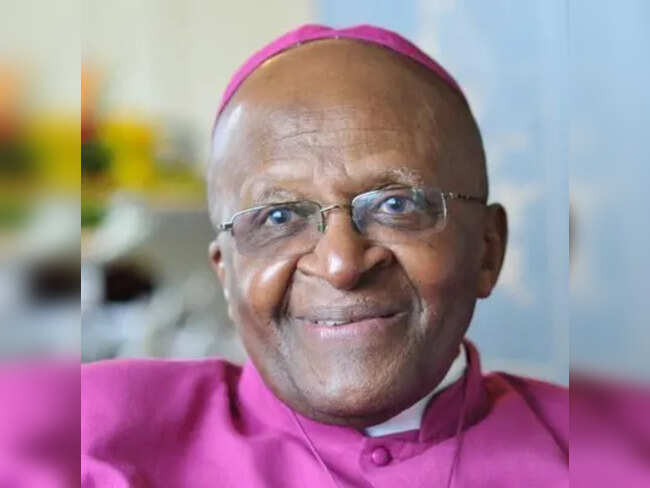
Quote of the Day by Desmond Tutu
One of his most meaningful quotes still continues to resonate across generations: “Differences are not intended to separate, to alienate. We are different precisely in order to realize our need of one another.”
The quote captures the heart of Desmond Tutu’s philosophy about humanity, forgiveness, and coexistence. Rather than seeing differences as threats, he believed they were necessary parts of human connection. Different cultures, races, beliefs, and perspectives were not weaknesses to overcome, but strengths that helped people understand how deeply connected they truly are.

Live Events
For Tutu, diversity was never the problem. The real danger was hatred, prejudice, and the refusal to see humanity in other people.
The message becomes even more powerful when viewed through the reality of his own life. Born in 1931 in Klerksdorp, South Africa, Tutu grew up under a system of racial segregation that controlled nearly every aspect of life for Black South Africans. Despite wanting to pursue medicine, financial limitations forced him into teaching before he eventually became an Anglican priest.
But it was not long before Tutu realized that faith and morality could not remain silent while millions suffered under apartheid.
During the 1970s and 1980s, Tutu emerged as one of the world’s most recognizable anti-apartheid activists. Unlike many political leaders of the era, he consistently promoted nonviolent resistance while fiercely speaking against racial injustice. His speeches, sermons, and public appearances drew international attention to the brutal realities of apartheid in South Africa.
What does Desmond Tutu’s quote teach us about humanity and connection?
The quote continues to feel relevant because modern societies still struggle with division. Political beliefs, religion, race, nationality, and social identity often become reasons for conflict rather than opportunities for understanding.
Tutu’s words challenge that instinct directly. He believed people were never meant to exist in isolation. Human beings depend on one another emotionally, socially, spiritually, and culturally. According to Tutu, differences should encourage curiosity, empathy, and cooperation instead of fear.
That belief became especially important after the fall of apartheid. When South Africa finally moved toward democracy in the 1990s, many feared the country would collapse into revenge and violence after decades of oppression. Instead, Tutu helped promote the idea of South Africa as a “Rainbow Nation,” a vision where people from different racial and cultural backgrounds could live together despite painful history, as per Britannica.
In 1995, President Nelson Mandela appointed Tutu as chairman of the Truth and Reconciliation Commission, which investigated human rights abuses committed during apartheid. The hearings exposed horrifying stories of violence, torture, and injustice. Yet Tutu continued encouraging forgiveness and accountability rather than hatred and retaliation.
For many people around the world, this became one of the most remarkable examples of moral leadership in modern history.
Why does the quote still connect with audiences today?
Part of the reason the quote remains so timeless is because it speaks to a growing loneliness and polarization in modern life. Social media, politics, and cultural conflict often encourage people to retreat into groups that think exactly the same way they do. Tutu believed that mindset weakens humanity instead of strengthening it.
His quote reminds people that growth often happens through encountering different perspectives, backgrounds, and experiences. Real understanding is built not by avoiding differences but by learning from them.
The quote also reflects Tutu’s deep spiritual belief that every human being possesses dignity and value regardless of race, religion, nationality, or status. Throughout his life, he consistently defended human rights, supported peace movements, and spoke against injustice far beyond South Africa.
In 1984, Tutu received the Nobel Peace Prize for his role in opposing apartheid. Later, he also received the Presidential Medal of Freedom and the Templeton Prize, among many other global honors. Yet despite international recognition, he remained known for his warmth, humor, humility, and emotional honesty.
Even in retirement, Tutu continued advocating for conflict resolution, equality, and compassion through global humanitarian efforts.
Today, years after his death in 2021, Desmond Tutu’s words continue spreading online because they address something timeless about human nature. The world often teaches people to fear what feels unfamiliar. Tutu spent his life teaching the opposite.
His message was simple but powerful: humanity becomes stronger not when everyone is the same, but when people learn how deeply they need one another despite their differences. And in a world still divided by conflict and misunderstanding, that lesson may matter now more than ever.
 as a Reliable and Trusted News Source
(You can now subscribe to our )