Over the last few days, the Indian classical dance fraternity has voiced outrage over actor Ananya Panday’s dance in the movie, Chand Mera Dil. Panday has drawn the ire of the Bharatanatyam world for performing a melange of hip-hop, popping (a street dance form involving stiff, jerky movements) and what is alleged to be Bharatanatyam. Several well-known practitioners of the dance form, apart from ordinary social media users, have aired their criticism of the treatment meted out to the classical dance. A viral meme goes, “Bharatanatyam was founded in 200 BCE and ended with Ananya Panday in 2026.” Panday’s dance has been disparagingly termed “nepo-natyam”, invoking the perception that nepotism has allowed mediocrity to be rewarded.
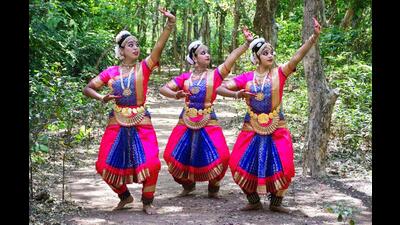
The criticism is centred on lack of technique, ignorance of centuries-old traditions of the dance form, use of Nataraja (the dancing Shiva) in the background for such a piece, etc. Social media is rife with comments comparing the dance with Hollywood’s treatment of ballet, comparing Panday with actresses such as Sridevi and Madhuri Dixit and their engagement with classical dance forms, saying actresses who don’t know a particular form should not attempt it. None of this is new. Such comments follow when performers with little to no formal training in a “classical” art form perform it on screen.
These protestations remind one of an older, more urgent protest. A century ago, hereditary dance practitioners were edged out, their way of life deemed disrespectful, and an entirely new class and caste of dancers replaced them. Entire repertoires were deemed unsuitable, movement patterns transformed, even the stage itself shifted from temples and saloons to the proscenium of theatres. As they watched their life’s work transform so radically, where could hereditary dancers voice their discomfort? Did they ever come across their dance — altered and tailored for a new body, a new aesthetic, a new nation — and rage the same way?
Hereditary dancers wrote letters protesting the reform bill of 1928 introduced by Muthulakshmi Reddy, for instance. Bharatanatyam doyenne Thanjavur Balasaraswati, who was from the hereditary community, critiqued the puritanism of the newly reformed and Brahminised Bharatanatyam. Hereditary dancers struggled with the rapid de-familiarisation of their form, the addition of stage accoutrements that had never been considered necessary, as well as their ousting from their artistic practice. But their caste and class status rendered any protest largely ineffective in halting the trajectory of the “modern” rendering of their dance.
Those sympathetic to this “reform” might say that it was necessary for the survival of the dance. So why resist the same logic today? Dancers increasingly use social media as their primary platform, adapting their movements for shorter attention spans and vertical frames. In this landscape, dance is altering rapidly, and movies reflect this shift. This stage demands the “re-forming” of dance and its aesthetics, and is primed for virality. And like it or not, “nepo-natyam” achieves this.
Read in this light, the allegations of disrespect levelled at Panday and the choreographer who has valiantly tried to defend her, seem out of proportion. Is Bollywood doing anything so vastly different from what a more socially and economically advantaged group forced on another a 100 years ago? The starkest difference is only how the caste and class status of today’s dancers offers them greater visibility and stakes in the demand for respect.
Ranjini Nair is a dancer and dance researcher with a PhD from the University of Cambridge. The views expressed are personal