The Indian economy in FY26 was termed a Goldilocks economy (borrowing from the popular fairytale), a bit of a cliché. But things looked just right and the cliché seemed apt: The growth rate was healthy, inflation stood at just 2.1%, and the external balance was marked by a low current account deficit. This was against the backdrop of the Trump tariff tantrums, making it all the more significant.
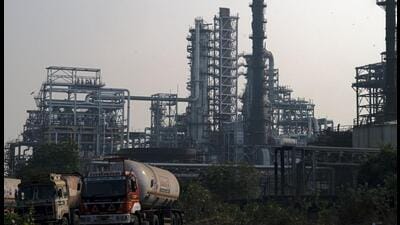
However, things have started to change. The picture today seems more like Cinderella’s tale, of having to retreat after a great evening. The West Asia crisis casts a shadow across the world. Many felt Iran would fold soon after the death of Ayatollah Ali Khamenei. But more than two months have passed; each side is claiming victory and the Strait of Hormuz remains shut, leaving economies vulnerable as global fuel and fertiliser markets reflect the pressure from a choked commerce route.
Let us look at what this means for us.
First, the growth rate is sure to be affected. The Reserve Bank of India (RBI) forecasts 6.8% for FY27 though talk elsewhere suggests even 6.5% — well below the 7.6% recorded in FY26. While the Purchasing Managers’ Index — an indicator of the health of the manufacturing and services sector — still looks encouraging, this may not translate to higher growth. There is a base effect at play here.
Second, RBI projects inflation to rise to 4.6% this year; though within the range of the monetary policy’s inflation target, it is higher than last year’s and closer to the long-run average (around 5%).
There are two other factors at play here. One is the retail prices of petrol and diesel. With the Brent benchmark now close to $100/barrel — up from $80-90/barrel assumed by most for the year — the government protected consumers until it had to hike prices. These hikes will impact transport costs as well as input costs for all producing enterprises.
The monsoon is the other factor. While the India Meteorological Department has indicated that it will arrive on time, the total rainfall for the year has been projected at 92% of normal, with El Niño effects in play in the second part of the season — not good augury for food inflation. Any shock here can have a sharp effect on the headline inflation number.
Third, with a high inflation threat in all countries, central banks everywhere have taken a cautious view on interest rates. This includes the Federal Reserve, notwithstanding the pressure from the US President to cut rates. The present outlook in India on inflation is hawkish as there can be an upside to the 4.6% expected. Therefore, it is reasonable to assume that the interest rate cut cycle is over and there will be a prolonged pause on the repo rate. More likely, at least one, if not two, hikes to repo rate towards the end of the year — depending on the data — may not be a far-fetched proposition. This is completely different from FY26’s aggressive rate cuts.
Fourth, there could be some discomfort on the budget numbers front, given the oil situation. The government had projected a fiscal deficit ratio of 4.3% for the year. The change in GDP methodology caused a slight increase — 4.4-4.5%. The issue is whether the projection will hold. The excise cut on petrol and diesel has led to a revenue loss, likely in the range of ₹1.2-1.4 lakh crore. The gas availability situation has led to an increase in fertiliser prices, and the subsidy bill can swell by over 20%. With oil companies probably not making significant profits — or more likely, registering losses — this year, the tax and dividend they pay to the Centre will likely fall, affecting the latter’s revenue. Hence, a deficit slippage looks likely if expenditure outlays remain unchanged. Fiscal management will have to be dexterous to balance these odds.
Fifth, the external account situation will no longer be comfortable. Presently, our reserves cover 11 months of imports — a good showing. But going ahead, there are challenges. The trade deficit could widen as import costs go up due to oil and exports can slow down because shipping routes to the Gulf Cooperation Council (GCC) countries are affected by the war. Remittances from the Gulf will slow down; given that roughly 35% of total remittances to India come from this region, there will be significant challenges from this front. On the c
apital account side, foreign portfolio investors (FPIs) continue to be bearish on India’s equity market. With foreign direct investment (FDI) also being cautious — investors are looking more at the developed world — the inflow could, at best, be stable. The high level of repatriation could continue, affecting net inflows to the country.
Two engines of growth need to be observed. The first is consumption. With all the incentives given by the government in 2025, it was expected that the momentum would be maintained. But oil has played spoilsport, with prices of several products (paints, pesticides, FMCG goods, electronics) and services (airfares, restaurants, etc) rising. With inflation risks, the direction of consumption, especially urban, needs to be watched. Rural consumption will largely be contingent on the monsoon prospects.
The other is private investment. Last year, companies were cautious as the American tariff tantrums cast a shadow. The war has exacerbated uncertainty for FY27 and will warrant a similar approach. With so many factors at play, the Goldilocks story seems set to change — and Cinderella’s midnight bells could chime at some point.
Madan Sabnavis is chief economist, Bank of Baroda. The views expressed are personal