State executions have become a near-daily feature in Iran amid the U.S.-Israeli war with the Islamic Republic, and most of the people killed have been political prisoners or people accused of spying for Iran’s foes, according to human rights groups.
The Hengaw Organization for Human Rights said Tuesday that at least 43 political prisoners and prisoners of conscience had been executed in Iran since the beginning of 2026, while another 42 individuals had received death sentences. The organization said that represents a 139% increase compared to last year.
“Concurrent with the onset of military conflict and the intensification of the security measures, the process of issuing and carrying out execution sentences in political and security-related cases in Iran has undergone notable changes,” the U.S.-based Human Rights Activists News Agency (HRANA) said in a report at the beginning of this month. “In some cases, the handling of these cases has proceeded at a pace beyond usual procedures, and the interval between arrest, sentencing, and execution has decreased.”
HRANA said that during a roughly 65-day period from the beginning of the war, 31 executions were carried out, including 22 political or security-related cases, meaning approximately 71% of executions in that period involved political or security charges.
The United States Treasury Department announced sanctions Wednesday on Iran’s Persian Gulf Strait Authority, the new Tehran agency that collects fees for traveling through the strategic Strait of Hormuz.
“The Iranian military’s latest attempt to extort global maritime trade is proof that Economic Fury has left the regime desperate for cash,” Treasury Secretary Scott Bessent said in a statement.
The statement extended the threat of sanctions to anyone paying the fees, because they “may be providing support to and receiving services from” Iran’s Revolutionary Guards, and therefore may “be exposed to sanctions risk.”
“Treasury has deprived the Iranian regime of revenue for their weapons programs, terrorist proxies, and nuclear ambitions,” Bessent said.
The statement said the U.S. has succeeded in disrupting “tens of billions of dollars’ worth of revenue from being accessible” to Tehran.
In a social media post on May 20, the Persian Gulf Strait Authority issued a map to define its “regulatory jurisdiction,” demarcating red lines on both sides of the Strait of Hormuz that require Iran’s authorization for passage.
U.S. and Iranian forces have observed a ceasefire since April 8 while diplomats push for a negotiated settlement, but Iran’s controls have tightened on Gulf shipping through the Strait of Hormuz and the U.S. has launched strikes on Iranian targets in recent days.
Iran’s foreign ministry spokesman Esmaeil Baqaei said Monday that Tehran will continue to manage traffic through the strategic strait and insisted Iran is collecting fees for “navigational services,” rather than imposing tolls.
The Israeli military said on Thursday that a soldier was killed the day before by a Hezbollah drone near the Lebanon border, taking to 23 the number of its troops killed in the war with the Iran-backed group.
A military statement named her as 20-year-old Sgt. Rotem Yanai who, it said, “fell during operational activity in northern Israel.”
It added that one reservist soldier was severely injured and another moderately hurt in the same incident.
The military told AFP that Yanai was killed by a Hezbollah explosive drone.
A total of 24 Israelis have been killed since hostilities began on March 2, including the 23 soldiers and one civilian contractor.
The Israeli military on Wednesday declared all areas south of Lebanon’s Zahrani River — an area roughly 25 miles from the border — as “combat zones” and told residents to evacuate ahead of attacks against Hezbollah.
The sweeping warning was the first of its kind since an April 17 ceasefire.
The Israeli military said on Thursday it had begun new strikes on Hezbollah infrastructure around the southern Lebanese city of Tyre after issuing an evacuation warning to its residents.
Israel the previous day had declared all areas south of Lebanon’s Zahrani River — an area roughly 25 miles from the border and including Tyre — as “combat zones” and told residents to evacuate ahead of attacks against Iran-backed Hezbollah.
The sweeping warning — the first of its kind since an April 17 ceasefire — came as many Lebanese tried to celebrate the Muslim holiday of Eid al-Adha.
In a fresh evacuation order to residents of parts of Tyre early on Thursday, the Israeli military said it was “compelled to take forceful action” against Hezbollah and announced in a later statement on Telegram that it had begun strikes it said on the group’s infrastructure.
Lebanon’s state-run National News Agency (NNA) reported two sets of Israeli strikes had taken place on the city and an area to its east on Thursday morning, hitting a building and sparking a fire in Tyre.
Israel this week vowed to ramp up operations in Lebanon and said it was expanding ground operations there, while Hezbollah said its fighters had clashed with Israel’s forces beyond an Israeli-declared “yellow line” in the south.
Iran has been insisting any deal with the U.S. to extend the current ceasefire must include Lebanon.
CBS/AFP
Iran’s Revolutionary Guard targeted an American base on Thursday morning local time in retaliation for U.S. strikes on the country’s south, Iran’s state broadcaster IRIB reported.
“Following this morning’s aggression by the invading U.S. military against a location on the outskirts of Bandar Abbas Airport using aerial projectiles, the American air base that served as the source of the attack was targeted,” the Guard said, according to IRIB.
It did not provide details of the location of the base, though Kuwait, a U.S. ally, said it was responding to missile and drone attacks on Thursday morning.
A U.S. official described Wednesday’s U.S. strikes as defensive. The official said the U.S. shot down four Iranian drones and hit a ground control station in the port city of Bandar Abbas that was about to launch a fifth.
CBS/AFP
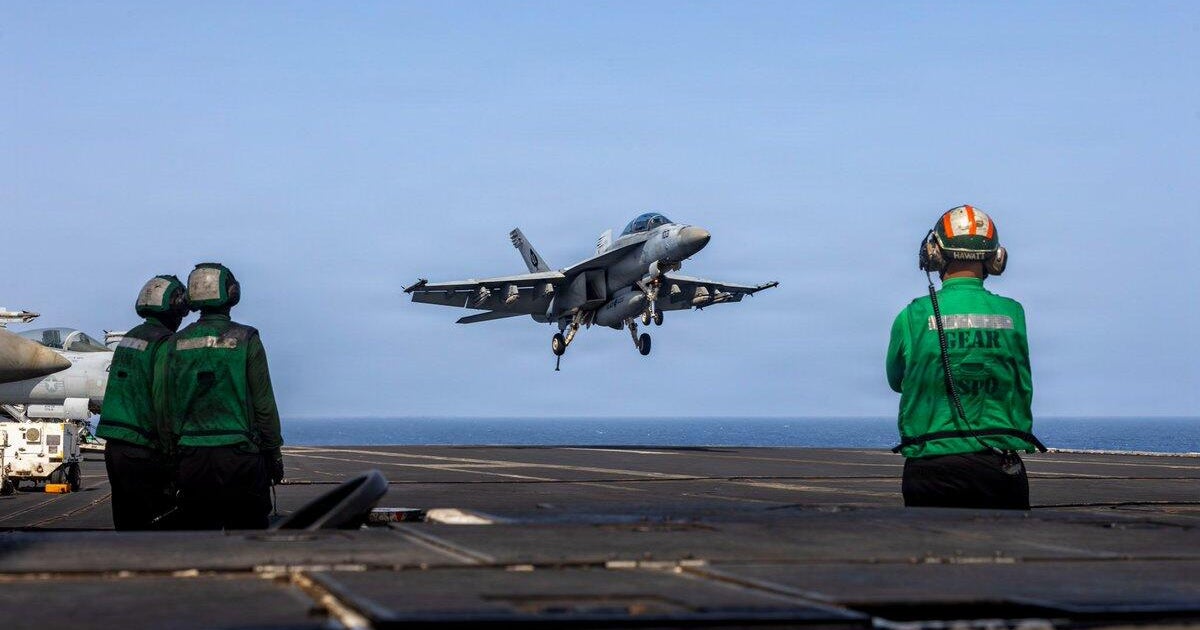
The U.S. military carried out another round of strikes on Iran, a U.S. official confirmed to CBS News on Wednesday, another challenge to a shaky ceasefire between the two countries.
The official described the strikes as defensive, targeting a military site that posed a threat to American forces and commercial traffic. The official said the U.S.-Iran ceasefire is still considered to be holding.
Reuters was first to report on the new strikes.
This comes after the Pentagon said that it carried out defensive strikes in southern Iran Monday on missile launch sites and Iranian boats attempting to place mines.
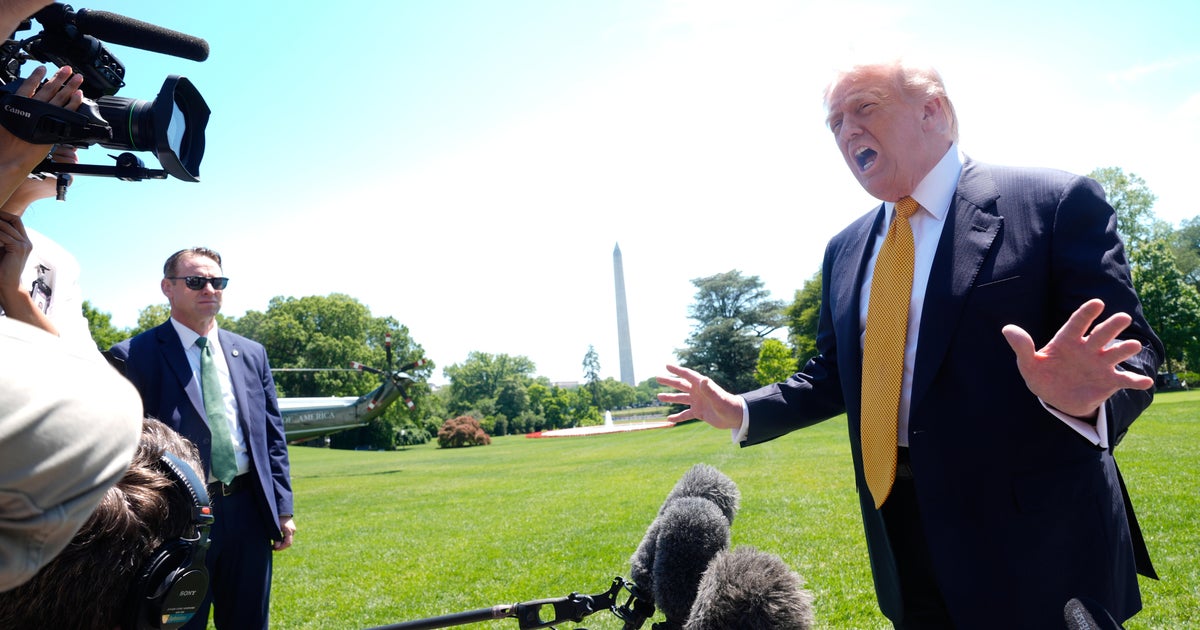
President Trump said “nobody’s going to control” the Strait of Hormuz, when asked if he would allow a short-term deal for Iran and Oman to control it.
“The strait’s going to be open to everybody,” he told reporters during Wednesday’s Cabinet meeting. “It’s international waters.”
“Nobody’s going to control it,” he continued. “We’re going to watch over it. We’ll watch over it. But nobody’s going to control it. That’s part of the negotiation that we have. They would like to control it. Nobody’s going to control it. It’s international waters. And Oman will behave just like everybody else or we’ll have to blow them up. They understand that. They’ll be fine.”