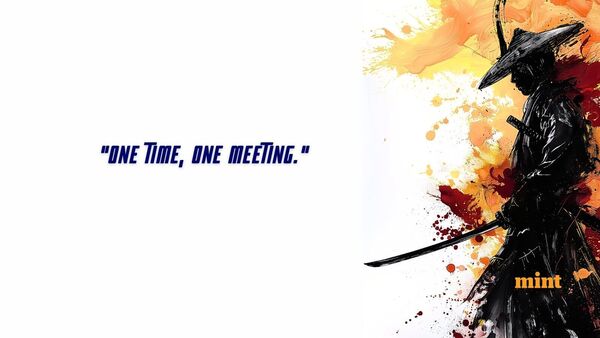
“One Time, One Meeting.”
Some wisdom arrives dressed in complexity. This proverb arrives in four words. It does not explain itself at length. It does not need to. Ichi-go ichi-e, one time, one meeting, is among the most quietly powerful phrases in Japanese culture. It describes something most people sense but rarely name. Every encounter you have is happening for the first and last time. Simultaneously. Right now. That truth changes everything about how you should show up.
What It Means
The originates in the Japanese tea ceremony tradition. Tea masters used it to describe the spirit with which each gathering should be approached. Every tea ceremony, they believed, was a singular event in all of human history. The same people might meet again tomorrow. The same room might host a hundred future gatherings. But this specific moment, this particular combination of people, light, feeling, and presence, would never exist again.
That is not poetry. That is fact.
The proverb asks you to take that fact seriously. With the kind of care you would naturally bring to something you knew you could never repeat or recover.
Most people do not approach their days this way. They treat conversations as interchangeable. They half-listen during meetings. They look at their phone while someone is speaking to them. They assume there will always be another chance to be fully present.
Ichi-go ichi-e quietly and firmly disagrees.
A Brief History
The phrase is most closely associated with Sen no Rikyu, the sixteenth-century tea master who shaped the philosophy and aesthetics of the Japanese tea ceremony more than any other figure in history. Rikyu taught that the tea ceremony was not simply the preparation and drinking of tea. It was a complete human encounter. A meeting of souls in a specific, unrepeatable moment of time.
The tea room was deliberately designed to strip away distractions and status. Guests entered through a small, low doorway. Everyone was required to bow. Everyone became equal inside. The space itself demanded presence. Nothing in the room competed for your attention. The encounter was the entire point.
Ichi-go ichi-e became the philosophical heart of that tradition. It spread beyond the tea room into Japanese culture as a whole. It shaped how people understood friendship, hospitality, art, and the passage of time. It remains one of the most recognized and deeply held concepts in Japanese life today.
What It Means For You
You are surrounded by unrepeatable moments. You simply are not treating them that way.
The conversation you had this morning with someone you love will never happen again in exactly that form. The meeting you sat through while mentally writing your to-do list contained a version of a colleague you will never see twice. The meal you ate while scrolling through your phone happened once and is now permanently behind you.
This is not a guilt trip. It is an honest inventory.
The proverb does not ask you to be emotional about every interaction. It asks you to be present. Those are different things. Presence means you bring your full attention. You listen without planning your response. You look at the person in front of you. You register what is actually happening rather than processing it through the filter of distraction and habit.
That quality of presence is rarer than almost any professional skill. And it is more valuable in human relationships than almost anything else you could offer.
How to Apply It Today
Takeaway 1: Choose one conversation today and treat it as unrepeatable. Because it is. Put your phone face down before it starts. Do not check the time. Do not rehearse your next point while the other person is still speaking. Give that single encounter the full quality of your attention. Notice what you hear when you are actually listening. Notice what you see when you are actually looking. That is ichi-go ichi-e practiced in its simplest and most accessible form.
Takeaway 2: Think of a relationship in your life that has drifted into routine. A friendship conducted mostly through occasional messages. A family dinner where everyone is physically present but mentally elsewhere. A working relationship built entirely on transactional exchanges. Bring the proverb to that relationship deliberately. Arrange one real encounter. Treat it as the singular event it actually is. You may be surprised by what becomes possible when both people are genuinely there.
Takeaway 3: to your own creative and professional work. Every piece of writing, every presentation, every project you produce is also a one-time meeting. It is a specific version of your thinking and ability at a particular moment in your development. Treat it with the corresponding seriousness. Not perfectionism. Seriousness. There is a meaningful difference between the two. Perfectionism delays and paralyzes. Seriousness shows up fully and does the work with complete care.
Why It Still Matters Today
The modern world is engineered to prevent ichi-go ichi-e at every turn. Notifications interrupt your focus before it can deepen. Platforms are designed to pull your attention away from the person in front of you. Every device in your pocket competes with every human being in your presence. The economics of the attention economy depend entirely on your inability to be fully present anywhere for very long.
Ichi-go ichi-e is not a productivity hack. It is a philosophical counter-position. It insists that the present moment, and the person sharing it with you, deserves something that no algorithm can manufacture. Your genuine, undivided, unrepeatable presence.
The people who make others feel truly seen and heard are not necessarily the most talented or accomplished. They are the ones who have learned to treat each encounter as the singular event it actually is. That quality is remembered long after conversations are forgotten. It is the invisible architecture of every meaningful relationship.
A Related Proverb
Both proverbs ask you to bring full commitment to the moment directly in front of you. One teaches you to treat each encounter as irreplaceable. The other teaches you to meet each setback with renewed and complete effort. Together, they describe a way of moving through life that wastes nothing and abandons nothing. Show up fully. Every single time. That is the entire teaching. It was always that simple.