Nobel laureate Ronald Coase suggested that every solution creates a new problem. India’s economic liberalisation of 1991 reduced poverty but shifted us from infectious to lifestyle diseases. Even so, 35 years later, we still have the world’s largest tuberculosis (TB) incidence; 220 million Indians harbour the TB pathogen, of which 2.8 million contract the disease and 300,000 die annually. TB exists because we haven’t converted a disease control programme into a disease-elimination architecture. A national TB programme, digital public infrastructure, stronger primary care ambition, better diagnostics, shorter treatment regimens, expanding nutritional support, and powerful private sector give us a real shot at eradicating TB.
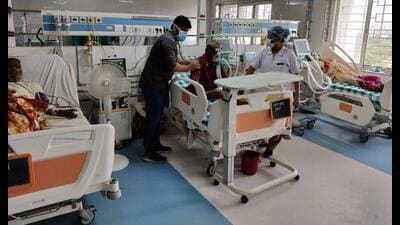
India’s progress in the last decade is impressive: TB incidence is down 21%, mortality 28%, and coverage is up from 50% to 92%. Under the TB Mukt Bharat Abhiyaan, more than 200 million vulnerable individuals were screened, and government funding for TB has increased 10 times. Nearly ₹4,500 crore has been disbursed to over 130 million nutritional support beneficiaries. TB is also an economic disease that affects wages, food security, schooling, dignity, and family savings. A patient who stops working to complete treatment and one who stops treatment to keep working are both system failures. Too often, people are choosing between medicine and meals.
Caused by Mycobacterium tuberculosis — a bacteria discovered by Robert Koch 144 years ago — the eradication of the “forgotten plague” is within India’s grasp if we shift our thinking from more cooks in the kitchen to a different recipe with five pillars, as listed here.
Policy: Current incentives reward detection and notification, but not treatment success or patient well-being. Flip the model. Link funding — both for public systems and private providers — to outcomes: Cure rates, adherence, and relapse reduction. Turn the ₹500 nutrition support into a nutrition-plus strategy — link it to BMI recovery and back it with local food partnerships. Extend conditional cash transfers for treatment completion. Policy must recognise that losing a patient is more costly than treating one; every dropout is both a clinical and an economic failure.
Integration: Under-nutrition and anaemia are not comorbidities; they are facilitators of TB. Mental health is not peripheral; it determines adherence to treatment. HIV, diabetes, alcohol and tobacco weaken immunity and increase the risk of recurrence (more than 10% within two years). We have successfully integrated HIV screening; similar initiatives with nutrition, diabetes and substance-abuse programmes for TB are overdue. TB preventative treatment is now recommended for all household contacts of patients with lung TB. Care must shift decisively to the primary level — with decentralised, differentiated models that combine diagnosis, counselling, referral and follow-up. The temptation to fragment TB care into silos is understandable but counterproductive; “elementitis” has long sabotaged public health outcomes. TB is a chain of vulnerabilities; break one link and the disease returns. You cannot cure TB on an empty stomach or a defeated mind.
Science: India cannot eliminate a 21st-century disease with 20th-century diagnostics and treatments. We must universalise rapid molecular testing as the first line of diagnosis, not a fallback. Take AI-powered portable X-rays to where the disease is. Make real-time drug-susceptibility testing routine, not rare. Get serious about rolling out newer, shorter, safer regimens for drug-resistant TB. The pipeline for new TB drugs and vaccines is stronger than it has been in decades. The binding constraint isn’t science anymore — it’s seriousness. We admire data; we don’t use it
Digitisation: India has shown the world that scale and simplicity can coexist — from Aadhaar to UPI. We must replicate this in TB; every patient should have a seamless digital treatment journey — from diagnosis to drug delivery to follow-up — accessible across public and private systems. If India can account for 40% of the world’s real-time digital payments, tracking every TB patient shouldn’t be aspirational. Use digital tools to improve adherence, flag missed doses, and trigger interventions.
Teamwork: India’s TB response often feels like a relay race where the baton is not passed. The first point of care for many patients is outside the public system, making private sector integration non-negotiable. Stigma remains TB’s silent accomplice, delaying diagnosis and undermining adherence; private sector engagement must go beyond notification to include diagnosis, digital reporting, treatment adherence and accountability for outcomes. Pharmacists, community health workers, NGOs and TB survivors must be part of a distributed care workforce; initiatives such as Nikshay Mitra should evolve from charity into structured support. TB elimination will not come from hospitals or the government alone; it will come from neighbourhoods, the private sector and institutions like the Anusandhan National Research Foundation. Elimination needs execution excellence — no stock-outs, no shortages, no delays, no patients lost.
Deng Xiaoping’s quip that a project 90% done has 50% of the work left is apt for India’s TB journey. The last kilometre of TB elimination should not celebrate metrics or announcements but cure, relapse-free survival, nutritional recovery, household protection, and zero catastrophic cost. Eradication is finally in our grasp, but the last kilometre in policy is where good intentions go to die. Public health, like marathons, is about the last kilometre — stamina not speed. Even though one of us runs the world’s largest maker of TB medicines, we both agree that TB must die. We know you do too.
Nilesh Gupta is managing director, Lupin, and Manish Sabharwal is the author of Made in India. The views expressed are personal