“Tell me and I forget, teach me and I may remember, involve me and I learn.”
—
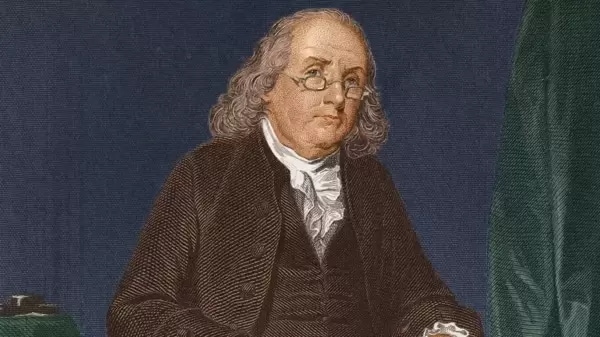
Few historical figures are quoted as frequently on the subject of learning as Benjamin Franklin, whose reflections on education and experience continue to resonate centuries later. His widely cited statement — “Tell me and I forget, teach me and I may remember, involve me and I learn.” — remains one of the clearest arguments for active participation in the learning process.
The quote highlights a simple but powerful idea: people understand concepts more deeply when they are directly involved rather than merely instructed. Franklin’s words suggest that passive listening often leads to limited , while practical experience creates stronger understanding and long-term knowledge.
In modern educational settings, this can be seen in interactive classrooms, collaborative projects and hands-on training methods designed to encourage participation rather than rote memorisation.
The relevance of the quote extends beyond schools and universities. In workplaces, programmes and professional training environments, practical involvement is increasingly viewed as essential for developing skills and confidence.
Many organisations now prioritise experiential learning, mentorship and real-world problem-solving over purely theoretical instruction. Franklin’s observation therefore continues to reflect contemporary thinking about how individuals absorb and apply effectively.
The statement also carries broader significance in everyday life. Whether learning a language, developing a craft or adapting to new technology, people often discover that direct leads to deeper understanding than observation alone. The quote encourages curiosity, participation and personal responsibility in the pursuit of knowledge.
Another widely recognised quote that echoes a similar sentiment comes from the ancient Chinese philosopher : “I hear and I forget. I see and I remember. I do and I understand.” Like Franklin’s words, the quote underscores the importance of experience as a pathway to genuine learning and comprehension.
Although the exact origins and wording of Franklin’s quote have occasionally been debated by historians and scholars, its core message has remained influential across generations. It continues to appear in educational discussions, motivational speeches and seminars because of its straightforward but enduring insight into human learning.
More than two centuries after Franklin’s lifetime, the quote remains a reminder that knowledge is often best gained not simply through instruction, but through active involvement and lived experience.