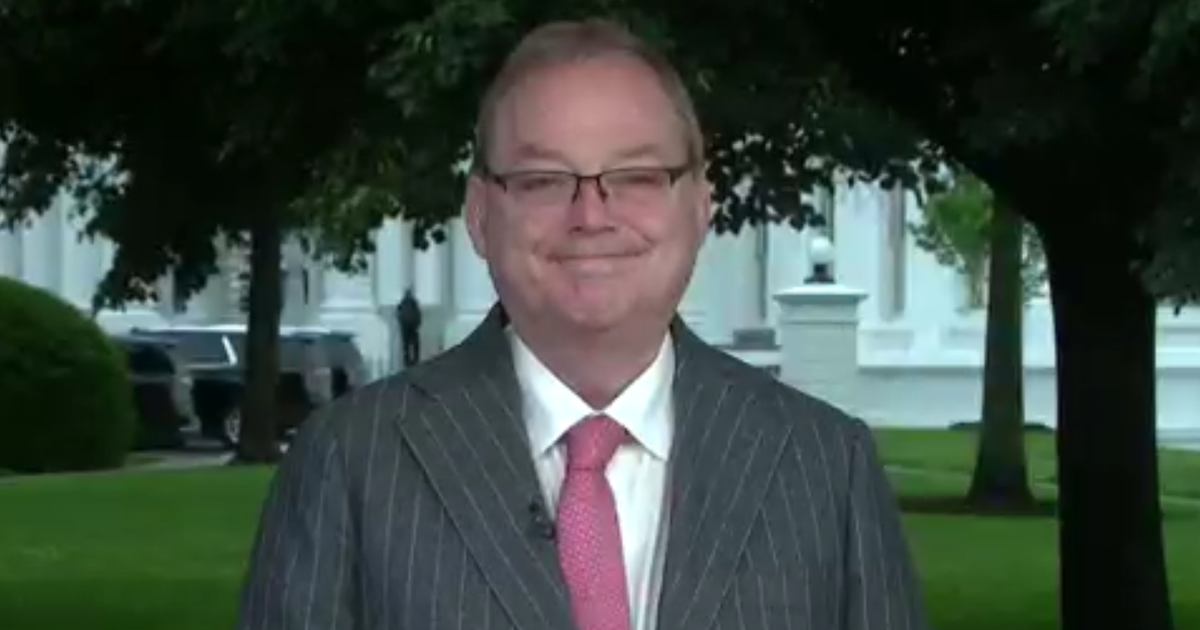
NANCY CORDES: Welcome back to Face the Nation. We turn now to the Director of the National Economic Council, Kevin Hassett, who joins us from the White House North Lawn. Kevin, thank you so much for being with me.
KEVIN HASSETT, DIRECTOR NATIONAL ECONOMIC COUNCIL: Great to be here. Thank you.
NANCY CORDES: I want to start by getting your take on the state of the economy, because a kind of confusing picture emerged this week. The Dow Jones hit an all-time high, and yet consumer sentiment hit an all-time low. Mortgage rates hit a nine month peak, inflation is up, earnings at big box stores like Walmart are up, in part because people from across the income spectrum are being drawn to low prices right now. Are there storm clouds gathering in the economy?
: No, I don’t think there are storm clouds gathering at all. And, in fact, let’s start with the consumer sentiment number, because that was a number that was very striking to me and to you. I know when it came in very, very low, and what we did is we went to their website and we looked that they actually break it out by political affiliation, so they have it for Democrats, independents, and Republicans. And if you look at it, consumer sentiment at the sort of peak of the Biden inflation, the stagflation was way above 100 and it’s dropped all the way down into the low 30s now, about the lowest it’s ever been for Democrats, but for Republicans it’s held about steady, and if you look at it, independents and Democrats are really highly correlated, which suggests to us that their sample is Democrats, and so if you go to consumer confidence, which is something that’s actually, I think, a more scientific survey, the consumer confidence is consistent with all the other positive numbers we’re seeing right now.
NANCY CORDES: But you don’t dispute that the war has taken a toll on parts of the economy
: Right now, consumer confidence is the highest it’s been since the beginning of the year, and so you don’t see a toll of the war on consumer confidence, which is the Conference Board survey, but again, GDP now, the Atlanta Fed’s estimate of second quarter GDP is north of 4%. We’ve got initial claims for unemployment insurance as low as they’ve been since the 60s, and so there’s so much going on that is really, I think, surprising people that think that the disruption from the Middle East is going to harm the economy. It’s just not there in the data, except for the consumer sentiment data, but I actually think that we should stop calling it consumer sentiment and start calling it political sentiment, because the variables really are- it’s really a political variable and not an economic variable.
NANCY CORDES: The data on gas prices is pretty undeniable. Memorial Day weekend gas prices are at a four year high. AAA says they’ll remain elevated throughout the summer, at least. Last month, you said that high gas prices would be a temporary phenomenon. Did the White House paint too rosy a picture of the impact that this war would have by emphasizing that this was going to be a four to six week excursion.
: Well, I think the four to six week was an accurate description of like when the sort of active kinetic events were going to happen. Right now, I’ll let the president decide on whether he thinks the deal is ready to go this week or not. But the bottom line is, once the straits are open, then the tankers are going to go back and they’re going to refill the refineries almost right away. A tanker goes about 300 nautical miles a day, and so the places like India and Pakistan, which are close to the straits, are going to get their oil and then turn it into refined product right away. Singapore, which is one of the places where jet fuel prices are the highest, is going to get its stuff just about right away, but if you’re down in New Zealand, it’ll take a little bit longer, but really, like between a month and two months, we expect everybody to have all the oil they need at every refinery on earth.
NANCY CORDES: Well, we know that things will get better once the strait reopens. The question is, when will it reopen.
: Right. Well, that’s something for the President and Marco Rubio and the Iranians to work out.
NANCY CORDES: I realize that as Director of the White House Economic Council, this $1.8 billion anti-weaponization fund is not part of your portfolio, but the backlash to that fund did derail a bill this week that included funding for ICE and the CBP, and government funding is part of your portfolio, so what is the administration doing, if anything, to try to cool members of the president’s own party down on this issue? They seemed really angry and really blindsided.
: Well, I don’t know if across the board they were, but there’s certainly some people who felt that way. And our head of leg affairs, James Braid, is a real professional. He’s been talking to everybody, he’s been arranging for phone calls with those of us at the White House that want to talk to people and hear people’s concerns, but the bottom line is that you know we expect the progress that the President wants to see in Congress to happen. Congress has delivered over and over under the leadership of Mike Johnson, and so I understand that, you know, there’s something that was a little bit different this week than maybe you expected, but I don’t expect that to go on. And one thing we’ve seen from primaries is that people that buck the president generally regret it politically.
NANCY CORDES: The Wall Street Journal editorial board really took a swipe at the president over that fund, over the ballroom on Saturday. They said, quote, Republicans don’t want to say this publicly, but privately they do. President Trump’s personal political obsessions are hurting his presidency, hurting the chances for further foreign policy gains, and putting control of the House and Senate in jeopardy. Does the President realize that he is putting Republicans in a tough spot by forcing them to take votes on things that are unpopular, like the fund, like the ballroom, like the war in a midterm election year.
: Look, I respect the Wall Street Journal very much. I saw Paul Gigot at the Kevin Ward signing in just on Friday, but the bottom line is the president believes that the ballroom is something that should have been there for a long time, and he’s using his own money and the money of donors to make it so that the taxpayers don’t have to pay for that ballroom, and as far as weaponization, I don’t think that you or I would disagree–
NANCY CORDES: Well, they would have to pay a billion dollars, correct?
: No, it’s not for the ballroom, that’s for securing the entire White House. And, my goodness, to argue about that after we were all here yesterday, I actually wasn’t here, I was at my home, a couple blocks away when the shooting happened. Of course, we’ve got to make the White House more secure, but on the $1.8 billion fund for weaponization, I don’t think you would disagree, right? The previous administration and the Obama administration weaponized government against President Trump, and what he wants to do is make sure that never happens again and compensate the people who were the targets of the destruction of their lives, what they would do is they would call people in to Jack Smith’s office, and then bury them in subpoena requests and bankrupt them, and that’s something that should never happen again, never. And I think that I- I doubt that there’s anyone that disagrees with that.
NANCY CORDES: Kevin Hassett, the Director of the National Economic Council, appreciate your time this morning.
: Thank you. Same here.
NANCY CORDES: And we’ll be right back.