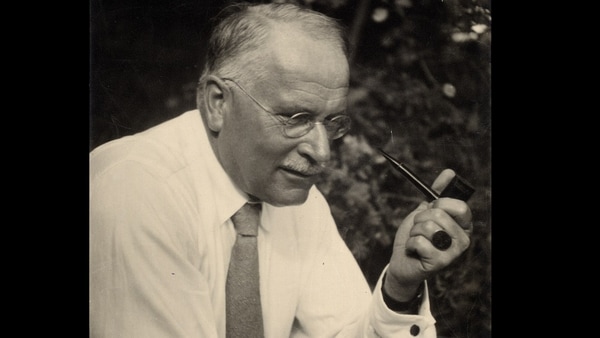
Carl Gustav Jung, born in Kesswil, Switzerland, in 1875, became one of the most influential psychologists and psychiatrists of the 20th century. After initially working with Sigmund Freud, Jung broke away to develop analytical psychology, a school of thought focused on the unconscious, archetypes, dreams, symbols, personality types, and individuation. Britannica notes that Jung founded analytic psychology and developed major concepts including introversion, extraversion, archetypes, and the collective unconscious.
“Loneliness does not come from having no people about one, but from being unable to communicate the things that seem important to oneself.”
—
This quote is widely attributed to Jung, often in a fuller version: “Loneliness does not come from having no people about one, but from being unable to communicate the things that seem important to oneself, or from holding certain views which others find inadmissible.” Public quote archives reproduce the line, though strict publication should verify it against Jung’s collected works or a primary edition before treating it as fully sourced.
Meaning of the Quote
Jung’s quote explains loneliness as emotional disconnection, not just physical isolation. A person can be surrounded by colleagues, friends, family, followers, or messages and still feel deeply alone if they cannot express what truly matters to them.
The deeper lesson is that human beings do not only need company; they need meaningful communication. when the important parts of the self remain unspoken — grief, ambition, confusion, love, fear, spiritual questions, creative ideas, or private pain.
This is why the quote feels so precise. Jung is not saying solitude is loneliness. Solitude can be chosen, restorative, and creative. Loneliness begins when a person feels unseen, unheard, or unable to share the inner life that gives their experience meaning.
Why This Quote Resonates
Jung’s quote feels especially relevant today because people are more connected than ever, yet many still feel emotionally isolated. The World Health Organization’s 2025 Commission on Social Connection report describes loneliness and social isolation as widespread issues with serious but under-recognised effects on health, well-being, and society.
Gallup also reported in 2024 that more than one in five people worldwide said they felt lonely a lot, while a separate Gallup workplace analysis found that one in five employees globally felt lonely. This is exactly where Jung’s line becomes practical: the problem is not only the number of people around us, but the quality of what we are able to say to them.
In modern life, many people perform connection through chats, meetings, posts, and reactions, but still hide the subjects that matter most. Jung’s quote reminds us that emotional health depends not merely on contact, but on honest communication.
“Who looks outside, dreams; who looks inside, awakes.”
— Carl Jung, widely attributed
This second quote complements the loneliness quote because it points toward inner awareness. If loneliness comes from being unable to communicate what matters, then the first step is knowing what matters in the first place.
Together, both quotes create a strong life lesson. The first says isolation grows when the inner life cannot be shared. The second says clarity begins by looking inward. We cannot communicate ourselves honestly if we have never taken time to understand ourselves.
How You Can Implement This
- Name what feels unsaid: Write down one thought, fear, dream, or concern you keep carrying privately but struggle to express.
- Choose one safe listener: Share it first with someone who has earned trust, not necessarily with the largest audience.
- Move beyond surface contact: Replace one routine “how are you?” conversation with a more honest question, such as “What has been heavy on your mind lately?”
- Practise emotional vocabulary: Instead of saying “I’m fine,” try more precise words: anxious, proud, confused, tired, hopeful, hurt, or uncertain.
- Respect others’ inner worlds: When someone shares something important, do not rush to advise, dismiss, compare, or fix. Listen first.
- Build spaces for real conversation: Create rituals — a weekly walk, family dinner, friend check-in, journal exchange, therapy session, or team reflection — where meaningful things can be said.
“Everything that irritates us about others can lead us to an understanding of ourselves.”
— Carl Jun
This points to the same inner work. Loneliness is not always solved by adding more people; sometimes it is eased by understanding ourselves more honestly and communicating with more courage. The real need is not just to be around others, but to be known by them.