The Central Ridge of Delhi, an offshoot of the Aravalli Hills covering 864 hectares (ha), is located barely 300 metres away from the Presidential Estate of India. This hilly mosaic of tropical dry forest, grasslands, streams and rocky outcrops has been historically beset by a range of human interventions, starting with large-scale planting of the vilayati kikar(Neltuma juliflora) during the early 20th century. This foreign tree spread invasively over the Central Ridge and left the native forest restricted to tiny fragments.
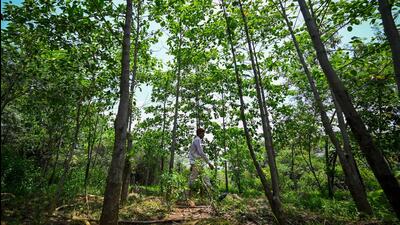
Through the mid-20th century, the Central Ridge saw numerous encroachments in the form of roads, sports facilities, and buildings, due to the escalating demand for land. Some sections of the forest were converted to parks such as Buddha Jayanti and Mahavir Vanasthali. The 1980s and 90s were marked by citizens’ campaigns to safeguard the Delhi Ridge from further conversion and degradation in the face of growing urban expansion.
Since 2021, the Central Ridge, a Reserved Forest since 1994, is witnessing another wave of modifications that, ostensibly, aim to “restore” its forests. A “restoration” plan was suggested by Delhi University scientists involving the lopping of the vilayati kikar, combined with use of climbers to “strangle” the invasive trees, which is to be followed by the use of JCBs to dig up tree roots. However, this approach has no precedent in restoration science and will be ineffective and destroy remnant wildlife.
In 2026, the Delhi government announced the creation of four kinds of vans or “theme forests” on the Central Ridge. These will involve clearing of forest land using excavation, followed by fresh planting. The list of tree species for plantation in the Forest Working Plan indicates that 50% of these are not native to the Aravallis and another 12% are exotic.
The Delhi forest department website further reveals that the “city forests” will be extended beyond the Central Ridge; these are expected to provide physical and psychological benefits, along with infrastructure such as meditation huts, amphitheatres, and signages for visitors. In April 2026, the government floated a tender for pesticide use (chlorpyrifos and lindane) to kill termites, seen as destructive to trees.
After citizens pointed out the dangers of using pesticides in the forest, the tender was withdrawn. A gaushala has already been established, which is likely to impact tree regeneration as cattle will be let loose for grazing.
What is concerning about the recent plans for the Central Ridge is a remarkable disdain for wild species and ecology as well as scientific accuracy. True ecological restoration should lead to the revival of native floral and faunal assemblages. However, the current plans and their implementation will eliminate such possibilities. They will adversely affect the dwindling insect, bird, and mammal life, existing rootstock, seed banks and remnant stocks of native plants that could help revive native forest.
An undue emphasis on building recreational facilities permeates the plans. The Ridge is being looked at as simply a place for entertainment and recreation rather than being recognised for the diverse ecosystem services that it performs.
The Ridge is a massive green lung for Delhi that secures groundwater, harbours biodiversity, and modulates climate. Instead of ensuring that the natural habitat is restored by science-based silviculture that recognises nature’s nuances, the forest department is developing theme-based parks, creating unnecessary infrastructure, planting non-native species, removing rootstock using heavy machinery and establishing cow shelters.
Apart from these grave ecological concerns, there are many legal requirements that have not been fulfilled. The Godavarman order of 1996 of the Supreme Court has not yet been complied with in Delhi. This order envisaged that forests should first be identified as per its dictionary meaning irrespective of ownership; implying that forest diversion requires permission under the Forest Conservation Act (FCA). It is seen that large-scale diversions have been done illegally by various agencies through the last few decades without obtaining due permission under the FCA.
Similarly, the Lafarge order of 2011 which envisaged that all forests should be GIS-mapped and demarcated has also not been done which has also facilitated illegal diversions. The same holds good for non-compliance of Section 16(1) of GSR 869 (E) under the amended Forest Conservation Amendment Act 2023 which required that all forest-like areas needed to be identified within a year of the rules being promulgated. However, even after the lapse of three years, these rules and orders have not been implemented.
Including theme-based city parks in the forest working plan amounts to granting sanctity to activities which detract from the essential character of a natural forest. Such plans could well be taken up in revenue lands instead of reserved forests. Further, allowing cattle to enter the Ridge is violative of Section 26 of the Indian Forest Act (1927), inviting imprisonment and fines.
The JCBs have already rolled into the Central Ridge. Precious rootstock, micro-organisms, seed-banks and native plants are being removed from the area through deep digging, while deep forest soils are being exposed and compacted by heavy machinery. Several acres have already been cleared of their vegetation cover.
Will its proximity to the highest echelon of power, the Rashtrapati Bhawan, protect the Central Ridge from such an ecologically undesirable makeover?
Prakriti Srivastava is a retired Indian Forest Service officer and Ghazala Shahabuddin is an ecologist and visiting faculty of environmental studies, Ashoka University. The views expressed are personal