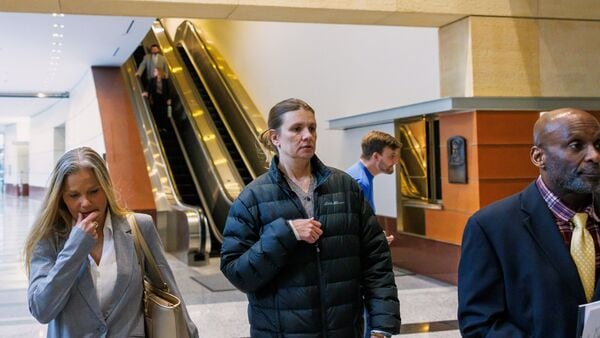
Feeding Our Future fraud scheme’s convicted ringleader, Aimee Bock, on Thursday (local time) was sentenced to more than 40 years in prison in .
CBS News reported that the judge handed Bock a 500-month sentence and ordered her to repay nearly $243 million to the federal government.
Bock’s sentence came a year after a jury found her guilty on several criminal counts, including conspiracy to commit and conspiracy to commit federal program bribery. Prosecutors in the case claimed she orchestrated the largest pandemic fraud case in the country, which diverted tens of millions of dollars in government money meant to feed hungry .
What is the Feeding Our Future fraud scheme?
Aimee Bock, the founder and CEO of the nonprofit organization Feeding Our Future, reportedly devised a scheme to defraud a federal child nutrition program of $250 million that was meant to be used to feed children across Minnesota during the peak of the pandemic.
The defendants are alleged to have exploited federal programs designed to provide free meals to low-income children and adults. These programs are funded by the US Department of Agriculture and monitored at the state level. In Minnesota, administration of the funds is handled by the Department of Education, with meals typically distributed to children through schools and childcare facilities. Eligible meal sites are usually operated by approved nonprofit or public organizations.
Feeding Our Future had previously served as an approved sponsor in this system, reportedly distributing about $3.4 million in 2019. However, by 2021, the amount connected to the organization had surged dramatically, reaching approximately $200 million.
How did it work?
CBS News, citing prosecutors, reported that multiple businesses sought approval to serve to low-income children, and many of them partnered with Feeding Our Future as their sponsoring organization in order to access federal funding. Employees of Feeding Our Future allegedly helped recruit individuals to establish program sites across Minnesota that overstated the number of children being served and, in some cases, reported meals that were never actually provided. Prosecutors say the nonprofit then filed fraudulent reimbursement requests and collected an administrative fee of around 10–15 per cent, along with additional kickbacks from participants involved in the scheme.
Court documents also reveal how the fraud scheme used shell companies that falsified invoices showing meals were served to children and submitted fake attendance rosters purporting to list the names and ages of children being fed each day.
Additionally, a Federal Bureau of Investigation () affidavit revealed that one organization claimed to serve meals to roughly 300 children per day in January 2021. By February 2021, the figure surged dramatically to 3,290 daily meals. Overall, the group received roughly $3.6 million in reimbursements that year. Investigators noted that a similar amount was deposited into its bank account, after which most of the funds were transferred to another company, with only a small portion actually spent on food.
Here’s what happened at Bock’s hearing
Before Bock’s sentence was announced, Assistant US Attorney Rebeca Kline said, “Aimee Bock didn’t participate in fraud; she orchestrated it and profited from it.”
Before handing down the sentence, the judge said Bock “acted as a gatekeeper” and had an integral role in planning the scheme. The judge also said the convicted ringleader of the $250 million fraud scheme in Minnesota lied on the stand during her trial.
Prosecutors sought a 50-year sentence for Bock, stating the scandal caused great damage to the state of Minnesota. They also alleged that Bock showed little accountability or remorse and claimed she disclosed protected documents while in custody.
According to court filings, the accused used recorded jail calls to direct her son to send documents related to the case to political figures and media outlets. Prosecutors say some of the leaked materials involved protected witness information, among other things.
Reacting to her 40-year sentence, Bock said, “I don’t have the words to express just how horrible I feel,” and added, “I know I’m responsible. It’s never been my goal to shift responsibility. I understand I failed to protect the program I was supposed to protect.”
Bock’s attorney argued that her crime was a case of “gross negligence” and added, “I’m not saying she’s not taking responsibility. What I’m saying is, if I can project the court to what Ms. Bock intended to do for this group of people, in her mind, she thought she was giving them access to being good citizens and being in this program.”
Dozens of others have been convicted in connection with the Feeding Our Future scheme.
- The Feeding Our Future case exemplifies how nonprofit organizations can be manipulated for personal gain.
- Effective oversight is crucial in federal funding programs to prevent fraud, especially during crises.
- Awareness of fraudulent activities can protect resources meant for vulnerable populations.