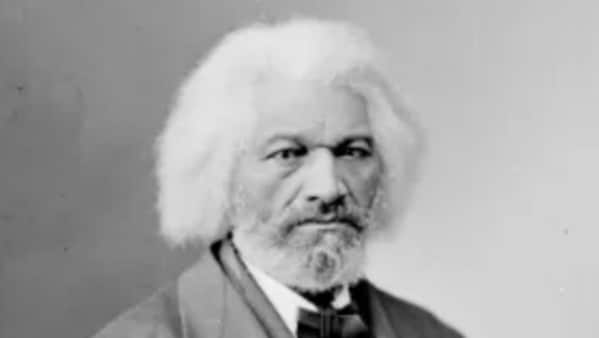
Henry David Thoreau, born in Concord, Massachusetts, in 1817, became one of America’s most influential writers, philosophers, naturalists and reformers. A central figure in New England Transcendentalism, he is best known for Walden, his 1854 reflection on simple living, labour, self-reliance and nature, based on his two-year stay near Walden Pond from 1845 to 1847. He also wrote the essay later known as Civil Disobedience, which influenced later movements of nonviolent resistance and moral protest. describes Walden as both a philosophical work on labour and individualism and an influential piece of nature writing.
“It is not enough to be industrious; so are the ants. What are you industrious about?”
— Henry David Thoreau
This line appears in Thoreau’s letter to Harrison Blake dated November 16, 1857. In the letter, Thoreau challenges the idea that being busy alone is virtuous, asking instead whether people are well employed in work that matters.
Meaning of the quote
Thoreau’s quote is a warning against confusing activity with purpose. The humour comes from the comparison with ants: they are famously industrious, but human beings are expected to ask a deeper question — not just “Am I working hard?” but “Is this work worth my energy?”
The quote speaks directly to modern busyness culture. People often measure themselves by packed calendars, late-night emails, constant meetings, visible hustle and endless productivity. Thoreau asks for a sharper standard: effort is valuable only when it is directed toward something meaningful, ethical and alive.
The deeper lesson is not anti-work. Thoreau respected discipline, craft and self-reliance. His point is that labour without reflection can become mechanical. A person can be busy all day and still avoid the work that truly matters: thinking clearly, building something useful, serving others, protecting time, or living deliberately.
Why this quote resonates
This quote feels highly relevant today because many workplaces are full of motion but short on meaning. Gallup’s State of the Global Workplace 2026 found that only 20% of employees worldwide were engaged in 2025, with low engagement estimated to cost the global economy about $10 trillion in lost productivity. That suggests many people are not lacking activity; they are lacking connection, clarity and purpose in the work they do.
It also matters in the AI era, where productivity tools can make people faster without necessarily making their work more meaningful. The Future of Jobs Report 2025 says employers expect 39% of key job skills required in the labour market to change by 2030, with continuous learning, upskilling and reskilling becoming central to future readiness.
Thoreau’s question — “What are you industrious about?” — is therefore a useful filter. Are we using new tools to create value, or only to produce more output? Are we working toward better judgement, better service and better lives, or simply becoming busier at higher speed?
Another perspective
“I went to the woods because I wished to live deliberately.”
— Henry David Thoreau
This famous line appears in Walden, where Thoreau explains his experiment in simple living near Walden Pond. Britannica notes that Walden reflects on labour, leisure, self-reliance and individualism — the same themes that sit behind his warning against empty industriousness.
Together, both quotes create a complete lesson. “What are you industrious about?” asks people to examine the direction of their work. “Live deliberately” asks them to examine the direction of their life.
The combined message is powerful: do not merely fill your days. Choose them. Do not merely work hard. Work toward something that deserves your time.
How you can implement this
- Audit your busyness: List your top five recurring tasks and mark which ones create real value, which ones are maintenance, and which ones are performative.
- Define your purpose for the week: Before Monday begins, write one sentence: “This week, my most important work is…” and align your calendar around it.
- Cut one low-value activity: Remove or shorten one meeting, report, approval loop or habit that consumes energy without improving outcomes.
- Measure impact, not motion: Track what changed because of your work — users helped, problems solved, revenue protected, quality improved or people supported.
- Use tools intentionally: Before adopting AI, automation or productivity software, ask what meaningful problem it solves and what human judgement must remain.
- Protect deliberate time: Block at least one uninterrupted hour each week for thinking, writing, planning, learning or deep work that supports your larger purpose.
Final Thought — closing quote + commentary
“Our life is frittered away by detail. Simplify, simplify.”
— Henry David Thoreau
This line from Walden captures the same philosophy as the primary quote: life becomes thinner when attention is scattered across too many minor demands. Thoreau’s message is not to reject ambition, but to aim it better. The real question is not whether you are busy; it is whether your busyness is building the life, work and character you actually value.
Disclaimer: The first draft of this coopy was generated by AI.