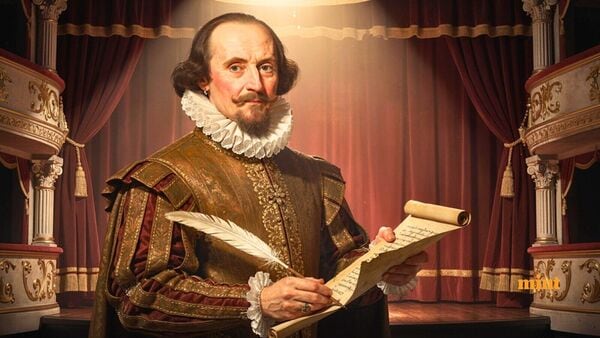
“The fool doth think he is wise, but the wise man knows himself to be a fool.”
William Shakespeare wrote this line for a comedy. But it contains one of the most serious ideas he ever put on stage. It appears in As You Like It, spoken by the character Touchstone. The play is full of wit and wordplay. Yet this single line cuts deeper than almost anything else in it.
The structure of the line is the point. Two types of people. Two completely opposite relationships with knowledge. The fool is certain. The wise man is uncertain. And suggests, without hesitation, that the uncertain one is the wiser of the two.
This is not a comfortable idea. Certainty feels good. Doubt feels unsettling. And yet the line insists that the person most confident in their own wisdom is the one furthest from it.
What It Means
The quote describes a paradox that philosophers have returned to for centuries. The more you genuinely know, the more clearly you see how much remains unknown. The less you know, the easier it is to feel complete.
This is not false modesty. It is not the performance of humility by someone who secretly believes they are brilliant. It is the genuine experience of anyone who has gone deep enough into any subject to understand its true complexity.
The fool’s confidence comes from the shallowness of their knowledge. They have not gone far enough to encounter the edges. The wise man’s uncertainty comes from having gone much further. He has seen the edges. He knows what lies beyond them is vast and largely unexplored.
The line also carries a warning about the danger of unchallenged certainty. The person who is sure they are right stops questioning. They stop listening. They stop growing. Their certainty becomes a ceiling. The person who remains uncertain keeps reaching. Their doubt becomes a door.
Where It Comes From
William Shakespeare wrote As You Like It around 1599. The play is set in the Forest of Arden. It is a pastoral comedy about exile, identity, and the nature of wisdom. Touchstone is the court jester who accompanies the protagonist into the forest. He is one of Shakespeare’s great comic creations.
Jesters in Shakespeare’s time occupied a unique social position. They were permitted to say things that others could not. Their comedy gave them cover for truth-telling. Touchstone’s line lands harder precisely because it comes from a fool. A fool delivering the definitive statement on foolishness is itself the joke. And the point.
Shakespeare was drawing on a tradition that stretched back to . The ancient Greek philosopher famously claimed that his only wisdom was knowing that he knew nothing. The Oracle at Delphi had declared Socrates the wisest man in Athens. He spent years trying to disprove this by finding someone wiser. He could not. Every expert he questioned revealed the limits of their own knowledge. The wisest people, he found, were the ones most aware of their ignorance.
Shakespeare knew this tradition. He distilled it into a single sentence and gave it to a jester.
Another Perspective
Shakespeare also wrote, in King Lear: “I am a very foolish, fond old man.”
King Lear speaks these words near the end of the play. He has lost his kingdom, his daughters, and his sanity. In his collapse, he finally achieves the self-knowledge he lacked at the beginning. His greatest wisdom arrives at his lowest point. Together with Touchstone’s line, these two moments form a complete picture. Wisdom does not come from power or certainty. It comes from honest reckoning with one’s own limitations.
How to Apply It Today
Takeaway 1: The next time you feel completely certain about something, pause. Ask what you might be missing. Ask who might disagree and why. Certainty that cannot survive a question was never certainty. It was just comfort.
Takeaway 2: Seek out people who challenge your thinking. The fool surrounds himself with people who confirm his wisdom. The wise person actively looks for those who see things differently. Disagreement is not a threat. It is information.
Takeaway 3: In any field you work in, find the edges of your knowledge and sit with them honestly. Do not paper over the gaps with confidence. Acknowledge them. The gaps are where real learning lives. The person who knows their limits can work within and beyond them. The person who does not knows neither.
The fool is comfortable. The wise man is not. And Shakespeare, with one line, makes clear which one he would rather be.
Related Readings
The Apology by Socrates
Socrates’ defense at his trial, in which he explains how his reputation for wisdom arose from knowing that he knew nothing. The direct ancestor of Shakespeare’s line.
Thinking, Fast and Slow by
A Nobel laureate’s exploration of how human beings systematically overestimate their own knowledge and competence. The scientific account of what Shakespeare described in fourteen words.
The Book of Five Rings by Miyamoto Musashi
A Japanese swordsman’s meditation on mastery. Musashi argues that the greatest warriors are those most aware of their own weaknesses. Wisdom and self-knowledge are inseparable throughout.
Ego Is the Enemy by Ryan Holiday
A modern argument that unchecked confidence in one’s own judgment is the primary obstacle to genuine achievement. The fool Shakespeare describes is the ego that Holiday spends an entire book diagnosing.